

A warning on your solar inverter doesn’t always mean the unit is broken. If you’re wondering how to tell if your solar inverter is broken, look at the whole system: a drop in production or an error message can also relate to cloudy weather, a grid issue or monitoring data that hasn’t updated. Checking the right clues can help you understand what needs attention and avoid assuming that one warning confirms a fault.
This guide explains which warning lights, error messages and changes in output may point to an inverter fault, and which could have another cause. You’ll learn safe, non-invasive checks you can carry out without opening the inverter or touching electrical components, plus when to follow the system’s shutdown instructions and arrange a qualified diagnosis.
You’ll also learn how product and installation warranties can affect your next steps. GES Energy assists with solar inverter repairs and warranty claims, including for systems installed by another company. With a strong focus on Victoria, including Melbourne and regional centres, GES Energy can help you move from uncertainty towards a clear diagnosis and an informed repair decision.
Key Takeaways
- To work out how to tell if your solar inverter is broken, look for persistent warning lights, error messages and signs the unit is inactive, but don’t treat one symptom as proof.
- Compare inverter readings with your monitoring data and recent weather to help distinguish a possible equipment fault from a grid or monitoring issue.
- Record the inverter’s make, model, displayed message and when the issue began. These details give a technician useful information for diagnosis.
- Don’t open the inverter or touch electrical components. Arrange qualified help for persistent warnings, especially messages referring to insulation, earth or ground faults.
- GES Energy can assist with inverter repairs and warranty claims, including for systems installed by another business.
Solar inverter warning signs: How to tell if it's faulty
Several signs can suggest an inverter fault, but one symptom alone doesn’t prove the unit is broken. If you’re considering how to tell if your solar inverter is broken, look for a persistent warning light, an error message or an inverter that appears inactive, especially if solar production has also changed. The inverter converts the panels’ output into electricity used at your property or supplied to the grid. A solar inverter can take different forms, so the display and indicators vary by model.
Start with what you can see. Note the status of any external indicator lights and whether the display is active, blank or showing a message. Don’t remove covers or touch wiring to investigate. A brief change in status may reflect normal operation, while a warning that remains or returns during suitable generation conditions deserves attention. Check the manufacturer’s information for the meaning of the displayed status rather than assuming a light colour or symbol means the same thing across all inverters.
Which inverter warning signs deserve attention?
Record any displayed error code or message exactly as it appears, including letters, numbers and punctuation. Note the date and time, and whether the warning clears or persists. This gives a technician reliable information to assess without risking a misinterpretation of a code that may differ between inverter models.
A blank display or an apparently inactive unit is another clue to document, but it isn’t a diagnosis by itself. The inverter may not be operating for reasons beyond an internal failure. Avoid repeatedly changing settings or resetting equipment to make a warning disappear. If a warning stays on, returns, or comes with a noticeable production change, arrange a professional assessment.
When does lower solar output point to a possible fault?
A noticeable, sustained drop in production warrants investigation, not an instant failure diagnosis. Solar output naturally changes with available sunlight. Cloud cover, seasonal changes and the time of day can all affect how much energy your system generates, so a lower reading on one day may not indicate a fault.
Compare similar periods, such as the same part of the day under broadly comparable sunlight conditions, rather than comparing a sunny day with a heavily overcast one. Check the inverter display as well as your monitoring records, if available. If production remains lower than expected during suitable generation conditions, note when the change began and whether it has continued.
Monitoring history can help show whether the change was sudden or gradual and whether it lines up with an inverter warning. Save relevant screenshots or readings, but treat them as clues rather than proof of the cause. To work out how to tell if your solar inverter is broken, consider the timing, displayed status and production pattern together. This gives a qualified technician a clearer starting point for diagnosis.
What can make a solar inverter appear broken?
A solar inverter warning or a gap in your app’s readings can have several explanations. The issue may be within the inverter, another part of the solar system, the grid connection or the monitoring service. These clues help narrow down what to investigate, but they can’t confirm the cause. A qualified assessment is needed to diagnose a specific system issue.
Solar and battery components also affect how a system behaves together. A change in one component’s status may alter what you see elsewhere, so consider the system as a whole rather than treating one app reading as a diagnosis. This interaction is covered in more detail in GES Energy’s guide to solar and battery systems.
Inverter faults versus system or grid conditions
An inverter fault is one possibility, but a warning needs context. A component issue elsewhere in the solar system, or conditions that lead the inverter to pause operation, can also affect output. Overheating, for example, can cause an inverter to shut down to protect itself. Common problems with solar inverters include overheating, but the same symptom can have different causes on different systems.
A grid interruption may also change system behaviour. Note whether other power issues at your home or site happened at the same time as the inverter warning or production change. That timing can help a technician assess whether the issue coincided with a broader supply interruption rather than an isolated inverter problem.
Monitoring problems that can look like equipment failure
Missing data in an app or online portal doesn’t, by itself, prove that solar generation has stopped. The monitoring connection may not be reporting current information, even while the inverter display shows a different status. Compare the latest monitoring record with what you can safely observe on the external display, and note when each was last updated.
If the app shows no data but the inverter display appears to show normal operation, record both observations. If they show the same warning or inactive status, include that detail in your notes. Don’t assume either source is conclusive. A qualified technician can assess the system and its monitoring together.
These categories help organise the evidence, not identify a fault from a single light, message or app reading. Keep a record of the timing, system status and any other power issues, and avoid opening the inverter or touching electrical components. If the cause remains unclear or a warning persists, GES Energy provides solar inverter repair and warranty assistance, including for systems installed by another business.
How to check whether your solar inverter is broken without guessing
A safe check means collecting useful information, not testing electrical parts. Compare what the inverter shows with your monitoring records and note when the change began. These observations help a technician assess the system, but they can’t confirm the cause. Don’t open the inverter enclosure, touch wiring or improvise a reset.
A safe, step-by-step check for inverter owners
Follow these steps using only the external display, indicator lights and monitoring information you can access as the system owner. If you see damage or a fault message referring to insulation, earth or ground, stop checking and arrange qualified assistance.
- Record the inverter details first. Note the make and model, the full display message or error code, and the date and time the issue appeared. Photograph the display only if you can do so safely, without touching or moving equipment.
- Observe the external indicators. Record which lights are on, off or flashing, and whether the display is active. Don’t infer what a colour or pattern means based on another inverter model.
- Check the available monitoring data. Note the most recent reading and compare it with the inverter’s displayed status. Record any gap between the two rather than assuming missing app data means generation has stopped.
- Review recent generation records. Compare similar periods and consider whether sunlight conditions differed. Note when any sustained change began and whether it coincided with a warning.
- Consult the manufacturer’s instructions. Use the guide for your exact model to interpret indicators and follow any stated operating or shutdown procedure. Don’t attempt resets or change settings unless the manufacturer’s instructions direct you to do so.
What information helps a technician diagnose the issue?
Along with the inverter details, prepare the system’s location and a concise account of what you observed. Include the dates of warnings, changes in output, whether the issue persists, and any recent changes to the system or monitoring. For a business site, note relevant operating changes and how the issue affects site operations. GES Energy’s commercial solar installation guidance provides context for the different demands of commercial systems.
Arrange a qualified diagnosis if a warning persists or returns, the inverter appears inactive during suitable generation conditions, or production remains unexpectedly low. Treat messages referring to insulation, earth or ground as a potential safety concern. Follow the manufacturer’s shutdown instructions if they apply, and don’t touch electrical components. GES Energy provides inverter repair and warranty assistance for systems installed by any business, with a strong focus on Victoria and service across Australia.
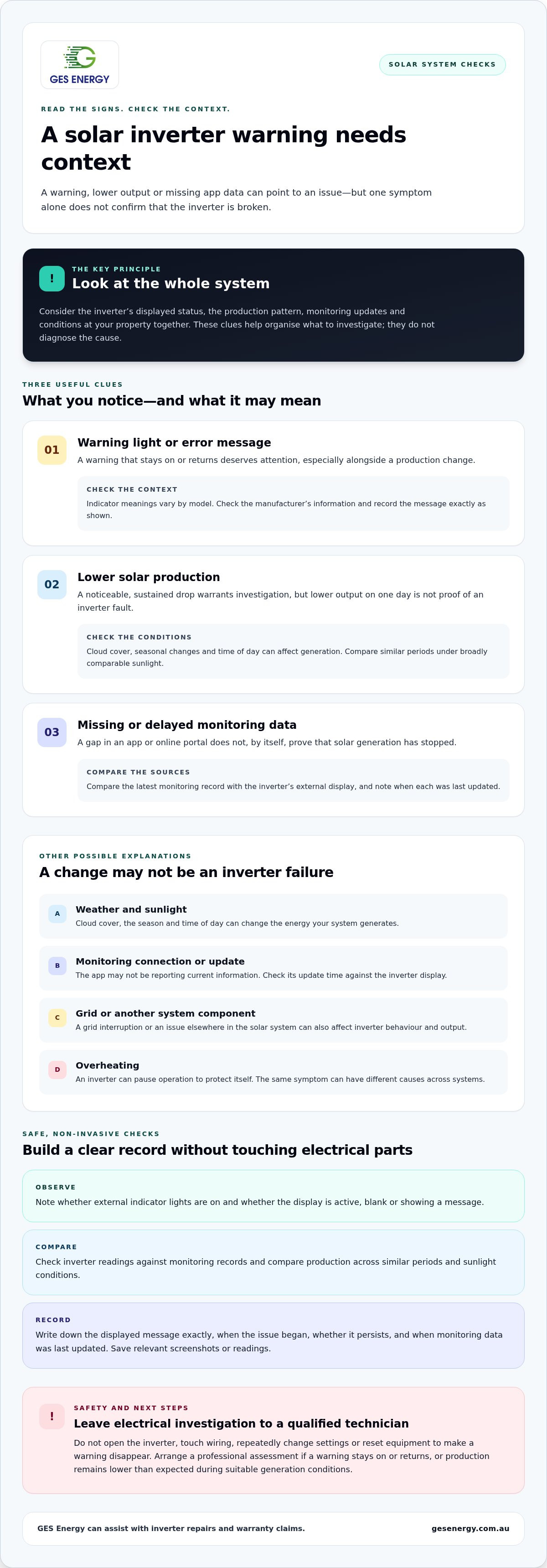
How to compare an inverter fault with a monitoring or production issue
Compare what the inverter itself shows with what your monitoring app or portal records. The difference can help you decide what information to gather next, but it can’t confirm that a component has failed. Use the clues below for triage only. A qualified technician must assess the system to identify the cause.
Clues that point to different parts of the system
An inverter warning displayed on the unit is different from a data gap that appears only in an app. Lower-than-usual production is another separate clue, and needs to be considered alongside sunlight conditions and system behaviour. No single observation proves inverter failure.
| Observed clue | Possible interpretation | Appropriate next step |
|---|---|---|
| A warning or error remains on the inverter display | The inverter may need assessment, but the message alone doesn’t establish the cause. | Record the exact message and when it appeared. Arrange professional advice if it persists or returns. |
| Monitoring data is missing, but the inverter display appears to show normal operation | The monitoring record may not reflect the inverter’s current status. Missing data doesn’t confirm generation has stopped. | Compare the display with the latest available app or portal record, and note when the data last updated. |
| Production is lower than usual, without a persistent warning | Changing sunlight or another system condition may affect output; the figures alone can’t identify a fault. | Compare similar periods and note weather conditions, display status and how long the change has continued. |
Look for a pattern rather than relying on one reading. For example, an app data gap with no corresponding display warning is different evidence from a warning that remains visible while production is reduced. Record both observations and their timing. This gives a technician a clearer basis for checking whether the issue relates to the inverter, monitoring or another part of the system.
When a suspected fault needs professional assessment
Arrange professional advice for a warning that persists or repeatedly returns, unexplained production changes, or visible damage to the inverter or surrounding equipment. You don’t need a definitive error code before seeking an assessment. Repeated or unexplained symptoms can still warrant investigation.
Stop your checks if you suspect electrical danger. Don’t touch the inverter, wiring or damaged equipment. Follow the manufacturer’s shutdown instructions if they apply, then seek qualified assistance. For support with diagnosis, repairs or a warranty claim, arrange solar inverter repair support through GES Energy. The company assists with inverter repairs and warranty claims for systems installed by another business, too.
When to arrange solar inverter repair or warranty assistance
Arrange a professional diagnosis if an inverter warning persists or returns, the unit appears inactive during suitable generation conditions, or you can’t explain a continuing change in system output. Don’t wait for a definitive error code. If you suspect an electrical fault or notice visible damage, stop your checks and keep clear of the equipment. Use the manufacturer’s shutdown instructions if they apply, then seek qualified assistance.
Knowing how to tell if your solar inverter is broken can help you recognise when a system needs attention, but a technician needs to assess the equipment to identify the cause. The observations you’ve recorded can make that assessment more focused and help distinguish an inverter issue from a monitoring or system concern.
What happens when you request inverter repair support?
Share the inverter make and model, the exact message or code, when the issue began, and any relevant monitoring or production records. These details help frame the initial technical assessment. GES Energy provides solar inverter repair and warranty assistance, including for systems installed by another business. The appropriate diagnosis and repair support depend on the issue found, so no repair method or timeframe can be assumed in advance.
If you want to pursue a warranty claim, have the inverter’s product details and available warranty documents ready. GES Energy can assist with the claim process, while the manufacturer’s warranty terms determine what is covered. Its installers are accredited by Solar Accreditation Australia (SAA), providing relevant installation expertise alongside repair support.
Why ongoing solar maintenance can help identify issues
Maintenance gives you a way to review system health and investigate developing concerns before they become harder to understand. A record of earlier system behaviour can put a new warning or production change in context. It also supports informed decisions about the next step, whether that means further monitoring or a closer technical assessment. Maintenance doesn’t guarantee that faults won’t occur, but it can help keep system concerns visible and organised.
System design also shapes what normal operation looks like. For example, a standalone system has a different operating context from one connected to the grid. If you have an off-grid system, refer to this off-grid solar system guidance when considering how your system is intended to supply power.
GES Energy supports customers in Victoria and elsewhere in Australia with inverter issues, diagnosis, repairs and warranty claims. Discuss your solar inverter issue with GES Energy and share the details you’ve recorded so the concern can be assessed with the right context.
Take the next step towards a clear diagnosis
A clear diagnosis gives you a sound basis for deciding what your solar system needs next, rather than relying on guesswork or a single warning. Keep your observations and system records together so they’re ready for a technical assessment. If you’re still unsure how to tell if your solar inverter is broken, a qualified review can help identify whether the issue calls for repair, warranty assistance or further investigation.
GES Energy’s in-house teams hold ISO 9001, ISO 14001 and ISO 45001 certifications. The business assists with inverter repairs and warranty claims for systems installed by other companies, as well as systems it originally installed.
For support in Victoria or elsewhere in Australia, arrange solar inverter repair and warranty support with GES Energy. Sharing your recorded observations can help move the process from uncertainty towards a clearer plan for your system.
Frequently Asked Questions
How long does a solar inverter usually last?
There isn’t one service-life figure that applies to every inverter. The model, operating conditions and maintenance history all matter. Check the manufacturer’s documentation for guidance specific to your unit, and keep its installation date and service records together. If an older inverter begins displaying unusual behaviour, compare it with those records, but don’t treat its age alone as proof that it has failed.
Does a solar inverter warranty cover repairs?
Warranty coverage depends on the manufacturer, inverter model, purchase terms and fault assessment. Keep your warranty documents, proof of purchase and service history available, as these can help when a claim is reviewed. GES Energy can assist with inverter warranty claims, including for systems it didn’t install. A warranty doesn’t confirm that the inverter is faulty or guarantee that a particular repair will be covered.
Can a solar battery still work if the inverter is broken?
It depends on your system configuration and which component has the fault. A warning on one device may not show whether the battery or another connected component is operating as intended. Check only the equipment’s external displays and the monitoring information available to you. Don’t open the battery or inverter, change electrical connections or assume the whole system has stopped. A qualified assessment can establish the effect.
Do solar panels need replacing when an inverter fails?
No. An inverter issue doesn’t automatically mean the panels have failed or need replacement. They’re separate parts of a solar PV system and should be assessed on their own condition. If you’re considering replacement, don’t decide based only on an inverter warning or a gap in monitoring data. A technician can assess the inverter and panels separately, helping identify which equipment, if any, needs attention.
Can a faulty inverter damage other solar equipment?
A warning or shutdown alone doesn’t show that connected equipment has been damaged. The effect depends on the fault and how the system is designed, so avoid drawing conclusions from one indicator. If you see visible damage or suspect an electrical hazard, keep clear and seek professional help. Don’t open the inverter or attempt electrical repairs. A technician can assess the system and determine whether other components need attention.
Can I replace my solar inverter with a different model?
A replacement must suit the existing system and its electrical design, so the inverter brand alone isn’t enough to choose a unit. Knowing how to tell if your solar inverter is broken doesn’t establish which replacement is suitable. Don’t buy or connect components yourself; arrange a qualified assessment first. GES Energy provides inverter repair and warranty support across Melbourne, Geelong, Ballarat, Bendigo, Shepperton, Shepparton, Melton, Mildura, Wodonga, Traralgon, Wangaratta, Horsham, Sale, Colac, Echuca, Arrarat, Ararat, Portland, Swan Hill, Benalla and Maryborough.


