

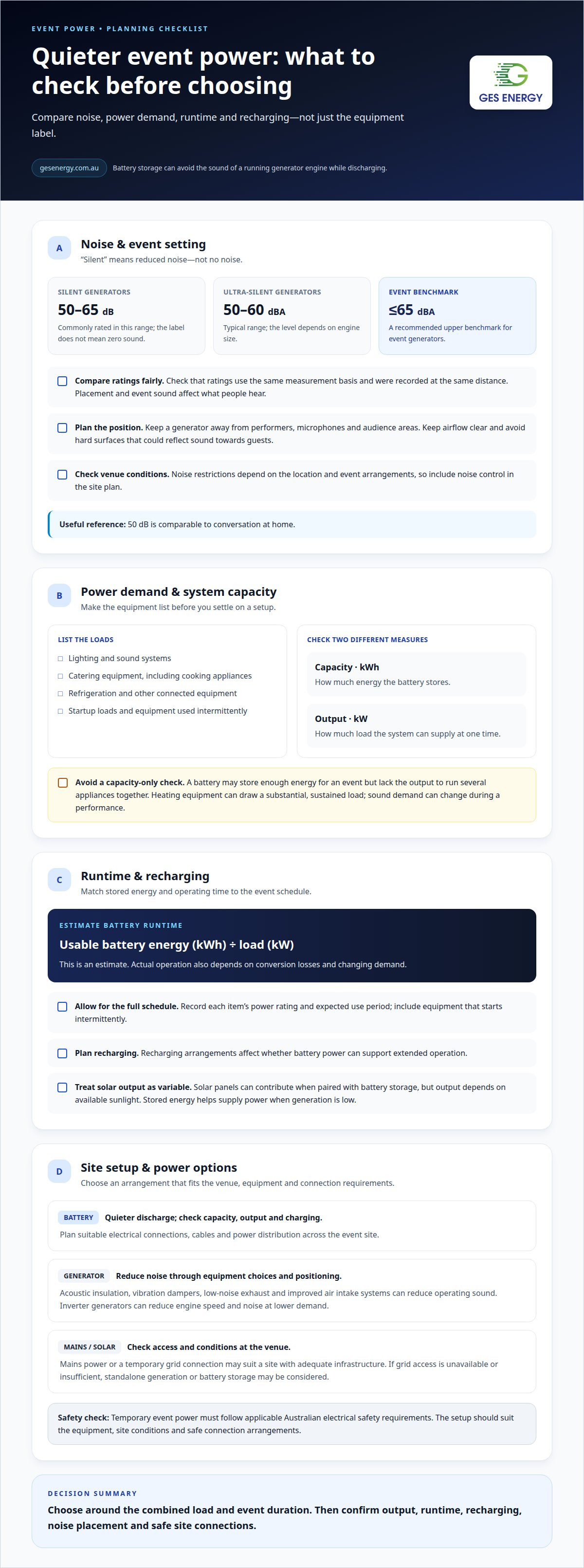
A “silent” generator still makes noise. Silent generators typically produce 50 to 65 dB, reducing disruption rather than removing it. An event generator is commonly recommended to stay at or below 65 dBA. Where engine noise is a concern, a battery system can be a silent generator alternative for events, supplying stored electricity without a running generator engine. The right option depends on how much power your equipment needs and how long it must run.
It makes sense to look for quieter power when speeches, music and conversation matter. But noise is only one consideration: capacity, changing loads, runtime and recharging all affect whether battery storage can reliably support an event.
This article explains what “silent” means in practice, how battery storage compares with generator power, and what event requirements to weigh before choosing a setup. Use the framework to assess noise, power demand, duration and the practical limits of each option.
Key Takeaways
- “Silent” generators still make noise, so consider how engine sound could affect speeches, live music and guest conversations.
- Battery storage avoids noise from a running generator engine, but whether it suits an event depends on power demand, runtime and recharging needs.
- Compare generator decibel ratings on the same measurement basis, including the distance at which each rating was recorded.
- Size event power around the combined demand of lighting, sound and catering equipment, including startup loads.
- When assessing battery hire costs, focus on the system capacity, operating duration and event power requirements that shape the setup.
Is a Silent Generator Really Silent?
No. “Silent” means reduced noise, not complete silence. At an outdoor event, that distinction matters when a generator runs near speakers, performers or guests.
Noise Effects on Vocals and Attendees
Generator noise comes from engine operation and can compete with voices, microphones and music. During a wedding speech, for example, a diesel generator’s steady background sound may make words harder to hear, especially for guests seated nearby.
At a concert or outdoor event, noise can also make it harder for performers to hear vocals and monitor sound clearly. This may lead to raised voices or higher sound levels, changing the experience for attendees. Consider the generator’s position relative to the stage, seating and microphones, not just its advertised noise category.
Noise Restrictions and Battery Operation
Event noise restrictions are conditions intended to limit disruption at a venue or nearby properties. Requirements depend on the location and event arrangements, so include noise control in the site plan rather than treating it as a generator feature alone.
Battery storage avoids the noise of a running generator engine while discharging, making it a silent generator alternative for events where vocals and conversation need a quieter setting. The system still needs suitable electrical connections, and its recharging plan affects how well it can support extended operation.
Typical Ultra-Silent Generator Noise Levels
Ultra-silent generators typically produce approximately 50 dBA to 60 dBA, depending on engine size. Silent generators more broadly are commonly rated between 50 and 65 dB, so the label does not mean zero sound.
A recommended event benchmark is no more than 65 dBA, while 50 dB is comparable to conversation at home. Ratings are useful for comparing equipment, but placement and the event’s own sound also shape what attendees hear. A quiet rating alone cannot establish how noticeable a generator will be beside a stage.
Reducing Noise at Outdoor Events
Reducing generator noise involves both equipment design and careful placement. Acoustic insulation absorbs and dampens engine sound, while vibration dampers reduce noise transferred through the frame. Low-noise exhaust and improved air intake systems can also reduce operating sound.
Where the site allows, place the generator away from performers, microphones and audience areas. Keep airflow clear, and avoid locations where walls or hard surfaces could reflect sound towards guests. Inverter generators can adjust engine speed to match electrical load, reducing noise at lower demand.
Temporary event power systems must be set up and operated in line with applicable Australian electrical safety requirements. The setup should suit the equipment, site conditions and safe connection arrangements.
Solar panels can contribute power at an event when paired with battery storage and a system designed for the event’s loads and operating period. Output depends on available sunlight, while stored energy helps supply power when generation is low.
Mains power or a temporary grid connection may work if the venue infrastructure and site arrangements support it. If grid access is unavailable or insufficient, standalone generation or battery storage may be considered.
Battery energy storage as a generator alternative
A battery power station stores electricity and supplies it to connected event equipment. It can reduce engine noise, but its capacity and recharging plan must match the event’s load.
Battery Power Station Hire Costs
Battery power station hire costs depend on the equipment and support included. Required capacity, power output, hire duration, delivery distance and recharging arrangements all affect the setup.
For a useful comparison, separate the station hire from any delivery, connection or on-site support charges. A smaller unit may suit lighting and basic audio, while catering appliances may need greater output. Request pricing after defining the equipment list and event schedule, rather than comparing hire prices without checking what each package includes.
Battery Runtime for Event Equipment
Runtime is the length of time a charged battery can supply the event’s connected electrical load. It depends on usable stored energy and the combined power draw of lighting, sound systems and food equipment.
Estimate runtime by dividing usable battery energy, measured in kilowatt-hours, by the load in kilowatts. Actual operation also depends on conversion losses and changing demand. A sound system may draw more power during a performance, while lighting may run steadily throughout the event. Food equipment with heating elements can place a substantial, sustained load on the battery.
There is no single runtime that applies to every event. A battery sized for background music and LED lighting may not run for the same period when refrigeration, cooking appliances and stage sound are connected. List each item, its power rating and expected use period. Include equipment that starts intermittently, as its demand can differ from its normal running load.
Battery storage supplies electricity without a diesel generator running beside the event. This can suit venues where speeches, vocals or guest conversation need a quieter background. You still need to plan cables, distribution and electrical loads across the site.
Capacity and output are different considerations. Capacity, measured in kilowatt-hours, determines how much energy is stored; output, measured in kilowatts, determines the load the system can supply at one time. A station may store enough energy for the event but lack the output to run several appliances together.
Recharging affects whether battery power can meet the schedule reliably. Grid charging, where available, can restore stored energy; solar can contribute when conditions and system design allow. For a longer event, plan around charging access, equipment demand and the required operating period. A battery can also work alongside a generator, supplying quieter periods while generator operation supports recharging or heavier loads.
Checking decibel ratings
A decibel rating helps compare generator noise, but only when the measurement conditions are clear. For an event, ask for the exact rating measured at one metre. This provides a consistent reference when assessing equipment for a stage, food area or quiet seating zone.
Check whether the rating uses dB or dBA, and compare like with like. A silent generator may be rated between 50 and 65 dB, while a standard generator can exceed 90 decibels. An event benchmark commonly used is no more than 65 dBA. These figures help frame the comparison, but they don’t describe what guests will hear in every location.
Distance and placement affect the sound that reaches attendees. A generator measured at one metre may sound different at the audience boundary, especially if a stage or barrier stands between the source and listeners. Venue background noise matters too: a rating that seems low beside traffic may stand out during a quiet speech. Consider both the loudest and quietest parts of the event.
- Confirm the measurement distance: use the one-metre rating as a common reference.
- Match the units: compare dBA with dBA, or dB with dB, rather than treating them as interchangeable.
- Relate the rating to use: assess the likely sound near microphones, seating and food service.
Ask how the rating relates to generator operation and electrical output. An inverter generator can adjust engine speed to match demand, which may reduce noise at lower loads. For example, powering basic lighting may place a different load on the unit than running lighting, sound and catering equipment together. Consider the stated rating alongside the intended applications and expected load.
A lower number does not automatically mean a better event setup. The unit still needs enough capacity for the equipment, and noise reduction must not compromise safe airflow or access. Where the site allows, position the generator away from audiences and performance areas. Then assess noise at key points, such as the stage edge and nearest seating, under representative event conditions.
For a battery system, compare its operating noise with the generator option and consider how it will be recharged. Discharging the battery avoids a running engine, while recharging arrangements may create sound during operation. This helps determine whether battery power suits quiet periods, the full event or selected applications alongside another power source.
Choosing a generator for an event
Generator selection starts with the event’s combined power demand, not its guest count. In Australia, events commonly use units rated between 10 kVA and 50 kVA; larger events may need more capacity. A wedding with modest lighting and sound has different needs from an outdoor festival with vendors, catering and stage equipment.
Small weddings often use generators rated from 10 kVA to 20 kVA, depending on connected equipment. A 10 kVA generator is often suitable for an intimate outdoor event. Corporate organisers commonly choose 20 kVA for added capacity and flexibility. These are starting points, not substitutes for calculating the actual load.
For practical equipment selection, add the demand from lighting, sound and catering equipment. Include startup loads, because some equipment draws more power when switching on than during normal operation. A system that suits steady lighting may need greater capacity when sound equipment and food appliances start together. Construction equipment also has a different load profile from event AV, so size the generator for the equipment actually in use.
Many outdoor events require 20 kVA to 50 kVA, depending on vendors, lighting, catering and entertainment. A 50 kVA generator typically provides approximately 40 kW of usable power. Larger outdoor events may need 50 kVA to 200 kVA or more. These ranges help frame planning, while the combined equipment demand determines the final requirement.
- List each load: include sound, lighting, food equipment and vendor connections.
- Allow for startup demand: account for equipment switching on, not just its steady operation.
- Match the site: consider where power is needed across the venue and how connections will be arranged.
- Plan backup: for larger events, multiple generators can provide redundancy and improve reliability.
Consider runtime as well as capacity. For a long event, confirm how many running hours the rental price covers and the fuel refill schedule. Organisers should also establish whether a backup generator is available if the hired unit fails. These details help prevent a power gap during a performance, meal service or another key part of the schedule.
Noise remains a key selection factor. Consider a generator’s rating alongside its position relative to the stage, speakers and guests. If speeches or performances need quiet operation, battery storage may suit those periods, with generator power reserved for heavier loads or recharging. This connects the power plan to both the event’s sound requirements and operating schedule.
How much does it cost to hire a battery power station in Australia?
Battery power station hire costs in Australia depend on the system and event requirements. Pricing is determined case by case and provided after a quote request. Capacity, power output, hire duration, delivery, connection needs and recharging arrangements all affect the cost. A unit for a short performance may require a different setup from one supporting an event across several operating periods.
Start by defining the equipment the station must supply. Lighting, audio and catering appliances place different demands on a battery system, and their combined load affects the required capacity and output. Cost depends on the complete setup, not simply the battery unit. Clear equipment details help ensure the quote reflects how you plan to use it.
Hire duration matters too. A station needed for one event period involves different logistics from equipment required across an extended schedule. Delivery distance and site access can also affect the quote, particularly for outdoor venues or locations without straightforward vehicle access. Include the event location and operating schedule in your pricing request.
- System capacity: the stored energy needed for the planned equipment and operating period.
- Power output: the load the station must supply at the same time.
- Hire period: how long the equipment is required on site.
- Logistics: delivery, access, connection requirements and recharging arrangements.
Compare quotes by checking what each setup includes. One option may cover delivery and connection, while another may charge for those separately. Confirm whether recharging equipment or support is included, and whether the proposed system suits the event’s operating plan. A lower headline quote may not cover the same capacity, service scope or duration.
You can also compare battery hire with generator hire or a mixed setup. For example, a battery may supply power during speeches or performances while another source handles higher loads or recharging. The suitable arrangement depends on noise priorities, equipment demand, site access and required runtime. These factors affect both system design and the final quote.
For a useful quote request, provide the equipment list, expected operating schedule, venue location and any known charging access. State whether the system must supply all event equipment or only selected circuits. That distinction can change the required capacity and output, helping ensure the quote reflects the event’s actual power plan.
GES ENERGY
GES ENERGY can help when event power planning connects to a broader solar, storage or off-grid project. For organisations in Melbourne or Ballarat, its Commercial and Industrial Solar, Off Grid Solar Systems and C&I Energy Storage Systems support planning for ongoing site energy needs. EV Charging Stations and Solar + Batteries for Homes address other specific power requirements.
Consider whether temporary power is a one-off need or part of a broader energy plan for your Victorian site. The answer can help shape the next steps for your organisation.
Contact GES ENERGY to discuss the energy requirements behind your project.
Plan power around what comes next
Event power planning can reveal longer-term energy needs at a venue or business site. If temporary power is part of a wider move towards energy independence, consider how the event setup could inform future infrastructure decisions. A silent generator alternative for events may be one part of that plan, alongside the site’s ongoing electricity requirements.
GES ENERGY offers Commercial and Industrial Solar, Off Grid Solar Systems and EV Charging Stations. These services address broader energy and charging needs, rather than event equipment hire. Outline your site requirements and the role event power plays in your plans to identify a practical next step.
Contact GES ENERGY about event power to discuss the energy needs behind your project and consider a practical direction for what comes next.
Frequently Asked Questions
Need Help Choosing An Event Generator?
Start with the event schedule and venue layout. Mark where equipment will operate, when each area needs power, and where temporary cables may cross pedestrian routes. For a Victorian outdoor wedding, the ceremony, reception and catering areas may need separate connection points at different times. A clear site plan helps identify distribution needs and whether one central power source suits the layout.
What are the quietest alternatives to generators for outdoor events?
Battery power stations and venue mains supply can reduce reliance on engine-powered equipment. Solar panels can contribute to a battery setup if the site has suitable exposure and the event schedule allows time for generation. A hybrid arrangement can combine these sources. The practical choice depends on usable venue infrastructure, space for panels and a workable plan for distributing power across the site.
How much battery capacity is needed to power an event without a generator?
Use equipment nameplates and the event run sheet to establish the energy requirement. The run sheet matters because a stage system used during performances may not operate throughout setup and pack-down. Separate essential equipment from optional loads, then compare planned operating periods. This creates a more useful battery system specification than choosing capacity based only on event size or attendance.
What are the best portable battery power stations for events in Australia?
Choose a portable station that suits the event’s equipment connections, site access and intended operating pattern. Check how it connects to the required distribution equipment, and whether its dimensions and weight suit the route from vehicle access to the operating area. At a regional Victorian venue, transport access and the surface where equipment will sit can matter as much as the power specification.
What are the risks and limitations of battery power compared with a generator at events?
Battery setups can create logistical challenges even when their electrical specifications suit the event. Consider moving units across uneven ground, protecting connections from weather and keeping equipment clear of public routes. Generator-based setups have different site and fuel logistics. Include pack-in, operation and pack-down in the site plan so power equipment does not obstruct performers, catering teams or attendees.
How can event organisers estimate power requirements and choose a suitable alternative?
Build a power schedule from the event run sheet. Record when each supplier needs power, which equipment operates together, and how setup or pack-down changes demand. Ask vendors for their equipment’s electrical details, including connection requirements. Map those needs to the venue layout and identify priority circuits. This gives the system design a clear operational brief instead of relying on a broad event category.


