

Commercial solar can reduce a business’s reported Scope 2 emissions when it generates electricity that the business uses on site. In Australia, mandatory climate reporting began rolling out from 1 January 2025, making reliable energy data increasingly relevant to ESG disclosures. Commercial solar for ESG reporting can help show how much electricity a system produces and how that generation relates to purchased power.
Solar doesn’t make every ESG claim straightforward. Scope 2 covers indirect emissions from purchased electricity, while the emissions outcome a business reports depends on factors such as generation, consumption and the accounting approach used. SECR is a UK reporting regime; Australian climate-related disclosures align with standards set by the Australian Accounting Standards Board and the International Sustainability Standards Board.
If you’re assessing solar as part of your sustainability reporting, this guide explains how it can affect emissions disclosures, which generation and consumption records can support your claims, and how recognised standards fit together. It also shows how commercial solar design and installation can provide useful operational data, helping you plan an energy project with reporting needs in mind.
Key Takeaways
- On-site solar used by your business can reduce purchased electricity and associated Scope 2 emissions, but it does not automatically reduce every emissions category.
- Generation records, consumption data and commissioning documents can help support clear, traceable ESG disclosures.
- SECR is a UK reporting regime. Australian climate disclosures align with standards set by the Australian Accounting Standards Board and the International Sustainability Standards Board.
- Understand how the Greenhouse Gas Protocol and other reporting frameworks relate to your organisation’s energy data before making renewable electricity claims.
- Planning a commercial solar project around both site energy use and reporting needs can help make its performance easier to assess and document.
Does solar reduce SECR reported emissions?
Yes. For Australian businesses, commercial solar can reduce reported Scope 2 emissions when the business uses its generation instead of purchased electricity. SECR is a UK reporting regime, so Australian organisations should distinguish its rules from Australian climate-related disclosures.
Solar impacts across emissions scopes
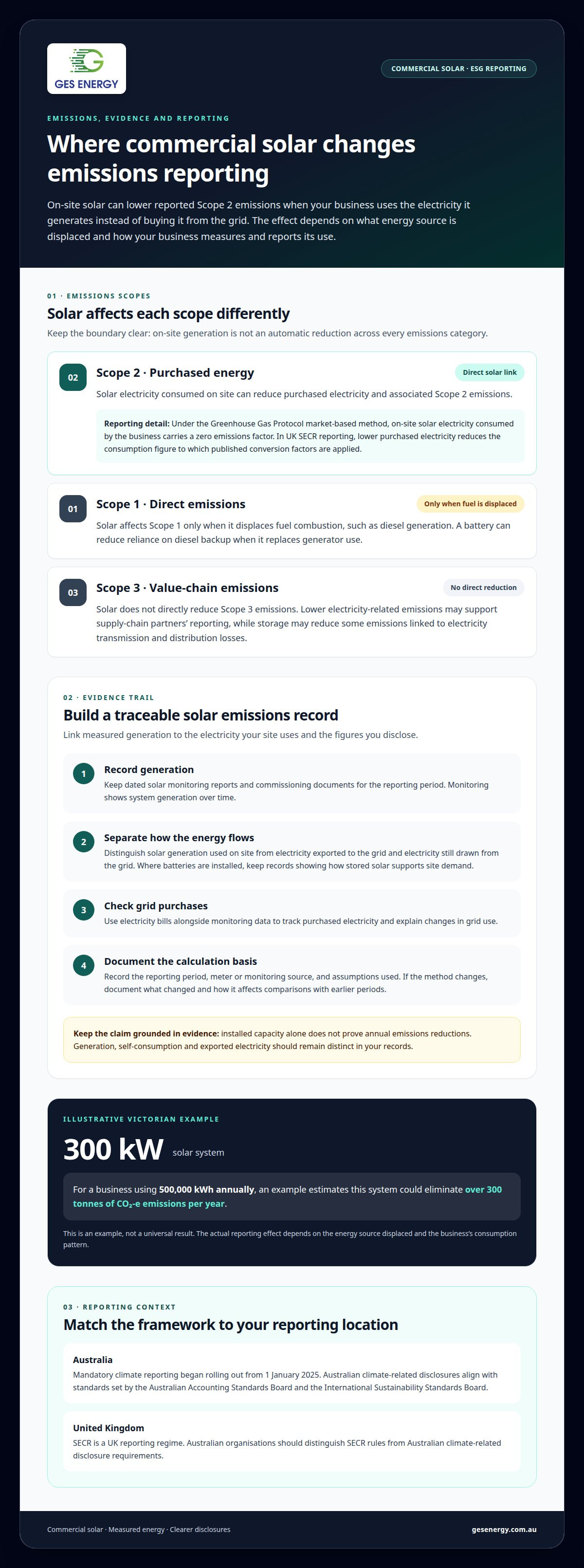
Scope 1 covers direct emissions from sources a business owns or controls; Scope 2 covers emissions from purchased electricity, steam, heat and cooling. Scope 3 covers other indirect emissions across a company’s value chain. This distinction matters because solar affects each category differently. Onsite generation can reduce Scope 2 emissions, while Scope 1 falls only when solar displaces fuel combustion, such as diesel generation. Solar doesn’t directly reduce Scope 3 emissions, though lower electricity-related emissions can support supply-chain partners’ reporting. Storage may also reduce some Scope 3 emissions linked to electricity transmission and distribution losses.
Self-consumed solar and reported emissions
Self-consumed solar is electricity generated onsite and used by the business rather than exported to the grid. In UK SECR reporting, reduced purchased electricity lowers the consumption figure to which published conversion factors are applied. Under the Greenhouse Gas Protocol’s market-based Scope 2 method, onsite solar electricity consumed by the business carries a zero emissions factor. Separate generation, consumption and export records help explain how the reported figure was calculated. For example, a site can distinguish solar generation used during operating hours from electricity still drawn from the grid. That breakdown makes the emissions effect of the initiative clearer in annual reporting.
Onsite solar, storage and emissions reduction
Onsite solar reduces reliance on electricity from the public grid, while a battery can store generation for later use. Together, these measures can help match clean electricity with a site’s operating demand beyond sunny periods. Storage can also reduce reliance on diesel backup when it replaces generator use, lowering direct Scope 1 emissions from fuel combustion. The actual reporting effect depends on the energy source displaced and the business’s consumption pattern. A Victorian example estimates that a 300 kW solar system could eliminate over 300 tonnes of CO₂-e emissions per year for a business using 500,000 kWh annually. Treat this as an example, not a universal result.
Energy use and environmental compliance
Environmental reporting links energy use to carbon emissions through the accounting methods and records a business applies. UK SECR reporting uses published conversion factors alongside purchased electricity consumption. Australian disclosures align with standards set by the Australian Accounting Standards Board and the International Sustainability Standards Board. Keep generation, self-consumption and exported electricity distinct in your evidence. Monitoring data can show solar output over time, while electricity bills help track grid purchases. Together, these records support a transparent account of a project’s environmental contribution, rather than treating installed capacity alone as proof of annual emissions reductions.
Using accurate, verifiable data in ESG reports
Credible Australian solar disclosures link measured generation to the electricity a business consumes and the claims it makes. A well-planned project should provide clear system records and monitoring data to support that account.
Solar monitoring as an audit trail
Solar monitoring records generation over time, providing evidence of system performance for ESG reporting. This matters because a carbon benefit needs a traceable link to actual energy data, not just installed capacity. A business can use monitoring records alongside electricity bills to explain changes in grid purchases. Where batteries are installed, separate records can help show how stored solar energy supports site demand.
For an audit trail, retain dated generation reports and commissioning documents for the relevant reporting period. Consistent records let governance teams trace reported figures back to system performance. They also give investors, employees and business partners a clearer view of the environmental initiative and help build confidence in the company’s reporting.
Data accuracy and changing regulations
Data accuracy depends on consistent measurement periods, units and calculation methods across reporting records. This is particularly important as Australian climate-related disclosures align with standards set by the Australian Accounting Standards Board and the International Sustainability Standards Board. These standards shape how climate information is presented, and reporting expectations can change over time.
Assign responsibility for solar data within the business’s governance process. Record the reporting period, meter or monitoring source, and any assumptions used in emissions calculations. If the method changes, document what changed and how it affects comparisons with earlier periods. This gives finance, sustainability and operations teams a shared basis for annual disclosures, instead of requiring them to reconcile separate spreadsheets at reporting time.
Credible solar and emissions claims
Credible claims specify what the data measures, the period it covers and how the emissions result was calculated. In Australian ESG reports, distinguish electricity generated from electricity consumed onsite, and don’t present exported power as onsite consumption. Explain the accounting approach and keep the supporting records together.
For example, a claim that solar reduced purchased electricity should be supported by generation and consumption records covering the same reporting period. Don’t claim that solar alone reduced all emissions across the business or its value chain. The Greenhouse Gas Protocol provides a framework for emissions accounting, but each claim still needs evidence that matches its stated scope and wording. Clear boundaries protect the integrity of the disclosure.
Solar disclosure data and documentation
A useful disclosure record brings system and energy information together. Retain commissioning documents, annual inverter generation data, and records showing the split between self-consumed and exported electricity. Pair these with electricity bills and the emissions calculation method used for the report. This evidence links operational data to the figures presented to investors and other stakeholders.
During planning and installation, consider how the system will be monitored and how its records will support reporting. Commissioning documents establish the system’s operational baseline, while ongoing monitoring records generation. Organise these files in the business’s ESG data management system, with access and ownership assigned through its governance process. Consistent storage makes reporting easier to maintain as disclosure needs evolve.
Australian sustainability reporting requirements
Australian climate reporting is being phased in by entity group, while solar project costs depend on site and system requirements. A well-matched commercial solar installation has an estimated payback of circa 4 years.
ESG frameworks used in Australia
Australia’s climate-related disclosures align with standards set by the Australian Accounting Standards Board and the International Sustainability Standards Board. This framework matters because corporate sustainability reporting needs consistent information about climate risks, energy use and emissions.
Mandatory reporting began with Group 1 from 1 July 2024, followed by Group 2 from 1 July 2026 and Group 3 from 1 July 2027. Group 1 includes entities meeting at least two thresholds, including consolidated revenue of $500 million or more and EOFY gross assets of $1 billion or more.
For Group 2, thresholds include consolidated revenue of $200 million or more and EOFY gross assets of $500 million or more. Group 3 thresholds include consolidated revenue of $50 million or more and EOFY gross assets of $25 million or more. Entities must meet at least two applicable thresholds to fall within the group criteria. These phased dates help businesses understand when reporting may apply and plan internal data collection.
ESG compliance and reporting
Australian climate reporting requires consistent, supportable information, not simply a statement that a business uses renewable energy. Businesses supplying larger corporate buyers, multinational firms or institutional investors may also be asked for carbon accounting and sustainability metrics. Sole traders, partnerships and trusts don’t need to lodge a sustainability report, but buyers and suppliers may request climate-related data for their own disclosures.
Commercial solar pricing depends on system size, site conditions, equipment, grid connection and storage; a project price is set after a quote request. The circa 4-year payback estimate applies to well-matched buildings, not every site. Consumption patterns, solar generation, self-consumption and export arrangements all influence project economics.
Incentives may also affect project planning. The Small-scale Renewable Energy Scheme provides an upfront discount for eligible solar systems under 100 kW. The federal Cheaper Home Batteries Program was described as offering an approximate 30% discount for batteries up to 100 kWh and open to small businesses. Eligibility and program terms matter when assessing a project’s business case.
For compliance, align claims with the applicable framework and retain records supporting energy and emissions figures. Australian sustainability reporting is subject to limited assurance initially, with more rigorous verification expected over time. Clear governance, documented methods and consistent annual records help corporate teams explain their practices to investors and other stakeholders.
ESG reporting requirements and standards
Australian climate disclosures use a defined accounting framework, while other ESG standards can add structure to specific topics. For solar reporting, the practical task is to link energy records with the emissions boundary, calculation method and disclosure being prepared. A renewable energy claim should explain what the data covers, rather than treating installed panels as proof of a lower carbon footprint.
Australia’s climate-related disclosures align with standards set by the Australian Accounting Standards Board and the International Sustainability Standards Board. The ISSB released its standards in June 2023, including IFRS S2 for climate-related disclosures. These standards help organisations present climate risks and opportunities in a consistent way. For a solar project, relevant information may include generation, electricity consumption and the method used to calculate associated emissions.
The Greenhouse Gas Protocol provides a widely used basis for greenhouse gas accounting. It separates emissions into Scope 1, Scope 2 and Scope 3, helping businesses define which activities their figures cover. That boundary matters: onsite solar used by a business relates directly to purchased electricity accounting, while a company’s full value-chain footprint requires broader data. Monitoring records can support the energy figures, but they do not replace the organisation’s emissions methodology.
TCFD recommendations also shaped climate disclosure practice. The Task Force on Climate-related Financial Disclosures was disbanded as an independent body in 2023, and its recommendations were incorporated into the ISSB’s IFRS S2 standard. This connection helps businesses interpret older TCFD-based reporting alongside newer ISSB-aligned disclosures. When reviewing a report, identify the framework and reporting period first, then check that solar evidence supports the stated metric.
Other standards serve different reporting needs. The Global Reporting Initiative provides sustainability reporting standards, while the Sustainability Accounting Standards Board developed industry-focused standards covering financially material sustainability information across 77 industries. A company may use these alongside climate disclosure requirements, depending on its reporting approach and stakeholder needs. The standards are not interchangeable: each can organise information differently, so the report should name the framework used for each disclosure.
For a commercial solar initiative, align three elements: the applicable disclosure framework, the emissions accounting method and the underlying energy records. A clear report states whether figures use location-based or market-based Scope 2 accounting, and explains any renewable electricity certificates included in the claim. Keep monitoring outputs connected to the reporting period and calculation inputs. This makes the disclosure easier to follow for governance teams, investors and assurance reviewers, without overstating what solar data demonstrates.
Greenhouse Gas Protocol, TCFD and SASB alignment
These frameworks help businesses organise climate information for different reporting purposes. For a solar project, alignment means connecting greenhouse gas accounting, operational electricity data and relevant industry disclosures.
The Greenhouse Gas Protocol helps define emissions boundaries and accounting methods. Apply it by identifying the facilities and activities included, then mapping electricity consumption to the correct reporting period. Solar generation records can support the calculation, but the reported result also depends on how much electricity the business consumes onsite and which Scope 2 method it applies. Keep exported generation distinct from onsite use, so the disclosure accurately describes the project’s effect.
TCFD recommendations focus on governance, strategy, risk management, and metrics and targets for climate-related issues. The Task Force on Climate-related Financial Disclosures ceased operating as an independent body in 2023, and its recommendations were incorporated into the ISSB’s IFRS S2 standard. This transition matters when aligning earlier TCFD-style reports with current disclosures. Map solar performance to relevant climate metrics, then explain how the figures inform business risks, targets or capital decisions.
SASB Standards offer an industry-based lens on financially material sustainability information. They help businesses identify which environmental matters may be relevant to their sector, rather than treating every solar metric as equally important. For example, an energy-intensive operation may connect electricity consumption and renewable generation to its material sustainability disclosures. Use the applicable industry guidance to frame the issue, then retain the data and rationale behind the metric.
For consistent reporting, create a clear route from system monitoring to the final disclosure. First, identify the framework and reporting boundary. Next, match the reporting period to generation and consumption records. Then apply the emissions accounting method and document assumptions. Finally, describe the result in language that fits the evidence. This sequence helps governance teams explain how a solar initiative relates to greenhouse gas emissions without implying it addresses unrelated climate impacts.
Framework alignment also supports comparisons over time. Keep the calculation method and reporting boundary consistent between annual disclosures, or explain changes when either shifts. If a company changes its electricity accounting approach, retain both the previous and revised calculations, along with the reason for the change. This helps investors and assurance reviewers understand whether a reported movement reflects actual energy performance, a methodological adjustment or both.
Plan a solar project around the energy data your disclosures need. Discuss commercial solar project planning with GES ENERGY.
GES ENERGY: Commercial and Industrial Solar
GES ENERGY designs and installs Commercial and Industrial Solar systems for businesses in Melbourne, Geelong and Ballarat. System design takes account of each site’s conditions, energy demand and operational objectives, helping shape a project around the business’s requirements.
For ESG reporting, include data needs in project planning and consider how generation will be monitored and recorded. This supports a clear link between system performance and the evidence used in sustainability disclosures. Businesses in Bendigo and other Victorian locations can also plan projects around their site’s energy use and reporting priorities.
Contact GES ENERGY to discuss a commercial solar project for your business.
Plan your next energy investment around reporting needs
Make the next planning discussion about more than equipment selection. Bring operations, finance and sustainability teams together to agree how an energy investment will be assessed, who will own the decision, and how its performance supports the organisation’s longer-term priorities.
For commercial solar for ESG reporting, set decision criteria before project approval. Consider how the proposed system fits site operations, capital planning and internal reporting responsibilities. A shared brief helps teams assess the project consistently and keep reporting considerations connected to business decisions.
With clear responsibilities and priorities, your organisation can move forward with confidence and make energy decisions that support operational and sustainability goals.
Frequently Asked Questions
What’s the implication of the new reporting for companies?
For affected companies, climate disclosure can influence governance, investment decisions and how the business explains its transition plans. Reporting inputs may need to be coordinated across finance, operations, procurement and sustainability, rather than left to one department. Solar projects can also raise questions about capital allocation and asset planning. Agreeing who owns each decision and disclosure internally helps keep reporting consistent with business strategy.
Is ESG reporting mandatory?
Mandatory sustainability reporting applies to entities that meet the relevant group criteria and reporting-period requirements. It isn’t a blanket obligation for every Australian business. The group tests consider factors such as employee numbers, revenue, assets and, for some entities, asset management. A business outside the mandatory scope may still receive climate-data requests from customers or investors, so voluntary reporting can also have a practical commercial purpose.
Is on-site solar better than a green tariff for ESG?
Neither option is universally better; each suits different procurement and reporting needs. Onsite solar may suit a business seeking direct control over an asset at its premises, while a green tariff may fit organisations without suitable roof or land space. Compare operational fit, contract terms, claim ownership and reporting methods. The decision should reflect the business’s energy strategy, not simply which option sounds greener.
Need a carbon number that survives an audit?
Set a clear calculation boundary before preparing the figure, including the facilities and reporting period it covers. Reconcile the reported result with the business’s underlying energy and emissions calculations, and record who reviewed the assumptions. If a figure changes from the previous report, explain whether the cause was operational performance, a revised method or a corrected input. This makes the result easier to assess.
Which ESG frameworks and standards recognise solar energy and emissions reductions in Australia?
Australian climate disclosures align with AASB and ISSB standards. The Greenhouse Gas Protocol informs emissions accounting, while GRI and SASB can guide broader or industry-focused ESG reporting. These frameworks don’t automatically recognise solar projects as emissions reductions. Match project evidence to the disclosure being made, and use a reporting crosswalk to identify where an operational metric is relevant without counting it twice.
How do businesses calculate Scope 2 emissions reductions from commercial solar under the GHG Protocol?
Calculate the change for each reporting boundary using the relevant electricity data and emissions factors, and apply the chosen accounting method consistently. For multi-site businesses, keep site-level calculations before consolidating results to reveal differences in consumption patterns or data coverage. Document how gaps or corrections are handled, and link the calculation workbook version to the report it supports. These controls make recalculation possible when inputs are updated.
How can businesses compare rooftop solar, solar power purchase agreements, and renewable energy certificates for ESG claims?
Compare what each arrangement offers: a physical onsite asset, a contractual electricity arrangement, or renewable energy attributes represented by certificates. Then assess contract duration, who controls the associated claim, how the arrangement fits the organisation’s reporting boundary, and whether its timing matches the disclosure period. A side-by-side assessment of operational fit and claim rights can clarify which option supports the business’s objectives.
What are the risks and limitations of using commercial solar for ESG reporting, including additionality and renewable energy certificates?
Additionality asks whether an intervention contributes to renewable generation that would not otherwise have occurred. A certificate can support a claim about renewable attributes, but it doesn’t by itself establish that causal contribution. Businesses should also consider whether the claim accurately reflects their role, the project’s scope and the evidence available. Don’t present a certificate or solar installation as proof of broader environmental outcomes it doesn’t measure.


