

Living off-grid is legal across Australia, but state and local council rules vary. The challenges of living off the grid include securing dependable water and power, choosing suitable land and understanding local requirements. An off-grid home may need approvals for septic systems, rainwater collection or new buildings, and some councils may require a water supply for firefighting.
Being independent of mains services gives you more control over how your home is powered and supplied, but it also means planning for the systems and responsibilities those services usually cover. A reliable setup depends on matching your site, household needs and local conditions.
This guide explains what off-grid living means and what to weigh up before committing to a property or system in Australia. It covers water sources and storage, solar power and battery planning, land suitability and legal considerations, with practical decisions to help build a more reliable setup.
Key Takeaways
- Assess water sources, storage and treatment alongside household needs before settling on an off-grid property.
- Match solar generation and battery storage to your energy use, seasonal conditions and essential loads.
- Compare land for practical access to water, suitable building areas and site-specific risks before committing.
- Off-grid living is legal across Australia, but state and local council rules vary; check requirements for buildings, wastewater and rainwater collection.
- Plan power, water and legal requirements together so each part of your setup works with the property and your day-to-day needs.
What Does 'Living Off The Grid' mean?
Living off-grid means supplying essential services independently instead of relying on mains electricity, water and sewerage. That independence makes the household responsible for generating, storing and treating resources, as well as maintaining the systems.
Water collection and treatment
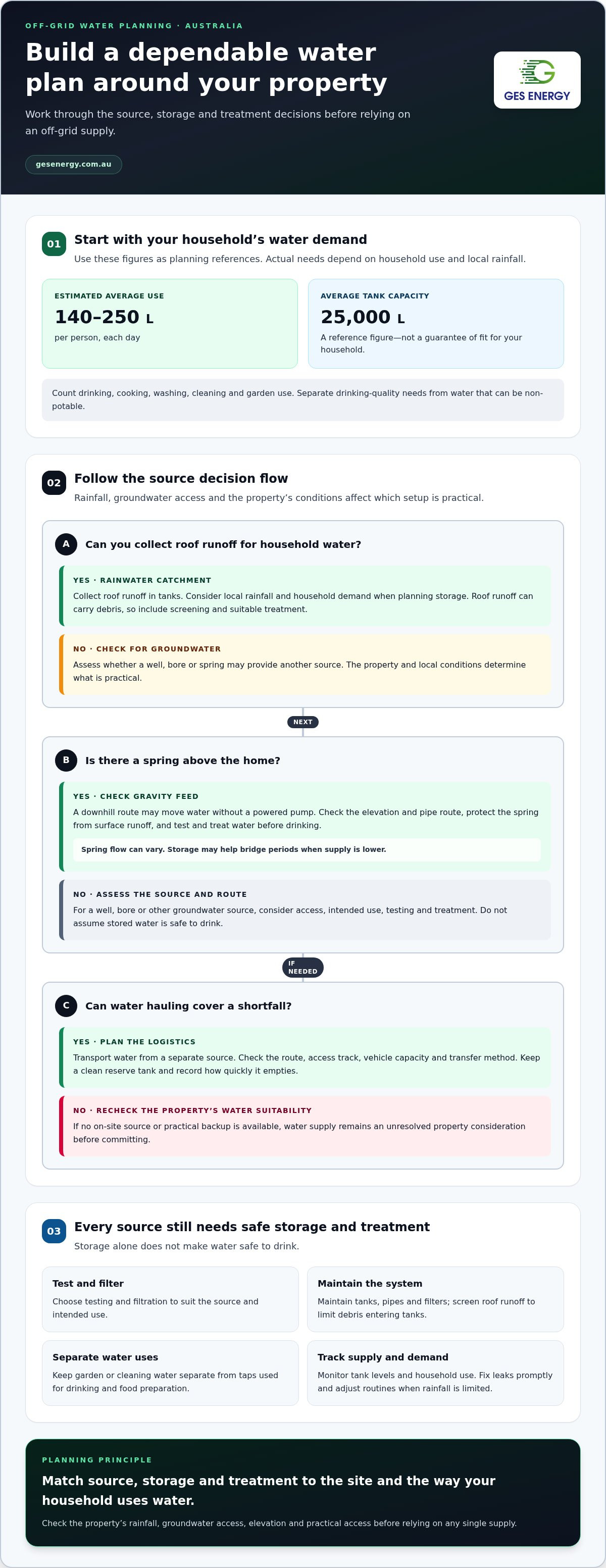
Water collection and treatment means capturing or sourcing water, storing it safely, then testing and filtering it for use. It matters because drinking, cooking and hygiene depend on a dependable supply. Rainwater systems collect roof runoff into tanks, while a well or bore may provide another source. The page estimates average use at 140-250 litres per person daily, and gives 25,000 litres as an average tank capacity. Actual needs depend on household use and local rainfall.
Storage alone doesn’t make water safe to drink. Plan for appropriate testing and filtration based on the source and intended use, and maintain tanks, pipes and filters. Roof runoff, for example, can carry debris into a tank, so screening and treatment are part of the system. Consider drinking water separately from water used for gardens or cleaning.
Off-grid electricity and battery management
An off-grid electrical system commonly generates electricity with solar panels and stores surplus energy in a battery for later use. Storage matters because panels produce power when sunlight is available, while household demand continues after dark and during cloudy weather. Size battery capacity and manage energy use around daily consumption, seasonal changes and essential loads.
Track when appliances draw power and prioritise critical needs such as refrigeration. Efficient appliances reduce demand, while a battery management system helps control charging and discharging. The system also needs suitable inverters and electrical protection. If you’re not comfortable working with electricity, have a qualified professional handle system design and electrical work.
Is off-grid living cheaper than connecting to electricity, water and sewerage in Australia? There’s no universally cheaper option. Compare connection costs with the equipment, installation and ongoing upkeep the property needs. Remote location, water access, household consumption and system design all affect the balance.
Everyday comfort depends on planning for services usually provided by mains connections. Refrigeration, lighting, cooking, heating, cooling and laundry all use energy or water. A fridge, for example, protects fresh food only if the power supply can meet its running load. Choose efficient appliances and identify essential loads before sizing generation and storage.
How do Australians manage internet, phone coverage and emergency communications off-grid? Mobile phones work where coverage is available; remote properties may need satellite internet or communications equipment. Check coverage at the actual site and plan an emergency contact method that doesn’t depend on a mobile signal.
How much maintenance and technical knowledge does off-grid living require? Expect regular attention to panels, batteries, pumps, tanks and filters, as well as monitoring system performance. Learn to read system alerts and manage energy use, but leave electrical work to a professional if you’re not confident. These practical demands are central challenges of living off the grid.
Water from wells and rainwater catchment
Off-grid water planning combines available sources with storage, treatment and household demand. In Australia, rainfall, groundwater access and local property conditions all influence which setup is practical.
Fresh water conservation
Fresh water conservation means protecting usable sources and reducing unnecessary household demand. Drinking, cooking, washing and cleaning all draw on the supply, so identify which uses need drinking-quality water and which can use a separate non-potable source. For example, keep garden water outlets clearly separate from taps used for drinking and food preparation.
Track tank levels and note when household use increases, such as during laundry or garden watering. Fix leaks promptly, run full washing-machine loads and avoid leaving taps running while washing dishes. These habits help you understand how much water your household uses and adjust routines when rainfall is limited.
Spring water and gravity-fed supply
A spring is a natural groundwater source, and a gravity-fed supply moves water downhill without a powered pump. Where the spring sits above the home, this can reduce reliance on electric pumping. The property’s elevation and pipe route determine whether gravity can deliver water to the required taps or storage points.
Assess the source and intended route before designing the system. Protect the spring from surface runoff, and arrange appropriate testing and treatment before using its water for drinking. Flow can vary with local conditions, so storage can help bridge periods when the spring supplies less water. In hilly parts of Victoria, the land’s elevation may make gravity feeding practical.
Hauling water
Hauling water means transporting it from a separate source to the property, commonly by vehicle and tank. It can provide a backup when stored rainwater runs low or a well cannot meet demand. The workload depends on the source’s distance, the access track, vehicle capacity and how quickly the household uses water.
Plan the route, loading and transfer method before relying on regular trips. A rough driveway, for example, can make a full water tank harder to transport than a clear, firm access road. Keep a clean reserve tank on site and record how quickly it empties. Hauling can address shortfalls, but repeated trips add time and logistical demands.
Rainwater catchment and wells
Rainwater catchment channels roof runoff through gutters into storage, while a well draws groundwater from below the property. Catchment depends on rainfall, roof area and tank capacity. Well access depends on local groundwater conditions and the equipment needed to bring water to the surface.
Compare each source with the property’s seasonal conditions and household requirements. Screens can keep roof debris out of tanks, while wells need appropriate pumping and water treatment. Some Australian councils regulate rainwater collection, so include local requirements in your property plan. A second source can provide an alternative if the primary supply falls short.
Matching water storage to household demand
Water storage connects collection with daily use and helps manage gaps between rainfall, pumping and consumption. Consider drinking, cooking, washing and garden needs separately, then assess how each source contributes through dry and wetter periods.
Choose tank locations that suit collection, delivery and inspection. Keep potable water separate from non-potable supplies, and label outlets so household members can identify each one. A marked garden tap, for example, reduces the chance of using untreated water for drinking. Reviewing tank levels and household use helps refine storage and conservation plans.
Choosing land and checking site risks
Land suited to an off-grid lifestyle must support the home, its energy and water systems, and daily access. A remote, appealing property may still create practical limits if its building options, terrain or access don’t match your plans.
Start by matching the location to your household’s routines. Consider how far you’ll travel for work, food, healthcare and supplies, and whether the access road remains usable in different conditions. A remote block can increase reliance on stored resources and make routine maintenance harder. Transporting building materials or a replacement generator, for example, may be difficult without reliable vehicle access.
Next, assess whether the site can accommodate the physical parts of your setup. Solar panels need a suitable position, while batteries, inverters, water tanks and wastewater arrangements need practical space. Map potential building areas against slopes, drainage paths, existing trees and vehicle access. A steep or constrained block may limit equipment placement and servicing.
- Water: identify possible sources and whether tanks can be positioned for collection and household supply.
- Energy: note shading, available panel locations and safe, accessible equipment areas.
- Access: consider how people, vehicles and maintenance equipment reach the house.
- Daily needs: estimate travel for groceries, medical care and essential services.
Site conditions can affect comfort and the effort needed to maintain systems. Low-lying areas may collect runoff, while exposed locations may require careful planning for equipment placement and shelter. Trees can shade a house but may also cast shadows on panels as the sun moves. Walk the property at different times and note where shadows fall before choosing locations for generation equipment.
Consider how your lifestyle will change after leaving grid life. Appliances that seem ordinary in a connected home may need more deliberate energy planning off-grid. A fridge, pump or workshop tool can affect system demand, while a generator may provide backup power but needs a suitable location and access for servicing. List essential uses before choosing land, then consider whether the site can support them.
Check local building restrictions and requirements before investing in a property. The rules and permitted uses can affect where you build and what infrastructure you can install. Review the property’s existing information and identify council requirements relevant to your planned home and systems. This early check can prevent a mismatch between the land you buy and the setup you intend to build.
Finally, consider how the property will work as a whole, not just whether it can accommodate a house. A suitable block gives you room to position equipment, maintain access and organise household routines. Compare the site’s practical constraints with your intended lifestyle before committing.
Planning solar power and other energy sources
Off-grid power planning matches energy generation and storage to actual household demand. Solar panels are common, but seasonal conditions and backup options also shape system design.
Planning energy sources
Choosing energy sources means selecting generation methods suited to the property and its expected loads. Each source performs differently across locations and conditions. Off-grid households commonly use solar or wind power; hydroelectricity and geothermal energy are also options, though they can be harder to establish and maintain. Compare the site’s resources, equipment needs and ongoing upkeep before choosing.
Plan for seasonal variation. Shorter winter days and changing weather can affect solar generation, while demand may rise for lighting or heating. Account for daily use, seasonal changes and extra capacity for unexpected demand. A generator can supply power when renewable generation and stored energy don’t meet essential loads, but it also brings fuel and maintenance needs.
Plan high-demand tasks carefully. The guidance advises against relying on electricity for cooking, space heating or water heating in an off-grid home. Consider other suitable energy sources for those tasks, and reserve stored electricity for essential appliances. This can reduce pressure on the system when solar generation is lower.
Measuring energy consumption
Measuring energy consumption means recording how much electricity appliances use and when they draw it. A system sized around assumptions can leave essential loads short. List each appliance, its operating pattern and whether it must run continuously. Include refrigeration, pumps, lighting, computers and workshop equipment in the household load assessment.
Track consumption alongside generation and battery levels. Comparing these records can show whether demand peaks in the evening, during winter or when several appliances run together. Running a washing machine while a pump and cooking appliances are operating, for example, may create a higher combined load. Staggering flexible tasks can help manage demand.
Computers also contribute to daily energy use. Choose an energy-efficient computer suited to the work, enable sleep settings and switch off external screens or peripherals when idle. A desktop used for long work sessions may draw power differently from a laptop, so record the actual equipment and usage instead of relying on broad estimates.
Keep the records practical. A simple energy log can track appliance use, generation and battery charge on ordinary and high-demand days. Review it as routines change, such as when you add a freezer or work from home. Tracking these patterns helps identify the biggest loads and where efficiency changes or additional capacity may matter most.
Treat the design as an integrated electrical system, not just a panel count. Panels, batteries, inverters, wiring and protection must work together. If you’re not comfortable working with electricity, leave electrical design and installation to a professional.
Legal considerations for off-grid living in Australia
Off-grid living is legal across Australia, but state and local council rules vary. Independence from mains services doesn’t remove planning, building or wastewater requirements. Before buying land or arranging an installation, identify the local rules that apply to the intended home and its systems.
Check requirements before committing to land
Start with the local council’s requirements for the property and proposed use. Off-grid homes may need approval for new buildings, septic systems or rainwater collection. These requirements can affect where you build, which toilet or wastewater system you install, and how you plan water storage. Check the relevant rules before purchase, rather than after equipment or construction plans are underway.
Describe the intended setup clearly. A proposal with a dwelling, rainwater tanks and onsite wastewater, for example, involves different elements from a vacant block used occasionally. Ask the council about requirements for each planned feature, then keep the responses with your property and design records. This helps identify approval steps early and account for them in project planning.
Plan water and wastewater together
Water collection and wastewater arrangements may be connected through local requirements. Rainwater collection may need approval, as may a septic system. Consider the water source, storage location and intended household use alongside the proposed toilet and wastewater arrangements. For guidance on septic tank installation, pumping and routine inspections, resources such as lilstinkyseptic.com outline what is involved in managing independent wastewater systems. This joined-up assessment can prevent a tank or building layout from conflicting with the wastewater plan.
Climate also affects how a rainwater system works in practice. Rainfall patterns influence collection and supply, while the site determines where tanks and plumbing can fit. Set out the proposed collection and storage approach when discussing the project with council. Assess the specific property and its intended use, rather than assuming rules from another council apply.
Include firefighting water in site planning
Some councils may require an off-grid property to reserve water for firefighting. Requirements depend on local council or fire service rules. Include this question when considering tank capacity and placement, because water reserved for firefighting may need to be accounted for separately from everyday household use.
A practical planning record can list proposed buildings, water collection, wastewater systems and any firefighting water arrangements. Use that list when discussing the project with council or the local fire service. This keeps key questions visible before you install tanks, build a dwelling or finalise site plans.
Treat legal requirements as part of site selection and system design. Confirm relevant local rules before committing to land, then align building, toilet, rainwater and fire-water plans with them. This approach preserves the benefits of off-grid independence while reducing the risk of later planning changes.
GES ENERGY: Commercial and Industrial Solar
GES ENERGY can help translate off-grid energy requirements into a practical solar and storage system. Its Off Grid Solar Systems support properties that need power generation independent of mains electricity, while Solar + Batteries for Homes can support residential energy needs. Businesses planning independent or on-site generation can consider Commercial and Industrial Solar.
Turn to GES ENERGY when assessing how generation, battery storage and household or business demand need to work together. For a property with electric vehicle charging needs, EV Charging Stations can also form part of the energy plan. Start with a clear picture of your site, intended use and essential loads.
Contact GES ENERGY to discuss your off-grid energy requirements.
Turn your off-grid plans into a practical brief
Before moving from research to design, write a short brief describing how you expect to live on the property. Note essential appliances, water use, working patterns, vehicle charging needs and site conditions that could affect your plans. This gives the project a clear starting point and keeps decisions focused on daily needs, not equipment alone.
The challenges of living off the grid are easier to assess when your priorities are visible together. Separate must-have services from optional upgrades, then consider how each part of the plan affects the others. GES ENERGY offers Off Grid Solar Systems, Commercial and Industrial Solar, and EV Charging Stations to support different energy requirements.
If you’re ready to discuss the energy side of your plans, contact GES ENERGY. A clear brief can help move your next decision forward with confidence.
Frequently Asked Questions
What are the main challenges of living off the grid in Australia?
The main challenges are coordinating essential services and keeping them dependable through changing conditions. The challenges of living off the grid can become more apparent when one system relies on another, such as a water pump needing electricity. Map these dependencies before settling in. A simple operating plan can show which household needs take priority during a prolonged interruption and who is responsible for monitoring each system.
How much water storage is needed for an off-grid household in Australia?
Work out storage needs based on household demand and the longest expected gap between replenishment. Separate water for drinking and cooking from water used for other purposes, then account for any reserve that can’t be used for routine consumption. Compare usable tank volume with the water expected from each source. This helps avoid treating a tank’s total capacity as water that is always available.
What are the rules for rainwater tanks, wells and wastewater systems in Australian states?
Rules don’t apply identically across every Australian state and property. Requirements depend on the location and the system being planned. Before finalising a design, prepare a site plan showing the proposed water source, equipment locations and intended use. Use it to establish which local requirements apply, and keep written records of guidance relevant to the property.
Do Australian councils allow off-grid homes, and what building approvals are required?
Yes, off-grid living is legal in Australia, but council requirements vary by location. Approvals for a home depend on the property and proposed development. Give the council a clear description of the intended dwelling and site layout, rather than asking only whether off-grid living is allowed. This helps identify requirements tied to the actual project before plans are settled.
What are the risks of bushfires, droughts, floods and extreme heat for off-grid homes in Australia?
These hazards can affect a property’s access, comfort and ability to keep essential systems operating. Assess where water may flow during heavy rain, how heat affects indoor conditions, and whether access could be disrupted. Consider how dry conditions affect water availability and how bushfire exposure affects the property. Use those observations to shape the site layout, household procedures and plans for maintaining essential services.
What practical steps should Australians take before moving off-grid?
Before moving, turn your plans into an operating brief covering household priorities, system responsibilities and maintenance records. Decide who will monitor equipment, record performance changes and arrange routine servicing. Consider a trial stay at the property before making a permanent move, so you can see how daily routines fit the site. Keep important system instructions and emergency contact details accessible to everyone in the household.


