

TL;DR: Maintain Australian solar batteries through quarterly DIY visual inspections and annual professional 8-point service checks to ensure safety compliance and 10-year-plus lifespans.
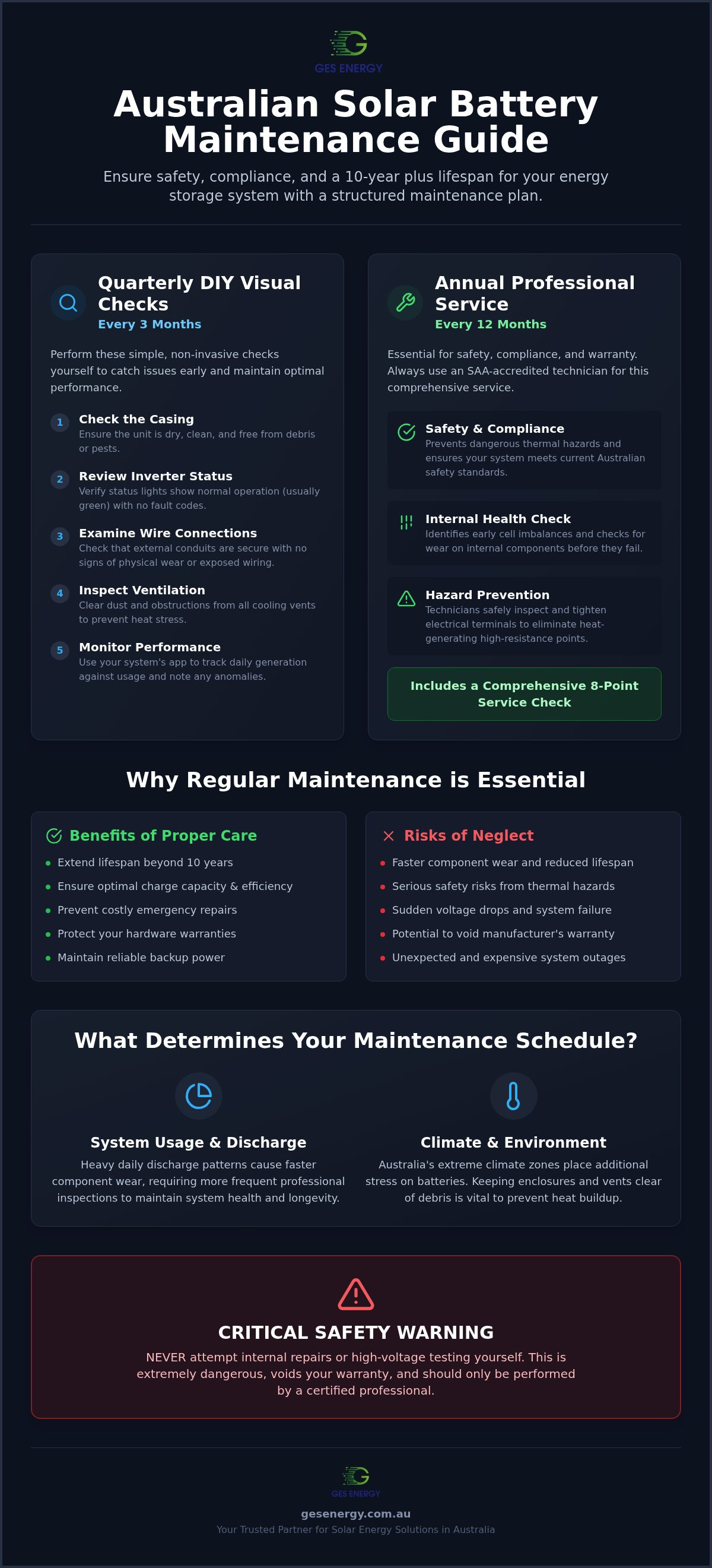
- Professional servicing is required every 12 months by SAA-accredited technicians to prevent thermal hazards.
- DIY maintenance is never worth the risk for internal repairs as it voids warranties.
- Perform visual casing and ventilation checks every 3 months to prevent heat-trapping debris buildup.
- Heavy daily discharge patterns require more frequent professional checkups due to faster component wear. Regular solar battery maintenance extends system lifespan beyond 10 years and prevents costly emergency repairs across Australia's extreme climate zones. Annual professional servicing combined with quarterly DIY checks ensures optimal charge capacity and complete safety compliance.
The best battery maintenance plan depends on your home's needs
Your household energy usage determines the right schedule for keeping a home energy storage system (ESS) working safely. The decision questions that run through this guide are simple: how hard do you discharge each day, how exposed is the hardware to heat, and when should a certified technician take over from DIY checks.
Typical situations map to clear next steps. Heavy daily solar discharge calls for frequent professional checkups, because systems under high daily stress wear critical internal components faster. A lightweight lithium setup needs simple daily monitoring through an app, much as you would watch any home appliance. Heavy off-grid hardware needs detailed hardware checks on a fixed annual cycle, closer to how a small power plant is run.
Are you upgrading equipment? You can secure Big Savings Ahead with 2025 Solar Battery Rebates to lower overall system expenses.
Selecting SAA-accredited technicians ensures total compliance with current Australian safety standards. Small systems suit automated monitoring apps, while large residential setups need annual physical checks by trusted specialists. Regular checks prolong total battery life (lifecycle / lifespan). Reach out for custom technical assistance when your usage pattern or hardware size changes.
Reasons solar batteries require regular maintenance
Regular maintenance prevents dangerous thermal hazards and protects your long-term energy storage system (ESS).
In routine field inspections, loose electrical terminals create high resistance points that generate excess heat. Qualified electrical workers must inspect these connections to ensure system stability. Clean connections protect your battery life and stop sudden voltage drops.
Checking the battery (8-point service check) identifies early cell imbalances before complete module failure occurs. Unchecked physical wear leads to severe safety risks. According to the Energy Safe Victoria 2026 Public Register, only certified professionals should carry out high-voltage system testing.
Fixing the system (repairs and maintenance) on time lowers total operational hazards. Dirty heat sinks trap heat inside sensitive electronics the way heavy insulation holds warmth on a hot day, so clearing them restores airflow. Preventative care helps maintain inverter efficiency while supporting your overall energy independence.
For larger sites, maintaining reliable Industrial & Commercial Solar Australia setups requires disciplined schedule monitoring by a trusted specialist. You gain reliable back-up power and avoid sudden operational downtime. Book your upcoming system check when you are ready for a scheduled inspection.
Tip: Keep your battery enclosure clear of debris to prevent heat retention and air flow blockage.
How to inspect your battery system in 5 steps
You should perform a DIY visual check every three months, while booking a certified technician once a year.
- Check the casing: Ensure the unit remains dry, free from debris, and clear of outdoor pests.
- Review the inverter status: Verify that the status lights on your solar box (solar inverter) show normal green operation without fault codes.
- Examine wire connections: Ensure all external conduits remain firmly secured without exposed wiring or physical wear.
- Inspect ventilation pathways: Clean away dust buildup to keep cooling vents open, preventing heat stress.
- Monitor system performance: Check your system app to track daily generation against actual usage.
Tracking daily usage (depth of discharge) helps you catch capacity reduction prior to total breakdown. Catching software errors early preserves total battery life over decades.
Regular checks support steady performance for any Off-Grid Solar System Australia installation across remote locations. Ignoring minor warnings can trigger unexpected system outages. Skipping basic maintenance on a storage setup leads to expensive fixes later, so treat early alerts as service triggers. Proper care supports continuous backup power during grid failures.
For complex fixes or internal testing, hire an SAA-accredited expert to manage fixing the system safely. Qualified specialists possess the technical tools needed to verify internal circuit health properly. Schedule professional service whenever you notice persistent app warnings or physical damage so accredited assistance can keep your battery storage (ESS) running safely year after year. Contact SAA-accredited installers to book your professional checking the battery (8-point service check) today.
Factors that determine solar battery servicing costs
Australian maintenance providers rarely publish transparent rates, leaving property owners guessing until custom quotes arrive. In field inspections, hidden travel fees and panel access issues often skew expected maintenance budgets. Neglecting routine care leads to thermal strain, which shortens your battery life and reduces system efficiency.
Schedule routine maintenance every two years to prevent unexpected component failures. Investing in professional care secures long-term energy independence and protects your hardware warranties.
| Service Component | Cost Factor | Scope of Work |
|---|---|---|
| Routine Care | Accessibility & Location | Solar box health check and safety testing |
| Deep Cleaning | Environment & Accumulation | Removing debris and checking the battery (8-point service check) |
| System Overhaul | System Size & Type | Fixing the system and wiring adjustments |
Complex installations require dedicated tools for safe diagnostics. For tailored system upkeep, explore options with Hybrid Solar Solutions Australia to protect your property. Servicing expenses shift based on hardware age, battery storage (ESS) chemical composition, and daily discharge habits.
How much you use your setup directly impacts long-term hardware stress. SAA-accredited technicians calculate charges based on labor hours and site safety needs.
Requesting a personalized quote ensures complete price clarity before work starts. Real feedback highlights why choosing SAA-accredited experts matters for long-term safety.
Among GES Energy's Google reviews, Syed (5★) wrote:
"Amazing service, got the job done very quickly with no problems. Highly recommend if you are looking to add high quality solar to your property for an amazing price. Unmatched with amazing service and quality."
Prompt and reliable work from certified installers helps your system operate safely without unexpected maintenance overhead.
Temperature conditions that directly affect battery life
Extreme Australian heat degrades internal chemical components rapidly, while freezing cold temporarily reduces total usable energy output. Thermal management systems keep internal cells within optimal operating limits. From field installations, improper airflow accelerates thermal stress faster than direct sun exposure.
Protecting your battery storage (ESS) from harsh elements preserves your investment and supports stronger financial returns. According to the Wikipedia Solar panel 2025 entry, solar hardware efficiency depends heavily on managing ambient temperature variations. Australian summers regularly push equipment past ideal operating ranges.
Maintaining cool running temperatures extends overall battery life. Heat builds internal resistance, and cold slows chemical reactions, so placement choices matter as much as service intervals.
Installing units in shaded outdoor locations or ventilated garages prevents rapid degradation. SAA-accredited installers ensure proper positioning for long-term reliability. Durable solutions built for tough climate conditions reduce the pace of thermal wear.
Prioritizing proper placement supports continuous energy independence and safety. Ask for a personalised quote when you want climate-protected installation options sized to your site.
Situations where diy maintenance is a bad choice
Handling high-voltage electrical work or internal repairs yourself carries severe safety risks and voids warranties.
Unaccredited tinkering instantly invalidates your system warranty and home insurance coverage. Working on complex electronics without proper qualifications endangers your safety. Professional intervention keeps your household secure while protecting your long-term investment.
From client work, homeowners often attempt fixing the system without realizing the technical risks involved. Accredited technicians possess the expertise to manage dangerous components safely.
Qualified installers understand precise thermal boundaries and electrical loads. Standard home inspection checklist:
- Visual inspection of all hardware encasing
- Thermal imaging of electrical connections
- Voltage testing across active modules
- Inverter firmware diagnostic scans
If your battery storage (ESS) develops internal faults or software errors, certified technicians must handle it. Attempting complex work on a solar box without accreditation breaches Australian standards. Trust SAA-accredited specialists to preserve your battery life. Arrange a safe inspection when faults or software errors appear.
Frequently asked questions
Why do solar batteries require maintenance?
Proper routine care protects your battery storage (ESS) from safety hazards while maintaining high system efficiency across its lifespan. Regular upkeep helps you catch loose wiring, prevents terminal corrosion, and supports steady energy independence.
How often should I check water in lead‑acid batteries?
Inspect fluid levels in traditional lead‑acid cells every month to ensure the electrolyte solution completely covers the internal plates. Distilled water must be added whenever levels drop, which preserves system health and extends overall battery life.
How can I monitor my battery’s performance?
Track your daily power generation and how much you use through a dedicated mobile application or your solar box display screen. Smart monitoring systems send immediate alerts if voltage drops or unusual operations occur within your off‑grid setup.
How often should I inspect my solar battery?
You should arrange a professional checking the battery (8-point service check) at least once every twelve months. Annual visits by SAA‑accredited trusted specialists ensure your system remains fully compliant with Australian safety standards.
How do I clean a solar battery safely?
Wipe the outer casing gently using a clean, dry microfiber cloth to clear away surface dust and debris accumulation. Never spray liquid cleaners or water directly onto electrical components, and contact qualified technicians if fixing the system becomes necessary.
Book Your Solar Battery Maintenance Australia Service
Regular battery storage (ESS) care protects your system performance in Australia and answers the same decision questions raised at the start: match service frequency to discharge load, control heat exposure, and hand high-voltage work to accredited technicians.
Protecting your equipment supports lasting energy independence and long-term system safety. A complete checking the battery (8-point service check) prevents unexpected downtime across your property.
Proper care preserves battery life so your setup runs at strong efficiency in 2026. Skilled technicians handle fixing the system to help lower total operational expenses. Technical expertise on the service team safeguards your clean energy setup.
Contact certified specialists at gesenergy.com.au to book a professional maintenance service and protect your power investment today.


