

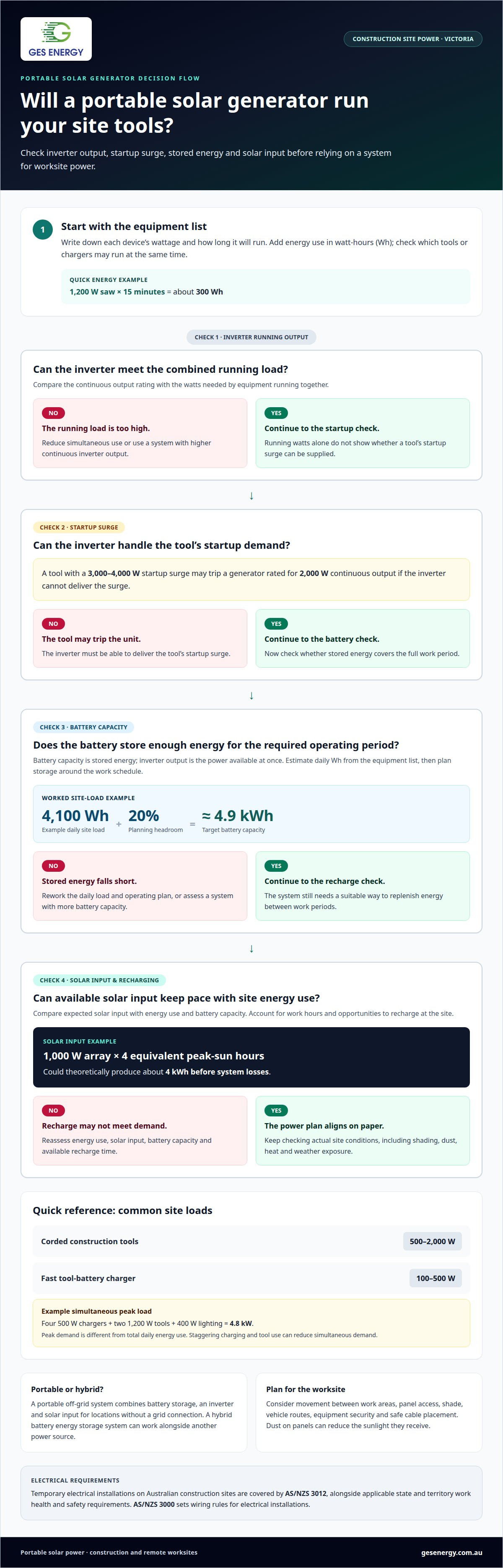
For construction teams in Melbourne and across Victoria, a generator’s wattage label is only half the answer. Portable solar power for construction sites can run tools, battery chargers, lighting and site-office equipment when the inverter meets their running load and startup surge. A 1,200 W saw used for 15 minutes consumes about 300 Wh, while a tool with a 3,000-4,000 W startup surge may trip a unit rated for 2,000 W continuous output.
It’s reasonable to want reliable power without relying entirely on fuel deliveries or a fixed grid connection. The key is matching inverter output and battery capacity to your equipment, operating hours and opportunities to recharge at the worksite.
This guide explains what construction equipment portable solar generators can power, how to size a setup for temporary or remote worksites, and where fuel and maintenance savings may come from. It also covers what to consider when planning a system that can move with work across Victoria.
Key Takeaways
- Match a generator’s continuous output and startup capacity to the tools you plan to run, not just their average energy use.
- Plan battery storage and solar input around work hours, recharge opportunities and how often the system needs to move.
- Prioritise lighter loads such as lighting, chargers and site-office equipment, then assess larger tools against their power demands.
- Compare potential fuel and maintenance savings with your current setup, while accounting for the equipment’s operating pattern.
- For larger or ongoing site requirements, GES ENERGY’s Commercial and Industrial Solar and Off Grid Solar Systems can support project-specific energy planning.
Can a Solar Generator Power Construction Equipment?
Yes. A solar generator can run construction equipment if its inverter meets the tools’ continuous demand and startup surge, and its battery stores enough energy for the work period. In Australia, eligibility for rebates, grants or tax incentives depends on the specific program and project, so assess the system and its intended use against the relevant criteria.
Estimating Daily Energy Use
List each device, its wattage and the time it will run, then add its energy use in watt-hours (Wh). A 1,200 W saw used for 15 minutes consumes about 300 Wh. Daily totals help set battery capacity: an example site load of about 4,100 Wh, with 20% planning headroom, gives a target of roughly 4.9 kWh.
Matching Loads to Battery Capacity
Battery capacity tells you how much energy a system stores; inverter output determines how much power it can supply at once. A constant 3,000 W load uses 3 kWh every hour before conversion losses. A 2,000 W continuous-output generator may still trip if a tool draws a 3,000-4,000 W startup surge and the inverter cannot deliver it.
Powering Tools and Charging Batteries
Portable systems can run electric tools and recharge tool batteries, provided their combined demand stays within inverter limits. Corded construction tools commonly use around 500-2,000 W, while a fast tool-battery charger may draw about 100-500 W. Check the charger’s input rating and allow for simultaneous use alongside other equipment.
For example, four 500 W chargers, two 1,200 W tools and 400 W of lighting create a combined load of 4.8 kW. That peak demand is different from total daily energy use. Staggering charging and tool use can reduce simultaneous demand, while a battery with sufficient capacity can store energy for periods when panels produce less.
A portable off-grid system combines battery storage, an inverter and solar input to supply power where a grid connection is unavailable. A hybrid battery energy storage system can also work alongside another power source, with the battery supporting loads when that source is limited. For either setup, size the inverter for peak demand and the battery for the required operating period.
Solar array output also shapes the daily plan. A 1,000 W array receiving four equivalent peak-sun hours could theoretically produce about 4 kWh before system losses. Compare that expected input with the site’s energy use and available battery capacity. The balance helps determine whether the system can recharge sufficiently between work periods.
Portable systems for temporary and remote worksites
Temporary projects can use portable solar systems to supply power without a grid connection or regular fuel top-ups. In Australia, weather, dust, heat, shading and theft can affect panel output, equipment performance and site security.
Portability and Site Security
Choose a setup that suits the site layout and how work moves between locations. Compact units can be shifted closer to a changing work area, while a larger containerised system may suit a fixed compound. Plan panel placement around access routes, shade and vehicle movements. At unattended sites, secure batteries and panels, and include their storage location in site procedures.
Dust on panels can reduce the sunlight they receive, so include regular visual checks in site routines. Heat and weather exposure also make placement important. Keep the power unit in a suitable location, protect cables from traffic and avoid placing panels where materials or machinery will cast shade. These steps help keep the power supply aligned with daily work.
Remote Power for Construction Work
At a remote worksite, an off-grid system combines panels, battery storage and an inverter to supply electricity without a grid connection. It can support temporary offices, lighting, charging and selected tools. A portable system can also move as the work front shifts, reducing the need to route power from one distant point.
Match the arrangement to the project’s footprint and energy use. A compact unit may suit a small crew and lighter loads, while a larger, containerised system can serve a broader site. Australia’s Container Roll-Out Solar System project describes a 40-foot container with 30 kW generation capacity, illustrating how mobile solar infrastructure can scale beyond a small portable power station.
Remote monitoring can help site teams review generation, battery state and energy use without visiting the equipment. This information can guide charging schedules and show when panels need attention. Solar tracking can adjust panel orientation to follow the sun, while fixed panels offer a simpler placement approach. Terrain, shading and moving equipment all affect which arrangement is suitable.
For projects across hillsides or clearings, plan panel locations around stable ground, safe access and the work sequence. Decide where the battery unit will sit, how cables will reach work areas, and how the system will be repositioned as tasks change. A basic site map can help coordinate charging, panel access and equipment movement.
For a planned off-grid supply at a temporary or remote site, explore portable off-grid solar solutions as part of the project’s power planning.
Construction-site equipment compatible with portable solar generators
Portable solar generators can supply selected construction equipment, from office electronics to lighting, fans and machinery. Temporary electrical installations on Australian construction sites are covered by AS/NZS 3012, alongside applicable state and territory work health and safety requirements. AS/NZS 3000 also sets wiring rules for electrical installations. A qualified electrician can apply the relevant requirements to the site setup.
Start with the task, not the generator label. A site office may need a laptop drawing about 30-100 W, a monitor using 20-60 W and a modem or mobile router at around 10-30 W. Portable LED work lights draw roughly 20-150 W each. These smaller loads can suit mobile power stations when the combined demand remains within the inverter’s continuous output.
Other applications include tool-battery charging, temporary offices, trailers, fans, heaters and selected machinery. A fast charger may draw about 100-500 W. Check each device’s input rating and operating schedule, then identify which loads must run together. This helps the crew prioritise essential equipment and avoid overloading the system.
A diesel generator remains useful for sustained heavy loads, but it needs fuel and has moving parts that require servicing. A portable solar power station needs no fuel during operation and produces no operating emissions. It can run quietly beside a small crew’s work area, while panels recharge the battery when conditions allow. Solar can complement a diesel generator when high-demand equipment needs a separate supply.
For a mobile crew, compare usable output with the equipment’s operating pattern. A compact station may handle office devices, lighting and chargers, while a larger system can supply more equipment or operate for longer. Modular, stackable systems can be arranged around site needs, with panels or batteries added to expand the setup.
Before setup, assess loads and site conditions. Position the station on stable ground, protect cables from vehicle routes and keep panels clear of work access. Secure equipment when unattended, inspect cables and connectors before use, and follow the manufacturer’s instructions. A qualified electrician should handle electrical connections and distribution that fall within their work.
During use, monitor the station’s display for output and battery state. Switch off non-essential loads if demand approaches the unit’s continuous rating. This helps crews match solar equipment to practical site tasks without treating it as a universal replacement for every diesel generator.
Potential fuel and maintenance cost savings
To assess savings, compare existing generator use with the loads solar could supply. Record diesel or unleaded fuel consumed, delivery frequency, generator run hours and maintenance tasks. Then identify suitable daytime loads, such as lighting, tool charging and site-office equipment. This baseline shows which fuel use a solar and battery system could displace, rather than assuming it will replace every generator.
Resupply logistics matter at temporary and remote Australian sites. Fuel deliveries require transport, storage and coordination with the project schedule. A solar system can supply selected loads without diesel or unleaded fuel, reducing the amount that must reach the site. If heavy machinery still needs a fuel generator, solar can serve lighter electrical loads while the generator covers demand beyond the system’s output.
Solar electricity has no fuel cost after the initial equipment purchase. To estimate potential operational savings, compare the fuel previously used for loads shifted to solar with the system’s solar contribution. Include battery charging patterns and periods of low sunlight. The result depends on how much electricity solar supplies and how often the existing generator would otherwise run.
Maintenance is another part of the comparison. Solar systems have fewer moving parts than diesel generators and are less prone to mechanical failures. However, battery storage still needs attention: portable power stations should receive maintenance checks at least every three months. Leaving one unused for over 12 months can damage its battery, so include storage and upkeep in project planning.
Operating conditions also affect site impacts. Portable solar systems can provide a quiet power option for lighting or charging near temporary offices. They can reduce fossil-fuel reliance and help lower a construction firm’s carbon footprint. These benefits apply to the electricity supplied by solar, not equipment that continues running on diesel.
For a practical review, compare the same project period across both setups. Use fuel records, generator service logs and a list of electrical loads solar could supply. Separate fixed and variable maintenance tasks, then account for battery checks and the time needed to manage fuel deliveries. This gives project managers a clearer view of potential savings without treating fuel reduction as a guaranteed cash result.
Portable solar power for construction and job sites
Australian construction sites can use compact solar generators for lighter loads or larger, modular battery systems for broader site demand. The right setup depends on the equipment, operating hours, available space for solar panels and how often the supply must move.
Start by mapping the project into work zones and listing the loads each needs. A site office may need laptop charging and communications, while a separate work area may need task lighting and tool charging. Portable solar power for construction sites is most useful when the system can sit near those loads without blocking vehicle routes or creating cable hazards.
Size the setup around the work pattern. Compact battery-and-inverter units suit smaller, localised demands; larger battery storage systems can serve more equipment or run longer between recharges. Modular, stackable configurations allow a site to add panels or batteries as project needs change. This can suit staged projects where crews and equipment shift between work areas.
Panel output and battery storage need to work together. A 200 W solar panel can provide around half a charge to a portable power station over a full day, depending on battery size. That example shows why panel rating alone does not establish the available supply. Consider how much energy the site uses, when it uses it, and when panels can recharge the battery.
Build an operating plan that matches renewable energy to predictable loads. For example, schedule battery charging and site-office use during solar production, then reserve stored energy for lighting or other essential tasks later. A portable unit can move as work progresses, but its new position still needs suitable panel exposure and safe cable routes. This keeps access clear and helps crews use available output efficiently.
Environmental benefits also depend on what the solar system replaces. Portable solar systems produce no emissions during operation and operate silently. If they supply lighting, charging or office equipment that would otherwise run from a fuel generator, they can reduce fossil-fuel use for those loads. They do not remove emissions from machinery or equipment that continues to use fuel.
Include equipment protection and end-of-project handling in the site plan. CHOICE recommends checking that a portable power station has overload and overcharge protection. Assign responsibility for checking the unit, keeping panels clear of obstructions and moving the system safely. At project close, plan how the battery will be stored and maintained before its next deployment.
GES ENERGY: Commercial and Industrial Solar
GES ENERGY can help businesses assess renewable power options through its Commercial and Industrial Solar and Off Grid Solar Systems offerings. These solutions are relevant when a project needs a planned power supply for temporary worksites, remote operations or ongoing commercial use. GES ENERGY delivers utility-scale projects up to 5 MW, supporting larger energy requirements as well as site-specific planning.
For a construction project, start by mapping equipment loads, work patterns, site conditions and the role of battery storage. This information helps shape an approach around power demand and site operations, rather than treating a portable generator as suitable for every task.
Contact GES ENERGY to discuss your construction project’s energy requirements.
Plan site power around the next project phase
As construction plans change, power needs can shift with crew size, equipment and work locations. Treat portable solar power for construction sites as part of project planning, not simply an equipment purchase. Map upcoming phases, identify where demand may move, and consider whether the site needs a temporary supply, an off-grid arrangement or a broader commercial energy solution.
GES ENERGY offers Commercial and Industrial Solar, Off Grid Solar Systems and EV Charging Stations. These solutions can support businesses planning site power alongside wider energy requirements. Start by outlining the equipment, site conditions and project stages that will shape your energy needs. This gives the discussion a practical starting point.
For help planning site power around your project, contact GES ENERGY about site power. A considered energy plan can help your team make informed decisions as work moves ahead.
Frequently Asked Questions
How long do they typically last?
A portable solar generator’s runtime is determined by its usable battery energy and the equipment load. Battery service life also varies by battery technology and how the unit is used and maintained. Older portable power station batteries may provide about 500 discharge-and-recharge cycles, while newer lithium-ion batteries claim 2,000-3,000 cycles. Regular checks and avoiding prolonged storage while unused help keep a unit ready for work.
How much do they cost?
Cost depends on the system’s battery capacity, panel input, inverter output and portability requirements. A compact station for occasional charging differs from a setup designed to supply several work areas. For a project-based system, the price depends on the project and is provided after a quote request; factors include equipment selection, transport, installation and commissioning. Compare the system scope, not just the battery unit.
The way of the future for construction projects?
Solar and battery systems can be a practical option for construction projects that need quieter power, reduced fuel use or electricity away from the grid. They won’t suit every load or replace every generator, particularly where equipment needs sustained high output. They work best when teams identify suitable electrical loads and plan charging around project schedules. That makes them one part of a changing site energy mix, rather than a universal replacement.
What do you use solar energy for on the construction site?
Use stored solar electricity for site-office devices, communications, lighting, tool-battery charging and selected equipment. For example, a crew might assign a portable station to office electronics while a separate supply supports work lights. This separates essential loads from heavier machinery and helps teams plan around available output. Solar can also support temporary power in remote areas without a grid connection, where coordinating fuel deliveries is difficult.
How much power do construction site tools and equipment require in watts and kWh?
Watts describe the power an item draws while operating; kilowatt-hours describe energy used over time. To estimate energy, multiply an item’s wattage by its operating hours, then divide by 1,000. Add each device’s estimate to find the planned total. Use the equipment’s input label, not an assumed average, and account for items that may run together. Startup demand can also exceed a tool’s ordinary running draw.
What size solar panels, battery and inverter are needed for a construction site?
Choose an inverter that supports the largest combined running load and any startup surge. Size the battery for the energy needed between charging periods, then select enough panel capacity to replenish it under the site’s sunlight and shading conditions. A useful design worksheet lists each load, operating hours, simultaneous use and charging window. Allow for future equipment only when the project plan identifies additional demand.
How much do portable solar generators and site power systems cost in Australia?
Australian site-system costs vary with required output, battery storage, solar panels, installation scope and transport to the worksite. A portable station is a different purchase from a larger system serving several site areas. For a project-based system, pricing is provided after a quote request, with the scope shaped by equipment, logistics, construction and commissioning. Set the budget against the power requirements and deployment plan.
How long do portable solar batteries take to charge and how long will they run common tools?
Charging time depends on the battery’s remaining capacity, panel input and available sunlight. Estimate runtime by dividing usable battery energy by the connected equipment’s draw, allowing for conversion losses. A tool used intermittently will run longer than the same tool operating continuously. Check the station’s display during use and schedule charging when panels can receive direct sunlight and the battery is not supplying peak loads.


