

Five checks can help you find the cause of an off-grid power problem: inspect the inverter and electrical components, track energy production and battery charge, assess sunlight exposure, look for faulty or degraded parts, and compare reliability with the main grid. Troubleshooting off-grid power systems works best when you follow power from generation through storage to the loads using it. The aim is to identify where performance changes, rather than guess at the cause.
It’s reasonable to expect an off-grid system to provide steady power, but its performance depends on connected components, available sunlight, battery condition and household or site demand. A drop in supply can have more than one cause, so a methodical check helps narrow down what needs attention.
This guide explains what to look for in each part of the system, how to track energy flows and spot poor sunlight or component degradation, and what reliability means when you compare an off-grid setup with the main grid. You’ll also see when an issue calls for a qualified technician rather than further inspection yourself.
Key Takeaways
- Check inverter and charge-controller displays for error codes, unusual sounds or signs of overheating.
- Track energy production, consumption and battery charge to help pinpoint where power flow changes.
- Look for shading from trees or buildings, and assess whether it is reducing sunlight reaching the panels.
- Inspect panels and visible connections for damage, but leave complex electrical diagnosis to a qualified technician.
- Compare how consistently your system supplies power with your needs and the reliability you expect from the main grid.
1. Checking inverters, charge controllers and electrical components
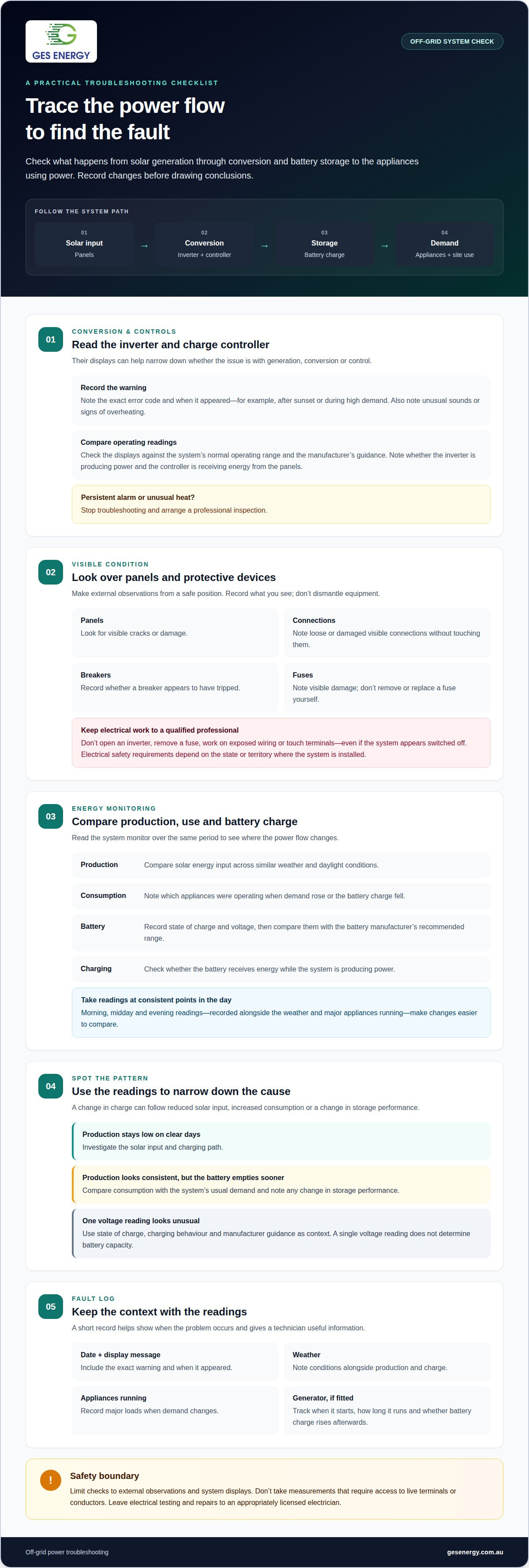
Start at the inverter display, where alarms and error codes can point to a fault. Record the exact code and when it appeared, such as after sunset or during a period of high demand. Listen for unusual sounds and look for signs of overheating around the inverter and charge controller. If either component seems unusually hot or an alarm persists, stop troubleshooting and arrange a professional inspection.
Next, compare the inverter and charge-controller readings with the system’s normal operating range and the manufacturer’s instructions. Check whether the inverter is producing power and whether the controller is receiving energy from the panels. A sudden change in either reading can help narrow the issue to generation, conversion or control. Avoid opening equipment or touching terminals to take measurements, as internal components can remain hazardous.
Australian electrical safety requirements are administered under state and territory rules, so the applicable requirements depend on where your system is installed. Limit your checks to external observations and have electrical repairs handled by an appropriately licensed electrician. Don’t open an inverter, remove a fuse or work on exposed wiring, even if the system appears to be switched off.
To investigate solar panels, wiring, fuses and circuit breakers, begin with a visual check from a safe position. Look for cracked panels, loose or damaged visible connections, tripped breakers and blown fuses, but don’t dismantle equipment. Note which circuit has stopped working and whether the inverter or controller displays a related fault. A technician can test electrical components and determine whether a panel, connection or protective device is causing the problem.
- Inverter: Record any error code and check whether the display shows normal operation.
- Charge controller: Compare its readings with the manufacturer’s operating guidance.
- Breakers and fuses: Note a tripped breaker or visible fuse damage; don’t remove or replace components yourself.
- Connections and panels: Look for visible cracks or loose connections without touching electrical parts.
Keep a short fault log with the date, display message, weather and appliances running. For example, a recurring inverter alarm during a period of high demand gives an electrician useful context. Don’t repeatedly reset a device without understanding its warning, as the underlying fault may remain.
Also distinguish equipment faults from electricity charges. Customers on standalone power systems pay per unit for electricity, as do consumers connected to the main grid. A charge on a bill does not by itself show that the inverter or charge controller has failed. Compare the bill’s recorded usage with your system monitoring and note any mismatch for investigation.
2. Monitoring energy production, consumption and battery charge
Use your system monitor to compare solar production, electricity use and battery state of charge over the same period. Check readings at consistent times, such as morning, midday and evening, and record them alongside the weather and major appliances running. This can show whether low battery charge follows reduced solar input, increased consumption or a change in storage performance.
To investigate low battery voltage, poor charging or unexpected power loss, compare the monitor’s readings with the battery manufacturer’s recommended voltage range. Then review solar input, site demand and any inverter warnings to locate where the power flow changes. Compare any multimeter reading with the panel specifications and the battery’s recommended range. Expected values vary with system design and operating conditions.
Keep a simple daily log. For example, note cloudy conditions, high appliance use and the battery’s charge before evening demand. If production remains low on clear days, investigate the solar input and charging path. If production looks consistent but the battery empties sooner, compare consumption with the system’s usual demand. A sudden drop can help reveal a developing problem before it causes repeated outages.
Battery voltage is only one indicator. State of charge, charging behaviour and the battery manufacturer’s guidance provide useful context. Check that voltage readings remain within the recommended range during charging and use. Don’t rely on a single reading to judge capacity, because demand and charging conditions affect the result. Leave electrical testing to a qualified technician if it requires access to live terminals or conductors.
- Production: Compare the solar system’s energy input across similar weather and daylight conditions.
- Consumption: Note which appliances were operating when demand rose or the battery charge fell.
- Battery: Record state of charge and voltage, then compare them with manufacturer guidance.
- Charging: Check whether the battery receives energy when the system is producing power.
For systems combining solar, battery storage and a diesel generator, track each source separately. Note when the generator starts, how long it runs and whether battery charge rises afterwards. If the generator runs but charge stays low, the issue may involve charging controls, connections or battery condition. This record helps a technician distinguish a generation problem from a storage or control issue.
Frequent power shortages can indicate that battery storage capacity does not match energy needs. Compare the battery’s usable output with the loads and the periods when solar generation is limited. Corroded battery terminals can be cleaned with a mixture of baking soda and water, but avoid handling exposed electrical connections. A technician can assess terminal condition, voltage behaviour and storage capacity together.
3. Addressing shading and poor sunlight exposure
Trees, buildings and roof features can block sunlight from reaching solar panels. New shading can reduce generation even if the system’s electrical components appear to work normally. Start by observing the panels at different times of day. Note whether a tree, chimney, nearby building or roof structure casts a shadow across them.
Compare your observations with system monitoring records. If production falls when a particular roof section becomes shaded, record the time and affected panel area. Repeat the observation in clear and overcast conditions where possible. This helps distinguish a recurring shade pattern from a temporary change in weather. A simple site sketch can show which obstruction and roof area need attention.
Vegetation may change over time, so check whether branches now extend across the panels’ sun exposure. Trimming vegetation or relocating panels can improve exposure, but first assess the likely path of the shade. For example, a nearby tree may cast a longer shadow when the sun is lower. Avoid climbing onto a roof or cutting branches from an unsafe position. Use a qualified professional for work involving roof access or hazardous tree trimming.
- Record the obstruction: Note whether a tree, building or roof feature casts shade.
- Track the timing: Compare when shadows appear with changes in solar production.
- Check the panel area: Record whether shade affects one panel or several.
- Plan a response: Consider safe vegetation trimming or panel relocation based on the observed pattern.
Keep the panel surface clean as well. Dust and grime can reduce the light reaching solar cells, making shading harder to distinguish from surface dirt. For routine cleaning, use a soft brush or sponge with a mild detergent solution. Don’t use abrasive tools that could damage the panel surface. If dirt is difficult to reach safely, arrange professional cleaning rather than accessing a roof yourself.
After addressing an obstruction or cleaning the panels, compare production records under similar weather conditions. A change in output can help show whether the adjustment improved sunlight exposure. If production remains unexpectedly low despite clean panels and no obvious shading, the cause may lie elsewhere in the system. Record the conditions and readings for the next stage of diagnosis rather than assuming every drop comes from poor sunlight.
4. Identifying faulty or degraded components
Look for changes that persist after checking system readings and sunlight exposure. Inspect panels from a safe position for cracks, chips or discolouration. Check visible cables and connections for looseness or damage, but don’t touch exposed conductors. A cracked panel or connection that appears out of place needs professional assessment, not a hands-on repair.
To assess an off-grid battery bank, record the monitoring system’s voltage and compare it with the battery manufacturer’s recommended range. A qualified technician can test individual batteries and determine whether one is failing or the bank is losing performance. A single voltage reading cannot establish battery health by itself, because charge state and operating conditions affect the result.
Contact an appropriately qualified electrician or solar technician if you find cracked panels, damaged wiring, repeated system faults or battery readings outside the manufacturer’s guidance. Also arrange an inspection when system output drops without an obvious cause. Electrical testing and repairs can expose you to hazardous energy, so leave internal checks and component replacement to a qualified professional.
Degradation may appear as a gradual change rather than a sudden failure. Compare current production and battery behaviour with your own records from similar weather and demand. A growing gap between expected and observed performance can help a technician assess whether a panel, battery or connection needs attention. Keep dates, monitoring readings and fault messages together to support diagnosis.
- Panels: Note visible cracks, chips or other physical damage.
- Connections: Look for visible looseness or damage without handling cables.
- Batteries: Record voltage and compare it with manufacturer guidance.
- System behaviour: Track recurring faults or a sustained change in performance.
Prevention starts with regular visual checks and useful records. Keep batteries in a cool, well-ventilated area to help prevent overheating. Note changes in panel condition, battery readings and system alarms, then share those details during an inspection. Proper maintenance can help an off-grid solar system last for decades, although individual components still need attention as their condition changes.
For added resilience, a backup generator or secondary energy storage system can provide power during extended periods of inclement weather or equipment failure. It won’t repair a degraded component, but it can help maintain supply while the fault is assessed. Keep the system’s maintenance history and replacement records together so future technicians can see what has changed and when.
During a routine check, inspect panels for cracks or loose connections, noting only what you can see without disturbing the equipment. If you spot a concern, add it to the system’s existing records and describe whether it is new or recurring. This gives a technician a clearer account of the issue. Avoid trying to tighten or repair a connection yourself; arrange professional attention if you see damage or a loose connection. Clear observations help focus the assessment on the component that may need attention.
5. How do you safely troubleshoot an off-grid solar system step by step?
Use a staged check to identify whether the problem involves demand, sunlight, storage or equipment. Limit your inspection to system displays and visible conditions. Don’t open enclosures, touch wiring, remove fuses or test live electrical parts. An off-grid system can still have live components when its inverter is switched off.
- Make the area safe. Keep people clear of damaged equipment, exposed conductors or water near electrical components. If you notice smoke, a burning smell, unusual heat or sparking, stop and arrange professional assistance.
- Record what changed. Note when the fault began, what the system display shows and which appliances were operating. Include weather conditions, such as heavy cloud, and whether the issue affects the whole property or one circuit.
- Check the system display. Read the inverter and charge-controller messages without opening either unit. Write down the exact code and compare it with the manufacturer’s instructions. Don’t repeatedly reset a device if its warning returns.
- Review energy records. Compare production, consumption and battery charge over the same period. For example, low charge after cloudy weather suggests a different pattern from a sudden drop while production remains steady.
- Look at visible conditions. From a safe position, check for panel damage, new shading or visible cable damage. Don’t climb onto the roof, handle connections or try to repair a component yourself.
- Reduce avoidable demand. If supply is limited, switch off non-essential appliances using their normal controls. Record whether the system stabilises, and avoid repeatedly restarting high-demand equipment.
- Arrange qualified diagnosis. Give a licensed electrician or solar technician your fault notes, display codes and monitoring records. They can test components and connections that aren’t safe for an untrained person to access.
Keep the manufacturer’s operating instructions and system records together so a technician can compare current behaviour with the system’s specifications. If a battery voltage appears outside its recommended range, record the reading rather than testing terminals yourself. Leave electrical diagnosis and repairs to a qualified professional.
This step-by-step approach to troubleshooting off-grid power systems helps separate visible clues from electrical faults without exposing you to unnecessary risk. For persistent faults or unexplained performance changes, arrange professional off-grid system support.
Investigate unusual sounds, overheating or system error codes promptly, and note when they occur. Inspect panels for cracks or loose connections only from a safe position, and don’t handle connections. Shading from trees, buildings or roof features can block sunlight from off-grid solar panels. Trimming vegetation or relocating panels may improve exposure. Keep changes within safe, accessible areas and leave work involving electrical components to a qualified professional.
For an off-grid solar system in Australia, you can clean solar panels with a soft brush or sponge and a mild detergent solution if it is safe to do so. You can observe whether the inverter, charge controller and other electrical components appear to be operating normally, but leave electrical testing to a qualified professional rather than handling live parts. Qualified solar technicians can inspect an off-grid system and diagnose complex problems that may go unnoticed by an untrained owner. Share your records and observations so they can investigate the fault with useful context.
GES ENERGY: Commercial and Industrial Solar
GES ENERGY designs and installs Off Grid Solar Systems and Commercial and Industrial Solar with a strong focus on Victoria. For sites in Melbourne, Geelong, Ballarat or Bendigo, recurring faults or changing energy demand can signal that the system needs a closer assessment of its design and operating requirements.
For businesses and properties across Victoria, system planning takes site conditions, energy use and storage needs into account. GES ENERGY also provides solar and battery systems for homes where household storage is part of the energy solution.
Contact GES ENERGY to discuss your off-grid or commercial solar requirements and take the next practical step.
Turn your findings into a more reliable plan
Use what you’ve learnt from troubleshooting off-grid power systems to make future energy decisions with clearer priorities. Consider which activities need dependable power, how your energy needs may change, and what interruptions would mean for your household or operations. These priorities can guide how you manage demand and plan for future system changes.
Keep a simple record of operating patterns over time. Changes in occupancy, equipment or work schedules can affect how much energy a site needs and when it needs it. Reviewing those shifts can help you distinguish a temporary issue from a longer-term change in requirements. It also gives you a practical basis for discussing system performance with a qualified professional.
For any electrical fault, put safety ahead of experimentation. Observations and records are useful, but opening equipment or attempting repairs can create additional hazards. A considered approach helps you make informed decisions, maintain a clearer picture of your energy needs and plan the next step with confidence.
Frequently Asked Questions
What are the most common causes of off-grid solar power system failures?
Common causes include reduced sunlight, battery problems, damaged connections, equipment faults and electricity demand exceeding available supply. Timing can offer a useful clue: if a fault follows a spell of cloudy weather, generation may be part of the issue; if it appears when a particular appliance starts, demand or a circuit may be involved. Compare the pattern with system records to help narrow down the cause.
What do inverter and charge-controller error codes mean, and how do you fix them?
Error codes identify a condition detected by the inverter or charge controller, but their meanings vary by model. Find the exact code in the manual for your equipment and follow its stated guidance. For example, a code that returns after a reset needs diagnosis, not repeated clearing. Record the code and when it appears, and leave internal checks and electrical repairs to a qualified technician.
What multimeter readings should you expect from off-grid solar panels and batteries?
Compare multimeter readings with the panel specifications and the battery manufacturer’s recommended voltage range. Expected values vary with system design and operating conditions.


