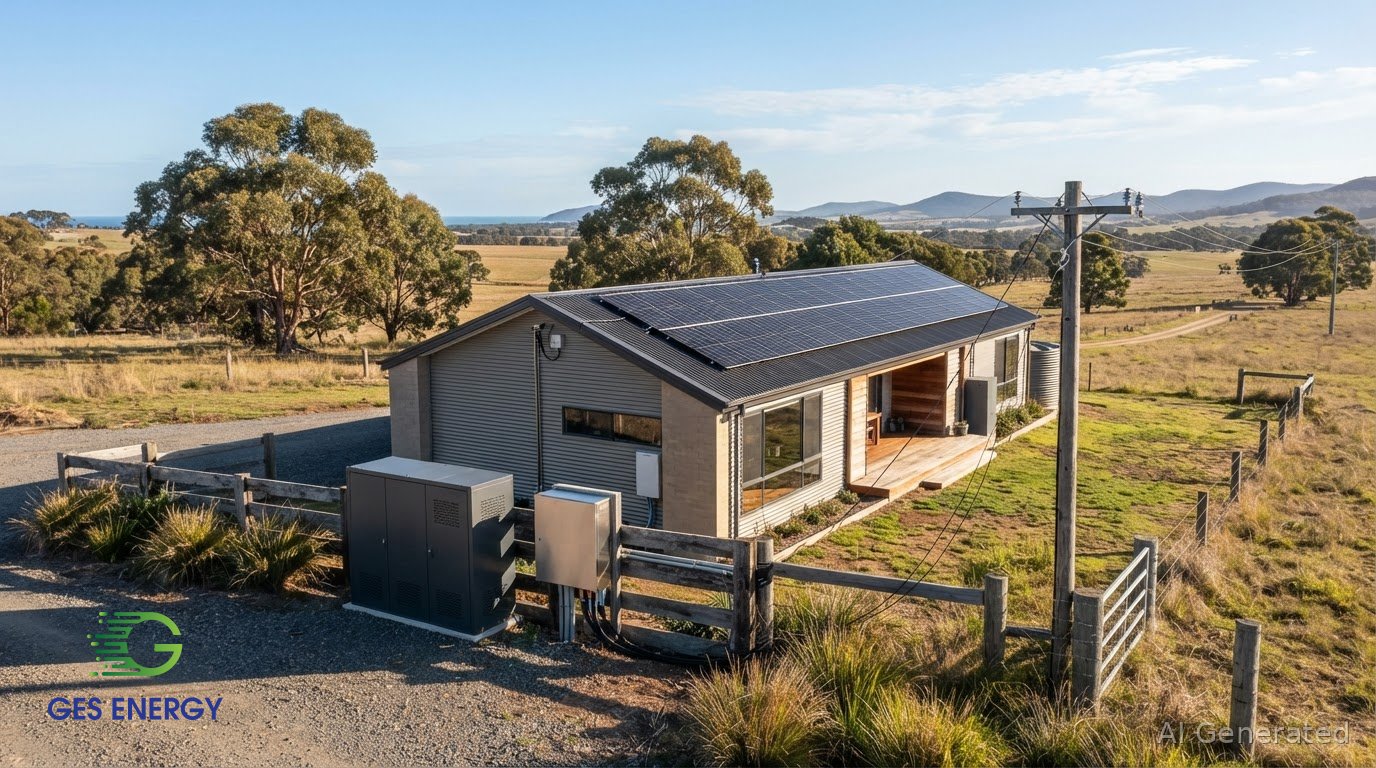
A farm grant may support connectivity equipment rather than the solar system itself. The most recent round of Australia’s On Farm Connectivity Program offered rebates of up to $20,000 GST exclusive, covering up to 50% of the price of eligible on-farm connectivity equipment. For a remote property, powering it with solar is a separate energy decision, shaped by the farm’s loads, operating hours and access to the grid.
Reliable power matters when pumps, sheds and essential equipment need to run beyond daylight hours. Solar panels can supply daytime demand, while battery storage holds surplus generation for early-morning and evening pumping. The right setup depends on how and when your farm uses electricity, not simply the size of the property.
This guide explains how connectivity rebates differ from solar support, how grid-connected and off-grid systems compare, and what affects system design and reliability. You’ll also learn how solar can reduce reliance on diesel, what to consider when choosing an installer, and how a tailored system can meet the practical demands of a remote farm.
Key Takeaways
- Separate connectivity support from energy-system planning so you can identify which farm costs a grant may help address.
- Compare grid-connected and off-grid options against your site’s access to power, operating patterns and critical loads.
- Plan battery backup around essential equipment and cloudy-weather operation to support more dependable power.
- Assess pump schedules, shed use and seasonal demand to shape system design and reduce reliance on diesel.
- GES ENERGY’s Commercial and Industrial Solar and Off Grid Solar Systems can suit farms planning a tailored rural energy system.
Are there rebates or grants for off-grid solar or connectivity equipment on farms?
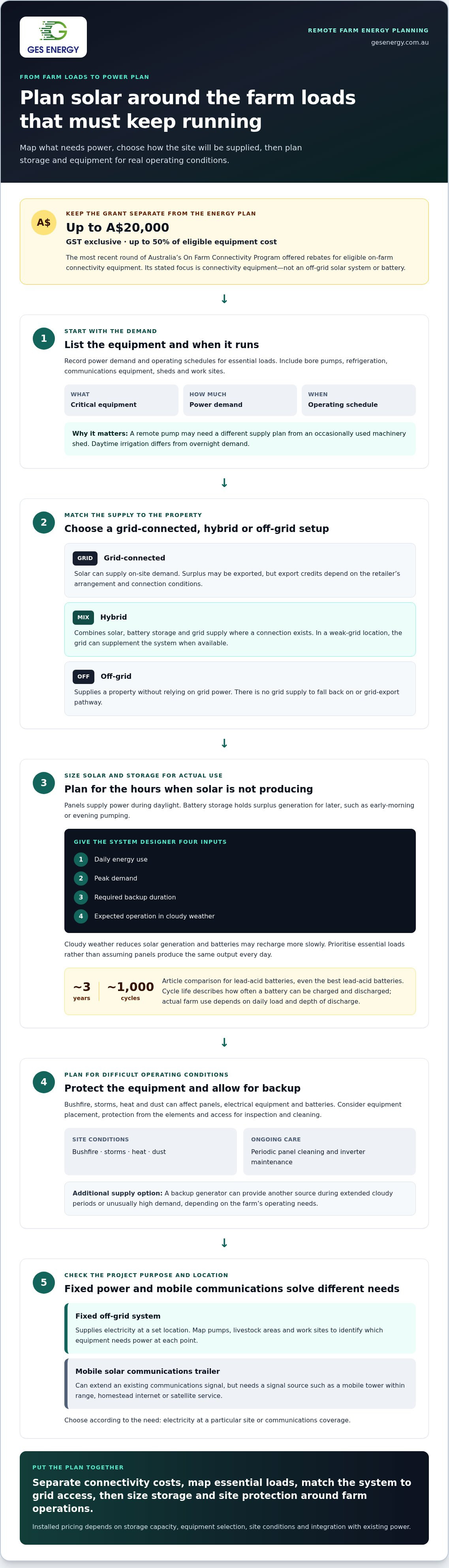
Support for connectivity equipment is distinct from funding for farm solar and batteries. The most recent round of Australia’s On Farm Connectivity Program offered rebates of up to A$20,000 GST exclusive, covering up to 50% of the price of eligible on-farm connectivity equipment. That rebate does not mean an off-grid solar system qualifies; the program’s stated focus is connectivity equipment.
Solar panels supply power during daylight, while battery storage holds surplus generation for later. A farm, for example, can store energy from daytime pumping for early-morning or evening operations. Cloudy weather reduces solar generation, so batteries may recharge more slowly. Planning for lower-generation periods helps protect essential loads instead of assuming panels will produce the same output every day.
Battery capacity and autonomy depend on which equipment needs backup and how long it must run without solar generation. List critical loads, such as a bore pump, refrigeration or communications equipment, and record their power demand and operating schedule. This gives the system designer a practical basis for sizing storage and prioritising essential operations when the battery is partly depleted.
A hybrid system can combine solar panels, battery storage and grid supply where a connection exists. In weak-grid locations, the grid can supplement solar and storage when available. An off-grid site has no grid supply to fall back on. A backup generator can provide another source during extended cloudy periods or unusually high demand, depending on the farm’s operating needs.
Battery lifespan varies by chemistry, operating conditions and use. The stated comparison for lead-acid batteries is about 3 years and about 1,000 cycles, even for the best lead-acid batteries. Cycle life describes how often a battery can be charged and discharged, while actual farm use depends on daily load and how deeply the battery is discharged. Compare those factors when assessing replacement planning.
Bushfire, storms, heat and dust can affect panels, electrical equipment and batteries through exposure, debris, high temperatures or accumulated dirt. When planning the site, consider equipment placement, protection from the elements, and access for panel inspection and cleaning. Farm solar panels need periodic cleaning, and inverters require maintenance. Factor in inspection access when choosing installation locations.
To size solar battery storage for a remote farm in Australia, start with daily energy use, peak demand, required backup duration and expected operation in cloudy weather. Installed system pricing depends on storage capacity, equipment selection, site conditions and integration with existing power. A project price is provided after a quote request.
For grants, separate connectivity needs from energy needs: identify the equipment required for each, then compare connectivity items with the program’s eligible equipment criteria. The On Farm Connectivity Program’s most recent round covered eligible connectivity equipment, while battery storage supports power supply. Treating these as separate planning steps clarifies which part of a remote farm project a rebate may address.
Choosing between grid-connected and off-grid systems
Start by checking the property’s connection, then compare reliability, operating needs and project purpose. The right option depends on the farm’s access to electricity and the loads it must supply.
Off-grid and hybrid farm systems
An off-grid system supplies a property without relying on grid power. Where grid supply is available, a hybrid system combines solar with the grid, giving the farm another source when generation changes. Compare each option against essential equipment and the impact of interruptions. A remote pump, for example, may need a different supply plan from an occasionally used machinery shed.
Mobile trailers and fixed off-grid systems
A mobile solar communications trailer and a fixed off-grid system serve different needs. A trailer can extend an existing communications signal, but requires a source such as a mobile tower within range, homestead internet or satellite service. A fixed system supplies electricity at a set location. Choose according to whether your priority is communications coverage or power at a particular site.
Solar suitability for remote farms
Solar panels can suit farms where extending the grid is impractical or buildings are spread across the property. Map pumps, livestock areas and work sites, then identify the equipment that needs power at each location. A farm with daytime irrigation has different needs from one requiring power overnight. Planning for powering a remote farm with solar starts with specific loads and their schedules.
For a grid-connected property, panels can supply on-site demand, with surplus electricity potentially exported. Export credits depend on the retailer’s arrangement, so compare their value with the benefit of using that electricity on-farm. Shifting flexible tasks, such as pumping, into sunny hours can increase direct use of solar generation.
Net metering generally refers to measuring electricity flowing both to and from the grid. In Australia, export arrangements depend on the applicable retailer and connection conditions. Treat export credits as one part of the project assessment, rather than assuming they will offset grid purchases. An off-grid farm has no grid-export pathway.
For water pumping, a Food and Agriculture Organization study found off-grid solar pumping one mile from a power source would cost 60% less than conventional electricity, including installation and annual operating costs. This example shows why powering a remote farm with solar may be worth assessing against the cost of extending supply.
To compare options, map buildings and existing grid access, record equipment schedules, then decide whether you need electricity, communications coverage or both. Assess grid supply, standalone generation and hybrid operation against those needs.
For farm projects, solar project planning can help connect site conditions and operating patterns to a system approach.
Energy independence and reliability for remote farms
Farm energy independence starts with matching generation and storage to essential loads. Solar can run irrigation, water and bore pumps, shed lighting and machinery. Where possible, align irrigation with daylight generation.
Assessing and comparing farm energy needs
Compare each load by its power demand, operating hours and role in daily operations. A bore pump used through the day differs from shed lighting needed after sunset. Record when pumps operate, which buildings need lighting, and how remote equipment is used. This map helps identify essential loads, flexible tasks and when grid supply or diesel backup may still be needed.
Farm energy assessments and system sizing
A detailed energy assessment helps determine system size and account for future expansion. Include seasonal demand, variable loads and planned changes, such as adding irrigation capacity or using another shed. Solar system capacity depends on energy use, farm size, equipment and operating hours. Review these factors together rather than sizing panels around one busy day or a single piece of equipment.
Powering irrigation, sheds and farm equipment
Solar can power irrigation systems, water pumps and bore pumps, particularly when pumping can run during daylight generation. Battery storage can shift surplus daytime energy to early-morning or evening use. For sheds, identify lighting, refrigeration and machinery needs separately. This helps prioritise important equipment and plan how the system will serve each site as farm operations change.
Reliability depends on designing for changing demand, not just average use. Farm solar systems can account for seasonal energy needs and variable loads. Irrigation demand, for example, may rise during a dry period, while machinery follows a different schedule. A planned maintenance routine also matters: panels need periodic cleaning, and inverters require maintenance to support ongoing operation.
Diesel remains a substantial part of Australia’s agricultural energy mix. Diesel accounted for 84% of total energy use across Australia’s agriculture, fisheries and forestry sectors in 2020-21. Solar-powered pumping can remove the need for diesel generators and long cable runs for remote farm fields. Compare fuel use, pump schedules and power requirements to identify where solar can reduce diesel dependence.
Renewable energy leases may provide another income stream, separate from a farm’s own power system. Farmers and landholders are expected to receive between A$7.7 billion and A$9.7 billion in direct payments from Australian renewable energy projects between 2024 and 2050. Lease income depends on hosting a project, rather than installing solar for farm operations.
Choosing a solar system and installer
For a farm solar project, compare the design, installation scope and ongoing care, not just the panels. A clear quote should connect equipment choices to your farm’s energy supply and operating needs.
Comparing quotes and estimating payback
Compare quotes by checking the solar array, inverter, battery capacity, installation work and included maintenance. To assess payback, weigh the quoted project cost against expected electricity savings and avoided diesel use. Include regular maintenance and battery replacement in your assessment. A system supporting daytime irrigation may reduce purchased energy differently from one designed mainly for overnight loads.
Electrical standards and permits
Off-grid farm installations still need to meet applicable electrical standards, while permits depend on the site and project scope. Grid connection can add separate network requirements. Ask for the electrical design, installation scope and approvals to be documented in the project plan. The state or territory, equipment location and connection type all affect which requirements apply.
Panels, inverters and batteries for harsh conditions
Choose panels, inverters and batteries to suit conditions at your property, including heat, dust, storms and bushfire exposure. Equipment placement matters: a dusty pump site may need easier access for panel cleaning than a sheltered shed roof. Match inverter capacity to the farm’s operating loads, and select battery capacity according to essential equipment and the intended backup period.
Installation and system maintenance
Plan installation around site access, equipment locations and the farm’s operating schedule. Ground-mounted and roof-based solar can be combined to use available space while protecting cropland. After installation, maintain a plan for panel cleaning and inverter servicing. Keep system documents and equipment details for future inspections and warranty claims.
For a remote farm, ask whether the installer is Solar Accreditation Australia (SAA)-accredited and experienced with agricultural loads. A useful project handover explains system operation, maintenance tasks and how solar supplies pumps, sheds or other priority equipment. These details help you assess the design as well as the installation.
Use a written comparison to keep proposals consistent. Record each quote’s system capacity, storage, included work, maintenance arrangements and expected-savings assumptions. Compare these details with your farm’s energy use and diesel consumption. This makes differences between project designs clearer without treating the lowest initial quote as the only measure of value.
A farm solar system design can connect site conditions, equipment needs and installation planning into one project scope.
Reducing diesel use and fuel costs
Solar can reduce diesel use when farm equipment draws power during daylight. Identify pumps, sheds and remote loads currently supplied by diesel, then compare their operating times with solar generation. Shifting a flexible water-pumping task into daylight, for example, can use solar electricity directly and reduce generator use.
Build a baseline before changing the supply. Record generator run hours, fuel deliveries and the equipment operating during each run. Separate essential loads, such as stock-water pumps, from flexible tasks, such as filling storage tanks. These records help show where solar generation or battery storage could displace fuel, and where diesel remains useful as backup.
Battery storage can carry surplus solar energy into periods without sunlight. Its contribution depends on the loads it serves, how long they run and the available stored capacity. A farm might reserve stored electricity for communications and stock water while scheduling irrigation during sunny periods. This priority-based approach can reduce generator use without expecting one battery to cover every operation.
Compare diesel generation with the cost of supplying the same load through solar. Include fuel, delivery, generator servicing, installation and maintenance in the assessment. Savings depend on how much diesel use the system replaces, not simply the amount of solar energy produced. Base the comparison on farm records rather than a general estimate.
Use this practical sequence to find diesel-reduction opportunities:
- List each diesel-powered load and its operating schedule.
- Mark tasks that can shift into daylight, such as pumping into a storage tank.
- Identify critical loads that need battery support outside solar hours.
- Retain generator supply for loads or conditions the solar system doesn’t cover.
Review results across seasonal farming operations. Irrigation demand can change with rainfall and crop requirements, while sheds and processing equipment may follow different schedules. Compare periods of high diesel use with available solar generation. For farmers, powering a remote farm with solar can mean prioritising daytime electricity, battery-backed loads or both, based on that comparison.
Keep tracking fuel use after installation. Compare generator run hours and fuel records with the baseline, then check whether operating schedules match the system design. If a pump still runs on diesel during strong solar production, its timing or connection may need review. Regular panel cleaning and inverter maintenance also help keep solar supply aligned with farm demand.
Assessing the benefits of powering a remote farm with solar starts with recorded loads, fuel use and operating schedules. Plan your farm’s solar project around those details to assess how solar and battery storage could reduce diesel reliance.
GES ENERGY: Commercial and Industrial Solar
GES ENERGY designs Commercial and Industrial Solar and Off Grid Solar Systems for farms that need planned energy supply beyond standard grid access. Turn to these services when assessing solar for irrigation, sheds, pumps or other farm operations, with system design matched to site conditions and energy demand.
For properties with grid access, Commercial and Industrial Solar can support on-site electricity use. For remote locations, Off Grid Solar Systems can be designed around the farm’s loads and operating patterns. GES ENERGY also offers EV Charging Stations and Solar + Batteries for Homes when those needs fit the property.
Share your farm’s energy priorities with GES ENERGY, or visit gesenergy.com.au to discuss the next step.
Plan the next step for your farm’s energy system
A practical next step in powering a remote farm with solar is to turn your operational priorities into a clear project brief. Note which equipment must keep running, where it operates, when demand peaks and how the farm may change. This gives solar planning a useful starting point and keeps system discussions focused on real farm needs.
GES ENERGY offers Commercial and Industrial Solar, Off Grid Solar Systems and EV Charging Stations. These services can support different parts of a rural property’s energy planning, from farm operations to vehicle charging. The right starting point depends on your site, current supply and planned energy use.
Bring your priorities together, then discuss the system approach that fits your property. Contact GES ENERGY about farm solar to take the next step towards a considered energy plan for your rural property.
Frequently Asked Questions
As a landholder, what’s in it for me?
Hosting a renewable energy project can provide landholders with a separate income stream through land-use agreements. This may suit properties where a project can use part of the land while farming continues elsewhere. Consider how the proposed footprint, access arrangements and operating requirements could affect existing agricultural activities. Lease income depends on the project agreement and land involved, so assess it alongside practical impacts on farm operations.
What are the advantages for agriculture?
Solar can supply electricity for farm activities, and panels may also benefit some land uses. For example, panel shade can reduce heat stress for livestock, while agrivoltaic shading can help reduce soil moisture loss and protect crops from extreme heat. These advantages depend on array design and how the land is used. Solar panels also produce no greenhouse gas emissions during operation.
How much solar power does a remote farm in Australia need?
A remote farm needs enough generation and storage for its equipment, operating patterns and backup priorities. A small bore pump and a large irrigation operation have different energy demands, even on similarly sized properties. Start by identifying each site and its loads, then account for seasonal changes and planned expansion. The system should reflect actual farm operations, not land area alone.
How to calculate farm electricity use and peak demand for solar sizing?
Estimate electricity use by listing each appliance, its power rating and how long it runs. Multiply power by operating time to estimate energy use, then total the loads across a representative day. For peak demand, identify equipment that operates simultaneously, such as a pump and workshop machinery. Repeat the exercise for busy seasons, as irrigation and processing schedules can change demand.
Is solar with batteries or solar with a diesel generator better for a remote farm?
Solar with batteries stores generated electricity for use outside sunny periods, while a diesel generator supplies power when it runs. Batteries can suit farms seeking to reduce generator operation; a generator can provide backup during extended low-sun periods or unusual demand. A combined system can use solar and storage for regular loads, with diesel reserved for backup. Compare fuel use, essential loads and operating schedules.
What Australian rebates or grants are available for farm solar and batteries?
Australia’s On Farm Connectivity Program supports eligible connectivity equipment, rather than being a solar or battery rebate. Its most recent round offered up to A$20,000 GST exclusive, covering up to 50% of eligible equipment costs. Separate solar battery incentives have their own eligibility rules and application processes. Keep communications equipment and energy-system costs distinct when assessing which support may apply to a farm project.