

A solar generator may provide backup power more quietly than a fuel generator. For Australian homes and portable use, it stores electricity from solar panels in a battery, ready to run compatible devices when you need it.
Choosing a power solar generator depends on the job. A portable unit suits off-grid trips and smaller power needs, while home backup requires a system matched to the appliances and circuits you want to keep running. Consider capacity, charging options and the equipment you plan to power.
This guide explains how solar generators work, compares portable power stations with home backup options, and outlines what to consider when comparing Australian prices and relevant discounts. It also covers how solar compares with fuel generation, what affects real-world runtime, and when a larger off-grid or home battery system may be a better fit. Use these points to assess your options based on how and where you need power.
Key Takeaways
- A solar generator combines battery storage with solar charging, giving you a portable power option for off-grid use or outages.
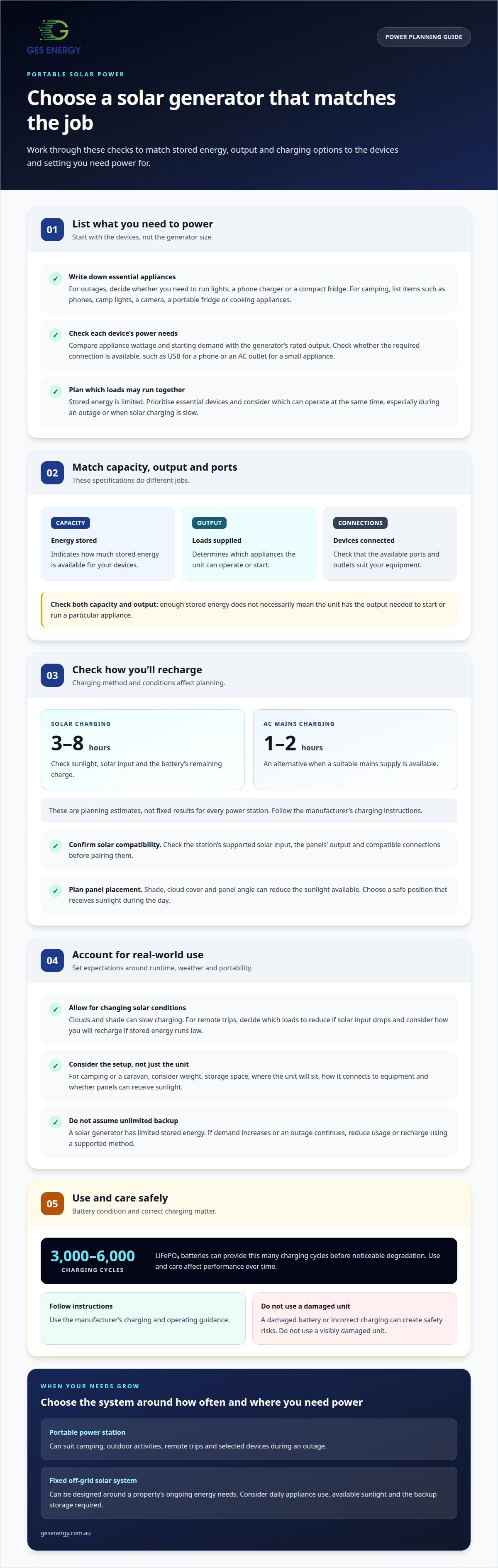
- Match a portable unit’s capacity and output to the devices you need to run, and consider that solar charging can take 3-8 hours compared with 1-2 hours from AC mains.
- For home backup, estimate which appliances matter most and check their running and starting power needs before choosing a system.
- Compare Australian prices by looking at capacity, included components and charging options, and check whether relevant solar battery incentives apply to your situation.
- If you need more than portable backup can provide, explore whether a fixed home battery or off-grid system better suits your energy needs.
What is a Solar Generator?
A solar generator stores electricity in a battery and supplies it through compatible outlets or ports. Solar panels recharge the battery, allowing the unit to power devices for emergencies, remote living and outdoor activities. Its practical use depends on the appliances you need to run and how you can recharge it.
Off-grid and emergency power
During an outage, a solar generator can power selected devices, such as lights, a phone charger or a compact fridge. Stored energy is limited, so prioritise essential appliances and match their power requirements to the generator’s output and battery capacity. If demand increases or the outage lasts, reduce usage or recharge the unit.
For off-grid living, solar panels can charge the battery during daylight, with stored electricity available when sunlight is unavailable. A portable unit may suit occasional use, while a fixed off-grid solar system can be designed around a property’s ongoing energy needs. Consider daily appliance use, available sunlight and the backup storage required.
Battery lifespan and fire safety are also relevant limitations. LiFePO₄ batteries can provide 3,000-6,000 charging cycles before noticeable degradation, while use and care affect performance over time. Damaged batteries or incorrect charging can create safety risks. Follow the manufacturer’s charging and operating instructions, and don’t use a visibly damaged unit.
A generator cannot provide unlimited power during an emergency. Check each appliance’s wattage and starting demand, then decide which devices may run at the same time. If stored energy runs low, recharging depends on sunlight, compatible solar panels or another supported charging method. Choose a solar-powered generator based on the appliances and loads you need it to support.
Camping and outdoor use
For camping, choose a unit suited to the equipment you plan to use. A phone, camp lights and camera need different connections from a portable fridge or cooking appliance. List your devices, then compare their power needs with the generator’s rated output and available ports. A suitable solar generator should match both your planned loads and your trip.
Caravans bring practical considerations, including where the generator will sit, how it connects to equipment and whether solar panels can receive sunlight. Follow the instructions for the unit and connected appliances. For remote trips, allow for cloudy conditions and plan which loads to reduce if solar charging slows.
Weight, storage space and charging options also shape your choice. A compact battery unit may suit short trips with phones and lights, while longer stays need more capacity or regular recharging. For repeated remote use, a portable off-grid solar generator provides mobile electricity; a fixed off-grid system better suits ongoing property needs.
Portable solar generator and power station products
A portable solar generator stores electricity in a battery and supplies it to compatible devices. A power station paired with solar panels can recharge from sunlight while providing power.
Portable models and power outputs
Portable models vary in battery capacity, output and connections. Compare the device’s continuous output with the appliances you plan to run, then check whether its ports suit each device. For example, a phone may connect through USB, while a small appliance may need an AC outlet. Capacity indicates stored energy; output determines which loads the unit can supply.
Don’t choose by capacity alone. A device with enough stored energy may still lack the output to start or operate a particular appliance. List your essential equipment, such as a laptop, lights or portable fridge, and compare each item’s input requirements with the station’s specifications. This helps narrow down suitable portable power options.
Pairing power stations with solar panels
A portable power station paired with compatible solar panels can collect energy during the day and store it for later. Check the station’s supported solar input and the panels’ output before connecting them. A mismatch can prevent effective charging or make the pairing unsuitable. The manufacturer’s specifications identify compatible connections and charging limits.
Panel placement also affects the available power. Shading, cloud cover and panel angle can reduce the energy they receive. For example, a camp setup shaded by trees may collect less sunlight than panels placed in a clear, sunny spot. Plan where the panels can sit safely and receive sunlight during the day.
Charging with panels or mains power
Charging time depends on the method: solar-generator charging takes 3-8 hours, while AC mains charging takes 1-2 hours. These are useful planning estimates, not a fixed result for every power station.
Recharge time depends on solar input, sunlight conditions and the battery’s remaining charge. A portable unit with depleted storage may take longer to recharge from panels when clouds or shade reduce available sunlight. Mains power provides another charging option when a suitable supply is available. Follow the manufacturer’s instructions for either method.
Portable product recommendations
Choose a portable power station for the devices and setting you need it for. For weekend camping, list essentials such as phones and lights, and check their connections and power demands. For a caravan, consider the appliances you’ll use and whether the station’s output and capacity suit them. These practical details lead to more useful recommendations than choosing by appearance.
For remote trips, prioritise panel compatibility and practical charging options. Confirm that the panels and station work together, then consider where the unit and panels will be positioned. A suitable choice balances portable power, the equipment you need to run and the charging conditions you expect.
Home backup power
For home backup, start by deciding which appliances and devices matter during an outage. Match their power needs to the generator’s output and stored energy.
Backup power during outages
Begin by listing the appliances you want to run, such as a fridge, lights or communications devices. Check each appliance’s running watts and starting watts, because a motor may need extra power when it starts. Unless the manufacturer specifies otherwise, estimate starting watts at double an appliance’s running watts. Add the loads you may use at the same time, then compare the total with the generator’s output.
Battery capacity helps estimate how long a generator can supply those loads. A 1,500Wh solar generator could power a compact fridge for roughly one to two days. Actual runtime depends on the fridge’s energy use and the other devices drawing power. Reduce demand during an outage by switching off non-essential appliances and running priority devices only when needed.
Plan how you’ll recharge the battery if an outage lasts beyond its stored capacity. Solar panels can provide a charging source when sunlight is available, while other supported charging methods may suit different circumstances. Keep the generator accessible and stored with at least an 80 percent charge, so its reserve is ready for an unexpected interruption.
Solar backup generators
A solar backup generator stores energy in a battery and supplies electricity through compatible outlets. It can suit selected home loads, but it won’t automatically power every circuit in a house. A portable model typically supplies devices connected directly to it. A fixed home battery system can be designed to support chosen circuits as part of a broader solar setup.
That distinction matters if you expect backup power to run several household appliances together. Consider which loads need power, their combined demand and the battery capacity required. For example, keeping a fridge and essential lights running differs from operating heating, cooking and laundry equipment at once. The more devices you include, the faster stored energy is used.
Camping and caravanning call for a different balance. A portable generator can move between a campsite, caravan and home, but its capacity and output still limit what it can supply. Choose based on the equipment you expect to use in each setting. For an ongoing off-grid home, a fixed off-grid solar system can be designed around regular household demand, solar generation and battery storage.
Before relying on any system for outage backup, understand how it connects to your devices or household circuits. A portable power station is not the same as whole-home backup. The right arrangement depends on the loads you need supplied and how the equipment is designed to deliver power.
Australian product prices and sale discounts
Australian prices for portable solar generators vary with battery capacity, output, included solar panels and charging options. A bundle with panels and cables may cost more than a power station alone, but it also includes components for recharging from sunlight. Compare the complete package, not just the advertised unit.
For a useful comparison, note the product’s regular price, sale price and included equipment. Then check whether the discount applies to the exact model and bundle you’re considering. A lower price may reflect a smaller battery, fewer outputs or no solar panels. Compare the specifications with your intended use, such as camping, caravan trips or emergency backup.
There isn’t one Australian electrical rule that covers every portable generator and installed home battery in the same way. Choose equipment intended for use in Australia, follow the manufacturer’s electrical and charging instructions, and don’t alter plugs or connect a portable unit to household wiring.
Solar battery incentives may apply to eligible installed battery systems; don’t assume that buying a portable generator alone qualifies. Program conditions can depend on the system and installation, so distinguish battery incentives from discounts on portable products before including them in your budget.
For a product price comparison, record the model, battery capacity, output, included panels and delivery terms. Check that regular and sale prices refer to the same configuration. A bundle’s value depends on whether its included parts meet your needs, not simply on the percentage discount shown.
Price also reflects how you’ll charge and use the unit. A setup for occasional outdoor power may need different capacity and panels from one intended for frequent backup. Consider whether you can recharge from mains power, solar panels or both. Each option affects which components you need and how well the bundle suits your plans.
Unlike a fixed solar-and-battery installation, a portable generator is a standalone product purchase. When comparing a home system, assess the complete installed design and battery storage rather than using portable product discounts as a guide to installation costs. A system quote depends on the equipment, site and installation requirements, so request a quote to establish the project price.
Before buying, check the final checkout price, included components, warranty terms and return conditions. These details help you compare like-for-like offers in Australia and avoid choosing a discounted package without the panels or charging accessories you need.
Solar generators compared with fuel generators
Solar and fuel generators store or produce electricity in different ways. A solar generator stores energy in a battery, then an inverter converts it into usable electricity. Solar panels recharge the battery when sunlight is available. A fuel generator produces electricity while its engine runs, so it depends on access to suitable fuel.
Noise is a practical difference. Noise levels vary by model and operating conditions, so consider how much noise will matter where you plan to use the generator. That may matter at a campsite, caravan park or home where quieter operation is a priority. Your choice should still reflect the appliances you need to run and the conditions where you’ll use the equipment.
Solar performance depends on stored capacity and the sunlight available for recharging. Cloud, shade or limited panel exposure can reduce solar input, so a solar unit may not replenish quickly in poor conditions. A fuel generator’s supply depends on fuel availability. For extended outages or remote trips, consider how you’ll maintain power when the stored energy or fuel runs low.
Compare wattage as well as battery capacity. Wattage indicates the load a unit can supply at one time; capacity indicates how much energy it stores. An appliance with a high starting demand may exceed an inverter’s output, even when the battery holds enough energy for longer use. Check appliance requirements against the generator’s output before deciding which devices can run together.
For camping and outdoor use, a solar generator can suit devices that match its output and stored energy. Panels provide a way to recharge when sunlight is available, without relying on fuel. A fuel generator may suit situations where continued operation matters more than quieter performance or solar charging. The practical choice depends on your access to fuel and sunlight, and the loads you need to power.
For home backup, decide which appliances are essential and whether you need short-term supply or extended operation. A solar unit can provide stored electricity, but its limits depend on capacity, inverter wattage and recharging conditions. A fuel option has different operating needs. Compare both with your outage plan, rather than assuming either can supply every household circuit or appliance.
In short, solar suits users who value stored energy, panel charging and quieter operation. Fuel generation suits circumstances where access to fuel and the generator’s output meet the need. To plan a home system around your backup requirements, review solar and battery options.
GES ENERGY
GES ENERGY designs solar and battery systems for homes and off-grid properties when portable power doesn’t meet your ongoing needs. The right setup depends on the appliances you want to run, your household’s energy use and whether you need outage backup or a system for life beyond the grid.
For a home, Solar + Batteries for Homes can help supply selected household loads using stored energy. For a remote property, Off Grid Solar Systems are designed around the site’s energy requirements and solar generation. These fixed systems differ from portable generators, which power compatible devices directly and have limited stored capacity.
Contact GES ENERGY to discuss which solar and battery approach suits your property and power needs.
Plan for the power you need next
A portable solar generator can suit occasional power needs, while a property’s longer-term energy plan may call for a different system. Consider how your requirements could change, from occasional backup to ongoing off-grid supply or energy infrastructure for a business. Planning around actual use keeps the next step relevant, rather than choosing equipment for needs you may not have.
GES Energy also offers Commercial and Industrial Solar and EV Charging Stations for projects beyond household backup. If you’re weighing a portable option against a larger solar or storage solution, outline where you need power and what you want it to support. That provides a practical starting point without assuming one system suits every situation.
Discuss your solar generator plans with GES ENERGY and explore an approach that fits your energy needs. A clear plan can help you make your next decision with confidence.
Frequently Asked Questions
What is a solar generator and how does it work?
A solar generator stores electricity in a battery and supplies it to connected devices. Solar panels convert sunlight into electricity to charge the battery; an inverter converts stored energy into AC power for compatible appliances. Some units also accept mains charging. Check the generator’s input and output specifications to see which panels, charging methods and devices it supports.
What size solar generator do I need to power common household appliances?
Choose a generator by matching its output to the appliances you plan to use and its battery capacity to their expected running time. Read each appliance’s rating label, note its running and starting demand, and decide which devices may operate together. For example, powering a modem and lights has different demands from adding a kettle or microwave. A load list helps define the system you need.
How many watts and watt-hours are needed for a home backup solar generator?
Watts describe how much power the generator can supply at once; watt-hours describe the energy stored for use over time. Add the wattage of appliances you expect to run simultaneously to estimate the required output. To estimate energy, multiply each device’s watts by its intended operating hours, then total the results. Include starting demand for motor-driven appliances when sizing the output.
How much do portable solar generators cost in Australia?
Portable solar generator prices in Australia vary by battery capacity, inverter output, included solar panels, ports and charging options. A power station sold alone differs from a bundle that includes panels and accessories, so compare the exact contents alongside the listed price. Sale discounts can apply to particular models or configurations. Check that the advertised regular and sale prices refer to the same product setup.
What are the best solar generators available in Australia in 2026?
The best option depends on what you need to power, where you’ll use it and how you’ll recharge it. Compare battery capacity, inverter output, device connections, solar input compatibility and portability. For camping, panel pairing and ease of carrying may matter most; for home backup, planned appliance loads are central. Avoid ranking products by battery capacity alone, because output and charging compatibility also affect suitability.
How do solar generators compare with petrol generators and home battery systems?
A solar generator stores energy for portable use and can recharge from compatible panels. A petrol generator produces electricity while running, so it depends on fuel. A fixed home battery system is designed as part of a property’s energy setup rather than carried between locations. Compare the intended loads, access to charging or fuel, noise, and whether you need portable power or household backup.
Can a solar generator power a house during a blackout in Australia?
A portable solar generator can supply compatible devices during a blackout, but it doesn’t automatically power a home’s circuits. Its output and stored energy limit which appliances it can run and for how long. Household circuit backup requires a system designed for that purpose and connected appropriately. Identify priority loads, such as communications or refrigeration, before deciding what backup arrangement you need.


