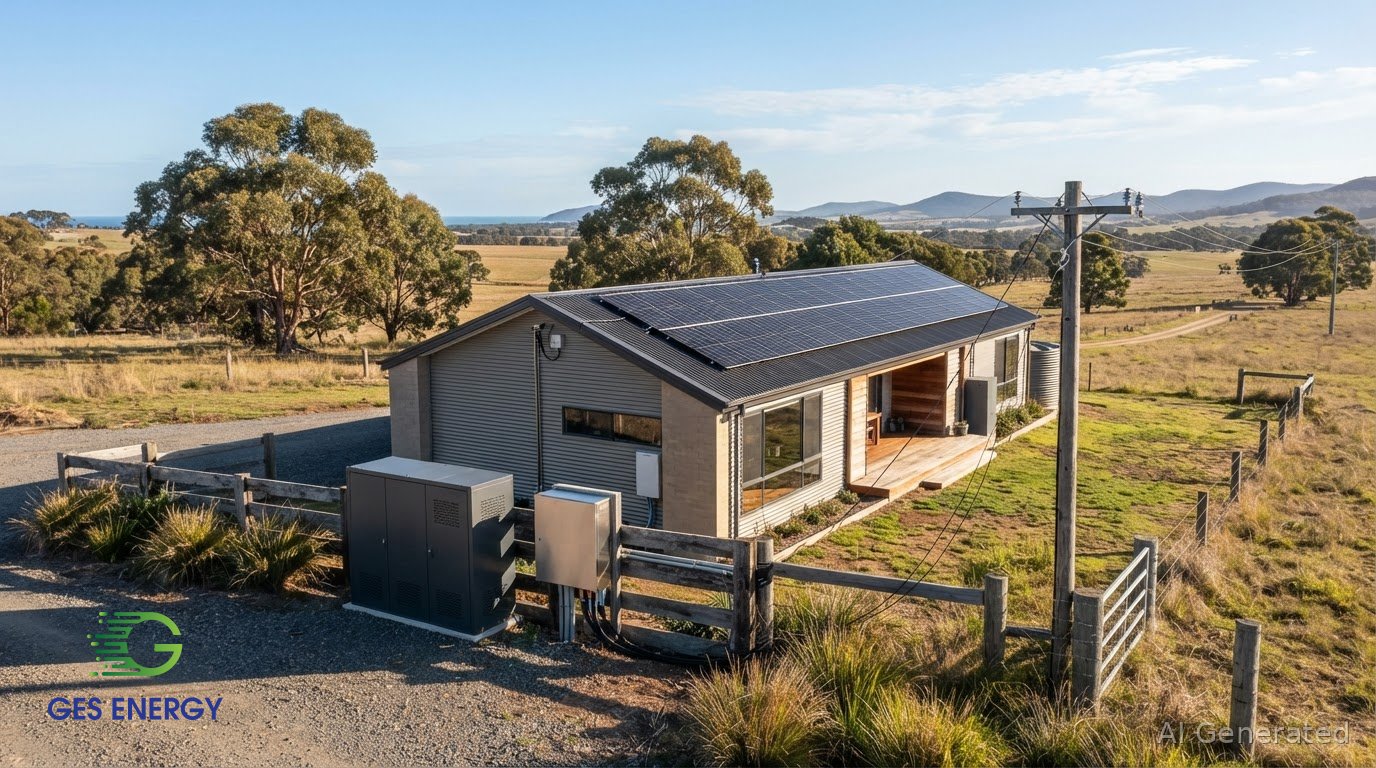
A remote rural property doesn’t always need a new grid connection to get power. Off grid solar for rural properties can be a practical option when the electricity network is unavailable or extending it is impractical. A typical system combines solar panels, battery storage and a backup generator.
Choosing an off-grid system is a significant decision, especially when your property relies on steady power for the home, water pumps, workshops or farm equipment. Good design accounts for when and how you use electricity, seasonal solar conditions, and the demands of motors and pumps.
This article explains how to assess whether off-grid solar suits your property, what system design needs to consider, and how batteries and generators can support supply during periods of low solar production. It also covers why rural installation experience matters and what to consider when planning for future needs, such as irrigation, new buildings or electric vehicle charging.
Key Takeaways
- Set battery capacity around your daily electricity use and the autonomy period your region needs. In south-west WA, the recommended target is 2 to 3 days; in the Kimberley and Pilbara, it is 3 to 5 days.
- Include bore pumps and other motor loads in your calculations. Their start-up demand, operating hours and ability to run during sunny periods all affect system design.
- Plan solar, batteries and backup generation as an integrated system. An existing generator’s output, voltage regulation, phase configuration, controls and condition affect whether it can be incorporated.
- Assess site conditions and future needs, including buildings, irrigation, machinery and EV charging, before choosing array placement and system capacity.
- Compare the practicalities of a stand-alone system with extending the grid, including the connection work and infrastructure your property may require.
Who Needs an Off-Grid Solar System in Victoria?
Off-grid solar may suit a rural Victorian property where grid supply is unavailable or extending the network is impractical. It can be relevant for a home, hobby farm or remote worksite that needs independent electricity. The decision depends on network access, the loads that must keep running and the property’s plans.
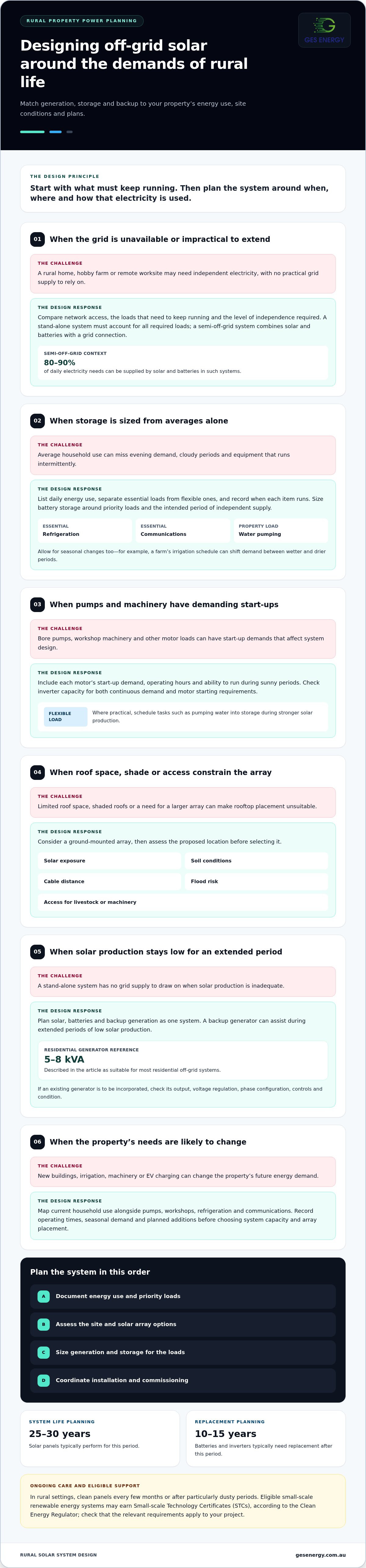
Start by listing daily energy use. Separate essential loads, such as refrigeration, communications and water pumping, from flexible uses, such as workshop equipment. Record when each item runs and note seasonal changes. For example, a farm’s irrigation schedule can shift demand between wetter and drier periods.
Plan battery storage around essential energy use and how long the system must supply those loads without adequate solar production. Don’t size storage using average household use alone. Account for evening demand, cloudy periods and equipment that runs intermittently. Motor start-up demand also matters, particularly for bore pumps and workshop machinery.
- Solar panels: Consider available roof or ground space, shading and the site’s solar exposure.
- Battery: Match storage to priority loads and the intended period of independent supply.
- Inverter: Account for continuous demand and motor starting requirements.
- Generator: A 5-8 kVA generator is described as suitable for most residential off-grid systems.
The components need to work together as one power system. Solar panels generate electricity, the inverter supplies compatible power to equipment, and the battery stores energy for later use. A backup generator can assist during extended periods of low solar production. Where practical, schedule flexible tasks, such as pumping water into storage, during stronger solar production.
Site layout can affect where panels should go. A ground-mounted array may suit a property with limited roof space, shaded roofs or a need for a larger array. Before choosing a location, assess solar exposure, soil conditions, cable distance, flood risk and access for livestock or machinery.
For eligible small-scale renewable energy systems, individuals or businesses can earn STCs, according to the Clean Energy Regulator. Consider potential certificates in project planning alongside the site assessment, energy inventory and equipment requirements. This preparation helps clarify whether an off-grid system fits the property’s practical needs and operating plans.
Off-grid solar system design for rural and remote Australian properties
System design starts with your property’s energy needs, site conditions and plans for future equipment. In Victoria, the right configuration also depends on whether you need full independence, grid support or power for a remote commercial site.
Comparing off-grid, semi-off-grid and grid-tied systems
An off-grid system operates independently of the electricity network, so its generation and storage must meet the property’s needs. A grid-tied system stays connected, while a semi-off-grid setup combines solar and batteries with a grid connection. Compare the options by considering network access, the loads requiring backup and how much independence you want.
A hybrid inverter can manage solar input, grid connection and battery charging in a semi-off-grid system. Such systems can supply 80-90% of daily electricity needs from solar and batteries. A stand-alone system has no grid supply to draw on, so its design must account for all required loads.
Custom systems for remote and commercial sites
Remote homes, farms and commercial sites need system sizing based on actual loads and site layout. Map household use alongside pumps, workshops, refrigeration and communications equipment. Record when each load operates, then account for seasonal demand and planned additions such as irrigation equipment or electric vehicle charging.
Three-phase systems need assessment of phase balance, motor starting requirements and generator compatibility. Separate systems may suit multiple buildings if distance, cable size, voltage drop or load distribution makes a shared system impractical. A ground-mounted array may suit limited roof space or shading. Assess sun exposure, soil, flood risk and access for livestock or machinery.
Standards and electrical rules
Off-grid design and installation must account for applicable Australian standards and the electrical requirements at the installation location. Equipment and configuration affect the design of a stand-alone system, so plan and complete electrical work with qualified professionals familiar with off-grid systems.
Government support can include Small-scale Technology Certificates (STCs), which reduce upfront solar costs. Individuals or businesses may earn STCs for eligible small-scale renewable energy systems, according to the Clean Energy Regulator. Government programs vary by location and eligibility, so include only applicable support in project planning.
Plan in sequence: document energy use, assess the site, size generation and storage, then coordinate installation and commissioning. Solar panels typically perform for 25 to 30 years, while batteries and inverters typically need replacement after 10 to 15 years. In rural settings, clean panels every few months or after particularly dusty periods.
Installer experience and generator integration
Weather, shading and seasonal solar production affect how much energy reaches batteries each day. Cloudy periods reduce generation, while trees, buildings or terrain can shade panels and lower output.
Installer experience matters because off-grid systems must coordinate generation, storage, inverters and backup equipment. Generator integration should suit the site’s loads and operating conditions.
Installer experience
Off-grid installation involves more than placing solar panels and connecting a battery. The designer needs to understand the property’s electrical loads, inverter capacity, generator controls and distribution arrangements. For example, a bore pump’s motor may create different demands from household lighting or refrigeration.
Ask how the design accounts for seasonal production, shading and equipment with high starting current. A site assessment should also consider cable routes, how separate buildings receive electricity and whether future loads will change demand. Clear commissioning and monitoring plans help you understand how the installed system performs.
Monitoring can track solar production, battery state of charge, consumption, generator operation, system warnings and historical performance. These readings help show whether low battery levels reflect cloudy weather, increased use or a system issue. They also support maintenance planning and informed adjustments to flexible loads.
Backup generators during low-sun periods
A backup generator can support a rural site during extended periods of low solar production, unusually high consumption or system maintenance. It provides another source of electricity when solar generation and stored energy cannot meet demand. Plan generator operation alongside battery capacity and the loads that take priority.
Automatic integration depends on compatible generator controls and system configuration. The inverter and generator must coordinate charging and power delivery without exceeding the generator’s output. The installation design should set out how the generator starts, supplies loads and charges batteries, and how operators can monitor its activity.
An existing generator may be suitable, but its output, voltage regulation, phase configuration, control system and condition need assessment. These factors determine how it can connect with the solar and battery equipment. For example, a three-phase generator needs to match the system’s phase configuration and the property’s equipment.
Plan for actual weather and site conditions. A shaded array may produce less electricity than an exposed array, while prolonged cloudy weather can increase reliance on stored energy and generator backup. Keep panels clear of vegetation, and use monitoring records to compare production and consumption in sunny and overcast conditions. This helps operators see when loads can shift to daylight hours.
Reliable power depends on coordinated design, careful installation and ongoing monitoring. Review generator operation alongside battery charge and solar output, rather than treating the generator as a separate appliance. A system plan should document operating priorities, the equipment being supported and the conditions that call for backup.
Energy independence for rural Victorian properties
For a rural Victorian property, energy independence means planning electricity supply around how the site operates. A home, farm and small rural business can have very different load patterns, even in the same area. Start by identifying which activities rely on continuous power and which can adapt to solar production.
Build a load profile from equipment schedules rather than relying only on an electricity bill. Record each appliance or machine, its operating hours, when it runs and whether demand changes during the year. For example, a cool room may run throughout the day, while workshop equipment may operate only during working hours.
- Map essential services: Identify loads that support daily living, communications, refrigeration or business operations.
- Note operating patterns: Record whether equipment runs continuously, intermittently or at set times.
- Separate seasonal uses: Mark activities that change with weather, occupancy or farm schedules.
- Include planned changes: Account for new buildings, machinery, accommodation or electric vehicle charging.
A load profile can also reveal where operating routines could improve energy use. A farm might run suitable machinery during productive solar periods while keeping evening demand focused on essential household loads. The benefit depends on the task’s timing and operational needs. Adjusting schedules can support independence without treating every load as equally flexible.
Buildings across a rural property may have different supply requirements. A homestead, machinery shed and staff accommodation can use electricity at different times and distances. Their locations, cable routes and load distribution affect whether a shared arrangement or separate systems make more sense. Include proposed buildings early, rather than adding them after the energy plan is set.
Energy independence also means setting clear expectations about supply. A stand-alone system relies on on-site generation and storage, so property owners need priorities for essential equipment during lower-production periods. A written operating plan can identify which activities take precedence and which can pause or shift. This is particularly useful when several people manage the property.
Review the load profile when business activity or household needs change. A new machinery shed, expanded accommodation or additional equipment can alter when electricity is needed, as well as how much. Keep an updated record of major loads and operating schedules. This gives future system assessments a practical basis and helps the property plan for changing energy needs.
When rural WA properties may need off-grid solar
For rural properties in Western Australia, the key question is whether grid supply is practical for the site. A remote block with no nearby network, a new homestead far from existing infrastructure or a farm facing costly connection works may suit a stand-alone power system. Off grid solar for rural properties becomes a serious option when connection requirements, supply reliability and long-term energy needs favour generating electricity on site.
Grid extension can involve poles, underground trenching, easements, transformers, network studies, vegetation clearing and approvals. A new rural connection in remote WA can take 12 to 24 months. Those factors make distance and connection complexity important parts of the decision, alongside the property’s electricity demand.
Compare likely connection work with the full requirements of a stand-alone system. It must supply the home and essential farm loads through different weather and seasonal conditions. List planned equipment, including pumps, irrigation and workshop machinery, before deciding. If the property is still being developed, include future buildings and changes in occupancy in the energy assessment. This helps avoid sizing a system around today’s loads alone.
- Map the connection route: Identify the distance to existing infrastructure and likely obstacles, such as road crossings or vegetation.
- List essential loads: Record household use, water pumping, refrigeration, communications and machinery requirements.
- Compare supply options: Consider grid access, on-site solar power, battery storage and generator backup together.
- Plan for seasonal demand: Include irrigation periods, cloudy weather and changes in farm operations.
A grid-tied solar system differs from a stand-alone system. Grid-tied panels work alongside network supply, while off-grid systems need their own generation and storage. A property near the network may be better suited to a grid connection; a remote site with substantial extension requirements may value independent supply. The choice depends on access, load profile and the infrastructure each option requires.
Review the decision if the property’s needs change. Adding a bore pump, accommodation or electric vehicle charging can alter system sizing and battery demand. Solar panels, batteries, inverter and generator need to be planned as compatible components. A site assessment should consider panel exposure, shading, cable distance, ground conditions and access for livestock or machinery.
For a rural WA site, compare connection distance and timing against its load profile and planned development. Explore off-grid solar system options to plan a power system around your property’s requirements.
GES ENERGY: Commercial and Industrial Solar
GES ENERGY designs solar solutions for rural homes, farms and businesses assessing on-site power. Its Off Grid Solar Systems suit properties that need a stand-alone supply, while Solar + Batteries for Homes can help households store solar energy for later use.
For rural businesses, Commercial and Industrial Solar can address operational energy demand. If your plans also include electric vehicle charging, GES ENERGY offers EV Charging Stations. Discuss your property’s location, energy use, essential equipment and future plans to identify a system suited to its requirements.
Contact GES ENERGY to discuss solar options for your rural property.
Plan your property’s next energy step
The right energy plan should fit how your property operates now and how it may change. Before moving forward, write down your most important loads, upcoming projects and desired level of independence. This gives your design discussion a clear starting point and connects technical choices to practical priorities.
Choosing off grid solar for rural properties is not simply a matter of adding panels. It means planning an energy system around the site, its daily demands and how you want power supplied. If your property’s needs are changing, revisit the plan before adding major equipment or buildings.
GES ENERGY works with rural property owners considering off-grid power, as well as businesses planning energy projects. Take the next step by sharing your site needs and goals with the team. Contact GES ENERGY about off-grid solar to discuss a suitable direction for your property.
A considered plan can make energy decisions easier to manage. Start with your priorities, then build from there.
Frequently Asked Questions
How much does an off-grid solar system cost in rural Australia?
The cost depends on the system design and the work required at your property. A quote accounts for equipment selection, engineering, transport, site access and installation scope. For example, a remote homestead with several buildings may need different electrical infrastructure from a single dwelling. GES Energy provides project-based design and installation, with pricing determined after assessing the property’s requirements and system scope.
What size off-grid solar system does a rural Australian property need?
There isn’t one standard system size for every rural property. Check that the proposed design distinguishes solar array output, measured in kilowatts, from energy use and battery storage, measured in kilowatt-hours. These figures describe different things. A useful design should show how the selected equipment relates to the property’s operating needs, rather than relying on a package label alone.
How do I calculate rural household electricity usage and battery capacity?
Use appliance labels or equipment documentation to find each item’s power rating, then multiply it by operating time to estimate energy use. Add the individual estimates for a daily total, keeping units consistent. For battery planning, identify the share of that total you need stored for later use. This calculation provides a starting estimate; actual demand can vary with equipment use and conditions.
What are the best off-grid solar batteries in Australia, and how long do they last?
The right battery is compatible with the inverter and suits the system’s intended use. Compare chemistry, usable capacity, manufacturer warranty terms, operating conditions and how the battery management system works with other equipment. Battery life varies with factors such as cycle frequency and operating temperature. Review the specific battery’s product documentation rather than assuming all batteries have the same service life.
How much solar, battery storage and backup generator capacity is needed for an off-grid home?
Capacity depends on the home’s energy needs and its highest simultaneous power demand. Solar production must replenish the energy used, while the inverter must support equipment running at the same time. The generator’s role also matters: depending on system design, it may supply loads, charge batteries or do both. These operating roles help determine equipment compatibility and required capacity.
How do I choose a qualified off-grid solar installer in rural Australia?
Review whether the installer can explain the design, equipment selection, installation scope and commissioning process clearly. Ask for documentation covering the system layout, operating assumptions and maintenance requirements. GES Energy uses SAA-accredited technicians for battery installations. A clear handover should identify equipment, controls and support information so you understand how the installed system is intended to operate.
What are the pros and cons of off-grid solar compared with grid connection or a hybrid system?
Off-grid solar gives a property control over its on-site electricity supply, but the owner must manage system performance and equipment upkeep. A grid-connected arrangement retains network access, while a hybrid system combines network supply with on-site generation and storage. Compare the options against your priorities: independence, access to network electricity, site infrastructure and willingness to manage an on-site power system.
What maintenance, safety risks and insurance issues apply to off-grid solar and batteries?
Keep system records, including equipment details, installation documents and maintenance history. Don’t open electrical enclosures or attempt repairs on live equipment; use a qualified technician for electrical work. Keep the battery and inverter area accessible and free of stored items that obstruct inspection. Tell your insurer about installed solar and battery equipment, and ask how it should be recorded under your property policy.