

What if the best way to get more value from rooftop solar isn’t adding a battery, but using electricity while your panels are generating it? If your home or business exports surplus power during the day and draws electricity from the grid later, that timing mismatch may be familiar. Knowing how to maximise solar self-consumption starts with matching energy use to generation, rather than assuming one solution suits every site.
This guide covers practical ways to shift flexible energy use into sunny hours and how monitoring and automated controls can help align demand with solar output. It also explains when a battery, such as a Tesla Powerwall, or a change to your solar system design may help you use more of your own generation.
The right approach depends on your load. At home, daily routines and appliance use affect how much solar power you use on site. For commercial and industrial premises, operating hours, equipment demand and site conditions matter. Use the comparisons and steps below to assess options for your home or business and make informed decisions about system performance, storage and future energy needs.
Key Takeaways
- Understand the difference between using solar power on site, relying on solar to meet your needs and exporting surplus electricity.
- See how household routines and business operating schedules affect the overlap between solar generation and electricity demand.
- Compare load shifting, automated controls and battery storage against your energy-use pattern.
- Review energy data, identify recurring surplus and assess changes over consistent monitoring periods.
- Plan around your site’s demand, generation profile and future energy needs to maximise solar self-consumption.
What solar self-consumption means for Australian homes and businesses
Solar self-consumption is the electricity your home or business uses on site as your panels generate it. A solar PV system converts sunlight into electricity; the photovoltaic system overview explains the technology behind that process. The practical measure is how much generation meets your demand at the same time, not simply how much your panels produce over the day.
Self-consumption measures how much solar generation you use directly; self-sufficiency measures how much of your total electricity use is met by solar. These measures describe different things. You might use most of a modest amount of solar generation as it’s produced, yet still rely on the grid after sunset. Solar electricity not used on site or stored is surplus that can flow to the grid as an export.
How to read solar generation, household use and exports
On a sunny afternoon, your system generates electricity while your appliances use some of it. If generation exceeds demand, the surplus is exported. If demand is higher than solar output, such as after sunset, the shortfall may come from the grid. A monitoring platform or smart meter can show when generation, on-site use, imports and exports occur, helping you see whether your demand lines up with solar output.
That timing matters because exported electricity and electricity bought from the grid may be treated differently on your bill. Retailer plans and export arrangements vary, so use your own account details when assessing the value of exports. Understanding when you import and export is a useful first step in working out how to maximise solar self-consumption.
Why the right approach differs between homes and businesses
Household demand often follows daily routines. Hot water systems, cooling and appliances may use more electricity at particular times, while occupants are away during daylight hours. Shifting flexible use to periods of solar generation may increase direct use, but the best opportunities depend on your household’s schedule and energy profile.
Businesses have different patterns. Operating hours, production equipment, refrigeration and other site loads can create steady daytime demand or peaks that don’t match solar generation. Across Melbourne and regional Victoria, local conditions and retailer arrangements can differ, so one site’s generation and bill patterns won’t necessarily predict another’s. Review site-specific data before choosing changes.
How solar generation and electricity use shape self-consumption
Solar output changes throughout the day. It generally builds after sunrise, is strongest around the middle of the day and falls towards sunset. Clouds, shading and seasonal daylight also affect generation. In Victoria, local weather, panel orientation and tilt influence actual output, so systems with similar rated capacity can still have different generation profiles.
Demand changes too. If a home or business uses little electricity while the sun is out, generation may exceed site demand and flow to the grid. When flexible demand overlaps with solar production, more electricity can be used directly. Shifting suitable energy use into sunny periods can increase direct solar use by matching demand to available generation.
Identify when solar generation exceeds site demand
Compare generation and consumption data across representative days. Look for recurring periods when solar output exceeds site demand, particularly around the middle of the day. Repeated exports at similar times can reveal opportunities to shift flexible activities, such as charging a vehicle or running suitable equipment, into those periods.
One unusual day or a single electricity bill won’t show the full pattern. Weather, household routines, business activity and seasonal changes all affect generation and demand. Compare similar weekdays and weekends, and look at seasonal patterns where data is available. This helps separate recurring trends from temporary variations before you decide what to change.
Match flexible energy use to available solar
Where site needs allow, schedule suitable appliances or processes for periods of stronger solar generation. At home, you might adjust when hot water is heated or when suitable appliances run. Cooling can also be planned around household needs and the site’s energy profile. For businesses, schedule flexible equipment during solar-producing hours if operational requirements permit.
EV charging may also align with daytime solar generation when a vehicle is on site and charging can fit around its use. Base schedule changes on your actual generation profile rather than assuming output is the same each day. For more on storage beyond daylight hours, read the solar and battery systems guide.
A site-specific solar system design service can take generation, operating schedules and energy demand into account when assessing system options.
Compare load shifting, energy controls and batteries for solar self-consumption
There’s no single upgrade that suits every solar site. Load shifting changes when you use electricity. Energy controls can automate how compatible equipment responds to solar generation. A battery stores some surplus electricity for later. The right choice depends on your existing equipment, energy-use pattern and priorities. A battery isn’t essential for every solar owner; changing the timing of flexible demand may be a practical first step.
When load shifting or controls may be a practical first step
If you can move flexible electricity use into solar-producing hours, you may use more generation directly without adding storage. This could mean adjusting appliance schedules at home or coordinating suitable processes at a business. It works best when the load can move without disrupting household comfort, production or other site requirements.
Automated controls can coordinate compatible equipment with solar output, reducing the need to manage every schedule manually. Options depend on the equipment, inverter and control system already installed, as well as how your site operates. A control can only manage loads it can communicate with and safely operate, so check compatibility and site requirements when planning a change.
Review the effect over consistent monitoring periods. If flexible demand already absorbs much of your daytime surplus, a battery may not be the first change to assess. If exports continue when flexible loads are unavailable, storage may be worth examining alongside other system options.
When to assess battery storage
A battery can store surplus solar electricity and discharge it later, such as during evening demand when panels aren’t generating. It shifts some energy use beyond solar production hours, but doesn’t create electricity. The amount available later depends on the solar energy stored and how the battery system operates.
A useful assessment considers your generation and consumption profile, recurring surplus, evening demand, retailer tariff and export arrangements, equipment compatibility and future site needs. Include backup priorities too: the loads you want supported during an outage can influence the system design. For businesses, operating schedules and equipment demand also matter. These factors help establish whether storage fits the site instead of assuming a battery suits every home or business.
For larger sites, the industrial battery storage guide provides further context. GES Energy’s solar and battery system design can account for site demand and energy storage as part of an integrated plan.
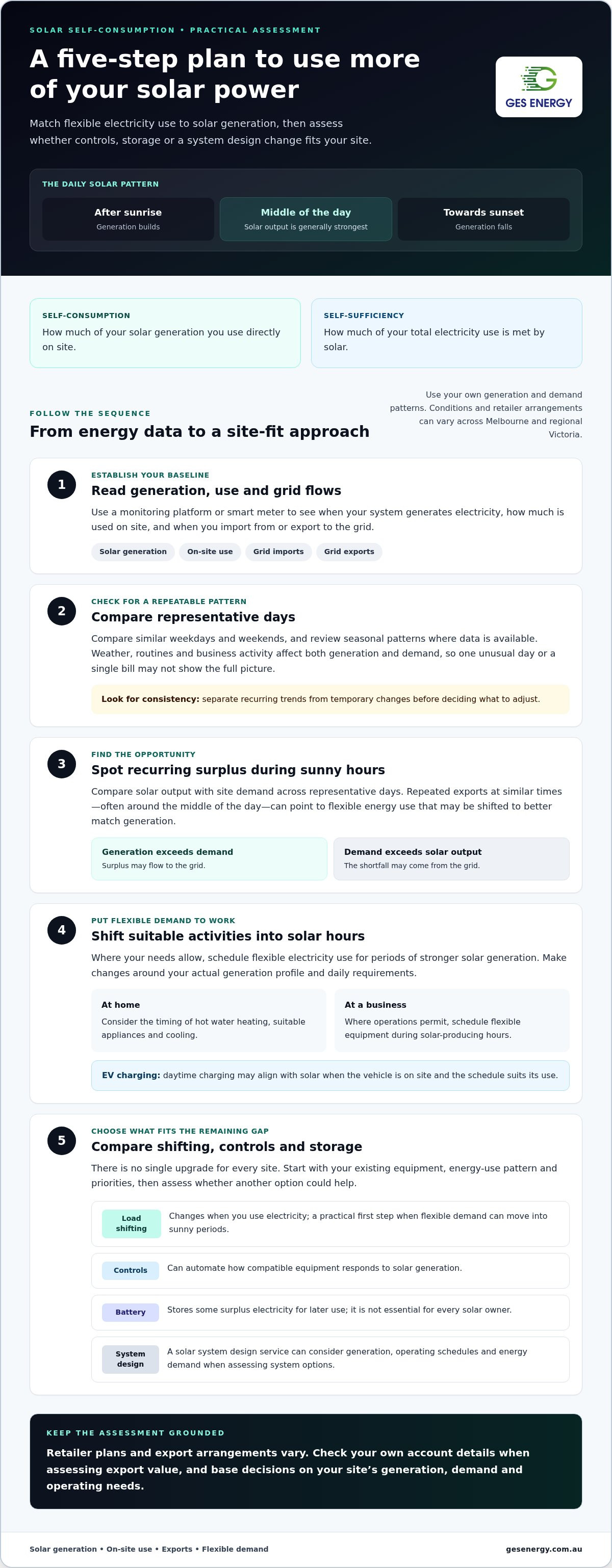
How to maximise solar self-consumption: a practical assessment and action plan
A measured review helps you choose changes that fit your actual energy use. Follow these steps to identify where solar generation and demand could align more closely.
Build a baseline from bills and monitoring data
Start with the information available from your electricity account and monitoring platform. Look for generation, consumption, grid imports and exports. If your monitoring doesn’t show a particular measure, record that gap rather than estimating a figure. Clear data makes it easier to compare patterns and assess changes.
- Gather your data. Collect available bills and monitoring records for a representative period. For businesses, include operating schedules, major loads and relevant energy reporting needs.
- Identify recurring surplus. Compare solar generation with demand to find periods when exports regularly occur. Review weekdays and weekends separately, and consider seasonal patterns relevant to your site.
- Shift flexible loads. Choose suitable energy use that can move to times when solar is available, without disrupting household routines or business operations.
- Assess controls. Consider whether compatible equipment and site requirements allow automated controls to coordinate selected loads with solar generation.
- Review the results. Compare monitoring over consistent periods before and after a change. Adjust schedules where practical, then assess whether the pattern has improved.
Prioritise changes and review their effect
Rank possible actions by how well they suit your site, their operational impact and the information you already have. A schedule change may be easier to assess than a system upgrade. A business may also need to account for production requirements or reporting processes before changing equipment use.
Weather, occupancy and operating changes all affect generation and demand, so compare similar periods rather than drawing conclusions from one bill or unusual day. If monitoring is incomplete, improve the available data before making decisions that depend on precise load patterns.
For a site-specific assessment, explore GES Energy solar design services. A design review can consider your site’s generation profile, operating schedule and energy demand when assessing practical system options.
Plan a solar system around self-consumption and long-term site needs
A solar system designed around self-consumption should reflect how a site uses electricity, when solar generation is available and what may change in the future. Look beyond panel capacity alone. Energy demand, operating schedules, site conditions and plans for storage or EV charging can all shape the design. A tailored assessment helps you consider these factors together before deciding what system changes may suit your property or business.
What a tailored solar system design should account for
Design inputs include a site assessment, energy-use patterns and engineering requirements. For a home, the focus may be household demand and likely future needs. Commercial and industrial projects also need to account for operating hours, major equipment and site load profiles. GES Energy’s solar system design service considers site conditions and energy demand. For business planning context, read the commercial solar installation guide.
Assess storage and EV charging against actual site requirements rather than treating them as automatic additions to every project. A battery may form part of a plan for using solar energy beyond generation hours. EV charging can be considered alongside available solar output and vehicle use. Account for how these loads fit with existing demand and future changes, so equipment choices support the way the site operates.
Connect installation, storage and ongoing system care
For solar, battery and EV projects, EPC services coordinate engineering, procurement and construction. This connects technical design with equipment selection and project delivery. GES Energy provides SAA-accredited installation and maintenance support, helping owners plan for the ongoing care of their system as well as its initial design.
GES Energy’s 10-year workmanship warranty applies to commercial and industrial projects, not residential projects. For every site, system requirements and installation planning should reflect the project’s conditions and energy needs.
If you’re considering a new system or changes to an existing one, discuss your solar project requirements with GES Energy. A site-specific design assessment can help you consider generation, demand, storage and future plans in one practical energy strategy.
Make your solar system work harder for your site
Getting more value from solar starts with matching electricity use to generation. Review your monitoring data, identify recurring surplus and shift suitable loads where your household routine or business operations allow. If those changes aren’t enough, assess whether controls, storage or a system redesign fits your site’s demand and future plans.
Knowing how to maximise solar self-consumption doesn’t mean every solar owner needs a battery. Start with your actual energy profile and compare options against how and when you use electricity. This gives you a clearer basis for decisions about solar, storage and ongoing system care without relying on assumptions about performance or savings.
GES Energy has more than 10 years in renewable energy and over 2,500 successful installations. Its SAA-accredited installation and maintenance support can help you plan for system operation. A 10-year workmanship warranty applies to commercial and industrial projects only.
Discuss a solar system designed around your energy use and take a practical next step towards using more of your solar power on site.
Frequently Asked Questions
What does solar self-consumption mean?
Solar self-consumption is the share of electricity from your solar PV system that your home or business uses on site instead of exporting. Self-sufficiency is different: it describes how much of your total electricity demand solar supplies. For example, you may use most of your daytime solar generation directly but still import electricity after sunset. Monitoring generation, consumption, imports and exports can help you see when these patterns occur.
How can I use more of my solar power during the day?
Review your generation and consumption data to find recurring periods of surplus, then schedule flexible loads during those solar-producing hours where practical. You might adjust hot water heating, EV charging or suitable appliance use to better match generation. The best steps for how to maximise solar self-consumption depend on your equipment, controls and household routine or business operating hours. Check monitoring data again after changing schedules to see whether the pattern has shifted.
Does a battery always increase solar self-consumption?
A battery can store some surplus solar electricity for later use, which may increase the share of solar used on site. It doesn’t generate electricity, and it isn’t automatically the right first step for every property. An assessment should consider when surplus occurs, evening demand, system design and operating priorities. Compare storage with options such as shifting flexible loads, which may address a timing mismatch without adding a battery.
Can I maximise solar self-consumption without a battery?
Yes. You can use more solar directly by moving suitable electricity use into periods when your panels are generating. Monitoring can show when surplus tends to occur, while automated controls may coordinate compatible equipment with available solar. The options depend on your routine, equipment and site requirements. Make a change, then compare monitoring over similar periods to assess its effect rather than relying on one day’s results.
How do I measure solar self-consumption?
Review system or meter data showing solar generation, on-site use, grid imports and exports, where available. Compare similar time periods and account for changes in weather, operating hours and demand. One bill or unusual day may not reveal your usual pattern. If your monitoring doesn’t capture all these measures, note the gaps and treat any calculation as an estimate, not a precise result. Consistent data gives you a clearer basis for assessing changes.
Does solar self-consumption advice differ for Victorian businesses?
The principles are similar, but business demand depends on operating hours, equipment and site activity. GES Energy designs solar systems for businesses across Melbourne, Geelong, Ballarat, Bendigo, Shepperton, Melton, Mildura, Wodonga, Traralgon, Wangaratta, Horsham, Sale, Colac, Echuca, Ararat, Portland, Swan Hill, Benalla and Maryborough. Local conditions and electricity arrangements can vary, so review site data to guide operational changes or a tailored system design assessment.


