

Why is your facility still facing five-figure peak demand charges even though you've already covered the roof in solar panels? It's a common frustration for Australian operations managers who find that hardware alone isn't enough to curb the costs of a 15-minute energy spike. You likely recognise that simply generating power doesn't mean you're using it effectively. The secret to actual control lies in integrating solar with business energy management systems to turn passive assets into active, intelligent infrastructure.
This guide explains how to synchronise solar PV hardware with management software to slash operational costs and achieve genuine energy independence. You'll learn how to automate load shifting, manage high-power EV charging stations without tripping site mains, and generate clear ROI reports for stakeholders. From understanding the 2026 SRES expansion for mid-scale projects to mastering Modbus protocols, this article details how a unified energy ecosystem provides the predictability a modern business requires. This approach ensures that your infrastructure remains stable and future-proof as Australian energy markets evolve.
Key Takeaways
- Moving from passive solar to active orchestration helps eliminate the expensive peak demand spikes common in Victorian industrial operations.
- Effective results depend on integrating solar with business energy management systems via open protocols like Modbus to ensure seamless communication between hardware and software.
- Protect site infrastructure by implementing automated load shedding and dynamic management for high-power EV charging station installations.
- Learn how to navigate the 2026 expansion of the Small-scale Renewable Energy Scheme to secure upfront certificates for mid-scale solar projects between 100 kW and 1 MW.
- Prioritise long-term reliability by using EPC services from SAA-accredited installers who offer a 10-year workmanship warranty on large-scale solar projects.
Why Solar Integration is Critical for Australian Business Energy Management
The era of installing solar panels and simply watching the meter spin backwards is over. For Australian commercial and industrial sites, solar is no longer just a passive generation asset; it's a core component of active energy orchestration. Without a direct link between your generation and your building's load, you risk 'solar clipping'. This occurs when your system produces more power than the grid allows you to export or your facility can consume, resulting in wasted energy potential. You need a system that thinks as fast as your operations move.
By integrating solar with business energy management systems, you transform a simple rooftop installation into a responsive power plant. This integration ensures every kilowatt produced is directed where it's needed most in real-time. Whether that's charging a fleet of vehicles or cooling a warehouse, intelligent software makes these decisions instantly. This shift from passive to active management is what separates a standard solar array from a high-performance energy ecosystem.
To better understand how these systems balance generation with facility loads, watch this technical demonstration of energy optimisation:
Combating Peak Demand with Intelligent Export
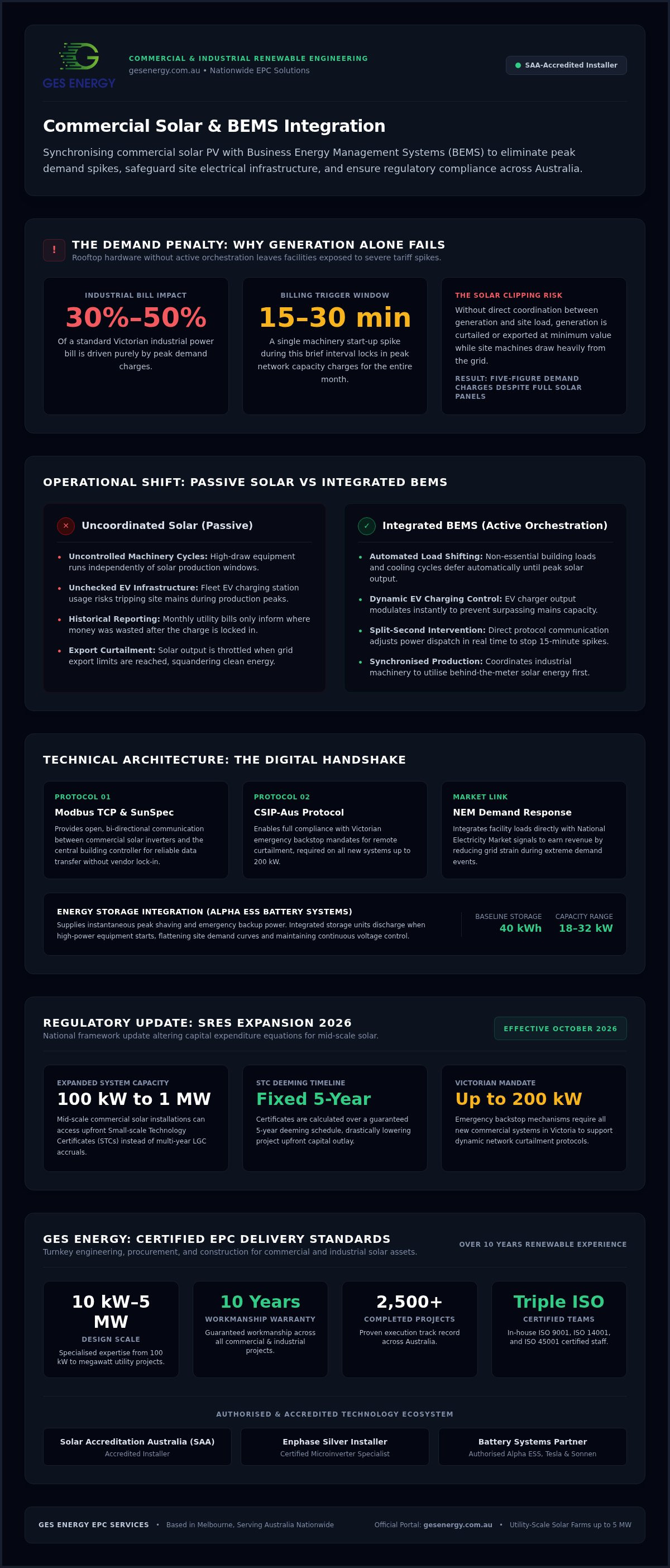
Peak demand charges often account for 30% to 50% of a Victorian industrial power bill. These charges are calculated based on your highest 15-minute or 30-minute usage spike during a billing period. If a heavy piece of machinery starts up while your solar output is low, you set a high capacity charge that lasts for the entire billing cycle. Integrated systems use live solar data to predict and prevent these spikes through several methods:
- Automated Load Shifting: The system automatically delays non-essential processes until solar production is at its peak.
- Peak Shaving: Using stored battery energy or throttled solar output to cover high-draw events.
- Synchronised Production: Aligning heavy machinery cycles with the most productive daylight hours to ensure you're using behind-the-meter power first.
The 2026 Regulatory Landscape in Australia
The Australian energy market is changing rapidly. As of October 2026, the Small-scale Renewable Energy Scheme (SRES) has expanded to include mid-scale systems between 100 kW and 1 MW. This allows businesses to claim upfront Small-scale Technology Certificates (STCs) based on a fixed 5-year deeming period. It's a significant financial incentive that reduces the initial capital outlay for large-scale projects.
Compliance is also more technical than in previous years. In Victoria, new systems up to 200 kW must comply with the emergency backstop mechanism. This requires inverters to support CSIP-Aus protocols for remote curtailment by network providers. Integrating solar with business energy management systems ensures your site meets these standards while maintaining the flexibility to participate in National Energy Market (NEM) demand response programs. These programs provide additional revenue streams for businesses that can reduce grid strain during extreme weather events.
The Technical Architecture of an Integrated Energy Ecosystem
Integrating solar with business energy management systems requires a reliable digital 'handshake'. This isn't just about viewing production on a mobile app; it's about bi-directional communication between solar inverters and the central building controller. Using industrial protocols like Modbus TCP or SunSpec ensures that data flows without interruption. When your hardware speaks the same language as your software, you gain the ability to make split-second decisions that protect your site's electrical infrastructure.
Real-time monitoring is superior to historical reporting because it allows for immediate intervention. While a monthly report shows where you wasted money, live data prevents the waste from happening. An industrial battery storage system, such as an Alpha ESS battery, acts as a buffer in this architecture. It stabilises the BEMS by absorbing sudden production drops caused by cloud cover; this ensures your facility's power quality remains consistent and predictable.
Hardware Compatibility: Inverters and Meters
Selecting the right hardware is the first step toward a functional ecosystem. You should prioritise inverters with native API support or RS-485 interfaces to simplify the connection process. High-quality smart meters are equally vital; they provide the granular consumption data the BEMS needs to balance loads. Using certified hardware from brands like Enphase or Alpha ESS simplifies the software link, as these systems are designed for interoperability. If you're unsure about your current setup, a professional solar system design service can identify the best hardware path for your specific site.
Software Integration: The BEMS Brain
The BEMS acts as the brain of the operation, interpreting solar forecasting data to adjust heavy loads like HVAC systems. If the forecast predicts high solar generation at 2:00 PM, the BEMS can pre-cool a building to store thermal energy. This automation extends to energy storage cycles. The software can trigger battery discharge based on spot price signals from the National Energy Market, ensuring you avoid high-cost intervals. By centralising control, you reduce the need for manual oversight and allow your energy assets to work autonomously.
Key Features of High-Performance Integrated Systems
High-performance energy systems do not simply monitor electricity; they actively direct it to where it provides the most value. Integrating solar with business energy management systems allows a facility to move beyond basic observation into the territory of automated orchestration. This level of control is essential for maintaining operational stability when grid prices fluctuate or weather conditions change suddenly. A truly integrated system provides four primary functional advantages: automated load shedding, dynamic EV charging management, predictive maintenance alerts, and granular sustainability reporting.
Automated load shedding protects your facility during high-cost peak periods by temporarily powering down non-critical industrial processes. If the building controller detects that the site is approaching its maximum demand threshold, it can automatically cycle off non-essential HVAC zones or secondary pumps. Additionally, constant inverter health monitoring generates predictive maintenance alerts. These notifications allow facility managers to address technical issues before they result in system downtime. For stakeholders, customisable dashboards translate these technical successes into clear data for C-suite sustainability reporting, proving the financial and environmental ROI of the infrastructure.
Smart Load Management and Shifting
The primary goal of smart load management is to align energy-intensive tasks with peak solar production. By shifting heavy machinery cycles to the middle of the day, a business reduces its reliance on expensive grid power. When cloud cover causes a sudden drop in solar output, an industrial battery storage system, such as a Tesla Powerwall or Alpha ESS battery, bridges the gap. This prevents the building from pulling high-cost power from the grid to cover short-term production dips. The system also allows facility managers to set priorities, ensuring that critical infrastructure remains powered during grid outages while shedding less important loads to preserve battery life.
EV Infrastructure Synchronisation
Managing a corporate fleet requires a sophisticated approach to power distribution. Installing a fast-charging solution, such as the ABB All-in-One High Power Charger, adds a significant load to the site's electrical budget. Without intelligent integration, multiple vehicles charging simultaneously could easily exceed the site's maximum demand limit and trigger expensive penalties. An integrated BEMS manages these chargers dynamically, throttling the charge rate based on real-time solar availability and the building's current electrical load. This ensures that EV charging station operations support corporate sustainability goals by using behind-the-meter solar power whenever possible, rather than increasing the facility's peak demand profile.
Step-by-Step Roadmap for Implementing Solar-BEMS Integration
Integrating solar with business energy management systems is a technical project that requires precise engineering. It begins with a comprehensive site energy audit to understand exactly how your facility consumes power throughout the day. This process identifies the best opportunities for load shifting and peak shaving based on your specific operational requirements. You shouldn't guess your capacity needs; instead, you must analyse 12 months of interval data to ensure the system is correctly sized for your current and future loads.
Feasibility and System Design
A custom solar system design service is essential for projects ranging from 10 kW to 5 MW. This phase evaluates your existing building controls for software compatibility with modern solar inverters. If your current BEMS cannot communicate via Modbus or SunSpec protocols, your engineering team will need to design an interface bridge. This ensures the solar array and the building management software function as a single, unified asset. A well-designed system accounts for roof orientation, shading, and the specific electrical characteristics of your site's main switchboard.
Accessing Incentives and Rebates
The financial feasibility of your project improves significantly when you access available government support. In 2026, the Small-scale Renewable Energy Scheme (SRES) provides upfront Small-scale Technology Certificates (STCs) for systems up to 1 MW. This is a vital capital subsidy for mid-scale installations that helps reduce the initial investment. Victorian businesses can also benefit from the Victorian Energy Upgrades (VEU) program under Part 47, which provides certificates for commercial systems between 30 kW and 200 kW.
You should also explore the Sustainable Business Program, which offers rebates for energy efficiency upgrades and EV charging infrastructure. Regional Victorian grants often provide additional funding for businesses moving toward energy independence. Navigating these applications requires accurate technical data, which is generated during the initial feasibility study and engineering phase. Ensuring you meet all eligibility criteria early in the project lifecycle prevents delays in receiving your financial incentives.
Once you have secured your hardware and rebates, managing the installation with SAA-accredited labour is a non-negotiable requirement for compliance and safety. The final step is commissioning, where engineers set up the automated logic for load shedding and battery discharge. Successfully integrating solar with business energy management systems requires this level of meticulous planning to ensure long-term reliability. To start your transition with a professional assessment, you can book a solar system design service today.
GES Energy EPC Solutions: Custom Engineering for Seamless Integration
Choosing a partner for integrating solar with business energy management systems requires more than just finding a panel installer. It demands a specialist capable of handling Engineering, Procurement, and Construction (EPC) for complex industrial environments. GES Energy provides this end-to-end expertise for projects ranging from 10 kW to utility-scale 5 MW plants. By maintaining in-house teams with ISO 9001, ISO 14001, and ISO 45001 certifications, the business ensures that every technical integration meets the highest safety and quality standards.
Reliability in the commercial sector is built on accountability. This is why every industrial and commercial project includes a 10-year workmanship warranty. This guarantee covers defects arising from the installation process; it provides the long-term security necessary for a significant infrastructure investment. When hardware and software are tightly coupled, having an SAA-accredited installer manage the build is a non-negotiable requirement for compliance and insurance purposes. This level of professional oversight ensures your system remains a stable asset for its entire operational life.
End-to-End Project Management
The transition to a unified energy ecosystem involves more than just physical hardware. It requires careful coordination with network providers for grid connection approval, especially for systems exceeding 30 kVA in Victoria. GES Energy manages this entire lifecycle, from the initial feasibility study to final commissioning. This structured approach mirrors the meticulous planning required for successful energy orchestration. Every build adheres to ISO-certified safety standards, ensuring that site operations remain safe and productive throughout the construction phase. By centralising procurement, the business also secures the most reliable components from a trusted supply chain.
Authorised Support and Warranty Management
As an authorised dealer for premium brands like Tesla and Alpha ESS, GES Energy provides direct access to high-level technical support. This relationship ensures that your business receives the latest firmware updates and hardware optimisations for your BEMS. If a component fails, the team provides an inverter warranty claim service even if the original installation was performed by another company. This commitment to ongoing performance is part of a comprehensive maintenance program designed to keep systems operating at peak efficiency. To begin the engineering process for your facility, contact the team for a custom solar system design service.
Future-Proofing Your Business Energy Strategy
Transitioning from a passive solar installation to an active energy ecosystem is the most effective way to protect your operations from rising peak demand charges. By synchronising your generation with real-time facility loads, you ensure that every kilowatt produced serves your bottom line. Success in 2026 depends on more than just panels; it's about the precise technical execution of integrating solar with business energy management systems to achieve true independence from grid volatility.
Managing this complexity requires a partner with deep engineering expertise and a commitment to long-term reliability. GES Energy delivers this through SAA-accredited installers and in-house teams holding ISO 9001, 14001, and 45001 certifications. Every commercial project is backed by a 10-year workmanship warranty, providing the peace of mind that your infrastructure is built to last. Taking control of your energy future starts with a clear plan tailored to your site's unique requirements. Request a custom GES Solar System Design service today to begin optimising your facility's performance. You can move forward with confidence knowing your transition is in expert hands.
Frequently Asked Questions
Can existing solar panels be integrated with a new BEMS?
Yes, existing solar panels can usually be integrated if the current inverters support standard industrial communication protocols such as Modbus TCP or RTU. If your older hardware doesn't have these capabilities, a technical specialist can often install a gateway or interface bridge to enable the necessary data handshake. This allows your legacy system to participate in modern load shifting strategies, ensuring your previous investment remains relevant as you move toward a more automated energy ecosystem.
What are the main benefits of integrating solar with building energy management?
The primary benefits are significant reductions in peak demand charges and improved self consumption of behind the meter power. By integrating solar with business energy management systems, you gain the ability to automate non-critical loads, ensuring heavy machinery runs when solar production is highest. This level of orchestration provides facility managers with granular data for sustainability reporting and helps stabilise operational overheads against the volatility of the Victorian energy market.
How much can a business save by automating energy load shifting?
Savings vary by site, but many Victorian industrial facilities find that peak demand charges account for 30% to 50% of their total electricity costs. By automating load shifting, you can avoid these expensive 15 minute usage spikes. Aligning energy intensive processes with peak solar generation or battery discharge intervals allows you to lower these capacity charges substantially, often resulting in a noticeable reduction in monthly operational expenditure for Melbourne based businesses.
Does the Sustainable Business Program cover solar integration costs?
The Sustainable Business Program provides rebates for several energy and water efficiency upgrades, including EV charging infrastructure and energy management assets. While specific eligibility depends on your local council and the scope of the project, these incentives often offset the costs of the hardware and software required for full system integration. You should check the current rebate caps for 2026 to understand how much your specific Victorian project might receive.
What hardware is required to connect a solar inverter to a BEMS?
Connecting a solar inverter to a BEMS requires a physical communication interface, typically an RS-485 port for Modbus RTU or an Ethernet connection for Modbus TCP. You will also need high quality smart meters to provide the granular consumption data the controller requires. If you're using premium hardware like an Alpha ESS battery or Tesla Powerwall, the integrated gateways often simplify this connection, acting as a central hub for the entire energy ecosystem.
How does integration help with managing industrial EV charging stations?
Integration allows the BEMS to dynamically manage an EV charging station by adjusting the charge rate based on real time solar availability and the building's total load. This is critical when using high power units like the ABB All-in-One High Power Charger, as it prevents multiple vehicles from spiking your site's maximum demand threshold. You can set the system to prioritise solar only charging, ensuring your corporate fleet supports your sustainability goals without increasing network costs.
Is a 10-year workmanship warranty standard for commercial solar projects?
While a 10-year workmanship warranty isn't a mandatory industry standard, it is a core offering from GES Energy for all commercial and industrial projects. This guarantee covers defects that might arise from the installation process, providing long term security for your investment. Choosing a partner that offers this level of protection, alongside SAA-accredited labour and ISO certified safety standards, ensures your facility's energy infrastructure remains reliable and compliant for years to come.
What is the difference between a standard solar monitor and a BEMS integration?
A standard solar monitor is a passive tool that only reports generation and consumption data. In contrast, integrating solar with business energy management systems creates an active control loop. The BEMS doesn't just show you the data; it uses that information to make automated decisions, such as shedding non-critical loads or discharging a battery during a price spike. This shift from simple observation to active orchestration is what drives genuine energy independence.


